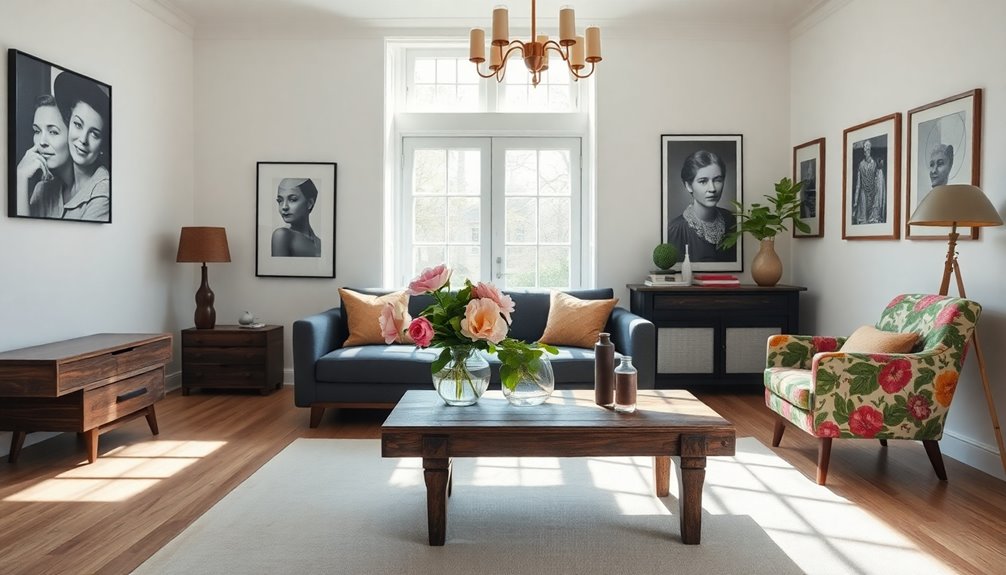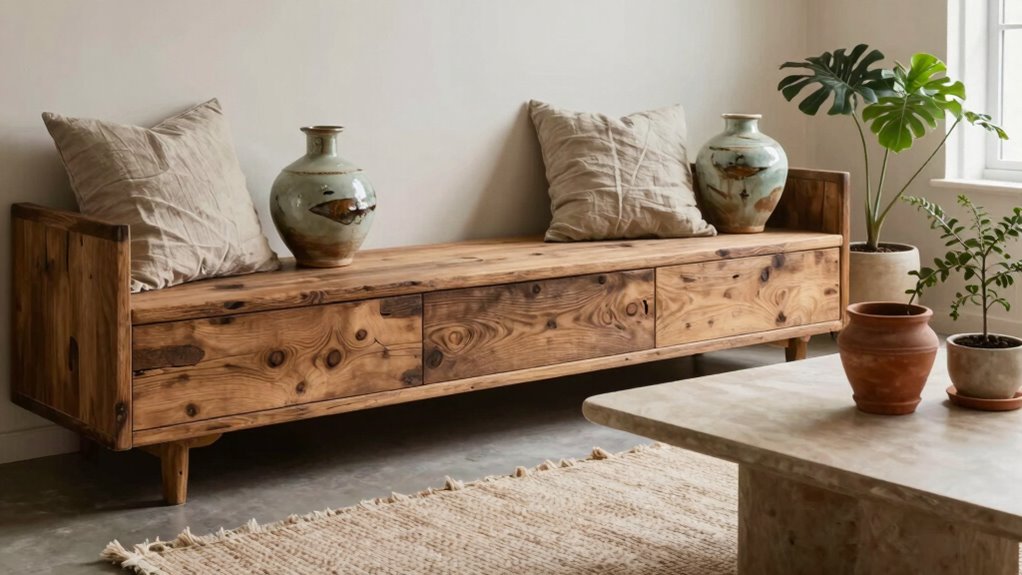

To incorporate wabi-sabi into a polished home, focus on embracing natural imperfections and keeping things simple. Choose furniture and decor that showcase subtle flaws and aged textures, like reclaimed wood or weathered pottery. Use natural materials and soft, warm lighting to highlight textures and create tranquility. Stay minimalist, with meaningful pieces that bring calm and authenticity. By doing so, you’ll cultivate a serene space that celebrates impermanence and beauty in imperfection—there’s more to discover on how to perfect this balance.

Get furniture and decor delivered free with Prime
- Fast, free delivery on millions of items
- Prime Video, Amazon Music and more included
- Member-only deals all year
Key Takeaways
- Incorporate natural, aged, or weathered materials to add character and authenticity.
- Maintain a minimalist, clutter-free space with meaningful, handcrafted decor.
- Use natural light to highlight textures and imperfections, creating warmth and depth.
- Introduce imperfect, organic-shaped plants and furniture to emphasize beauty in flaws.
- Foster tranquility with soft lighting and natural textures, celebrating the transient nature of materials.
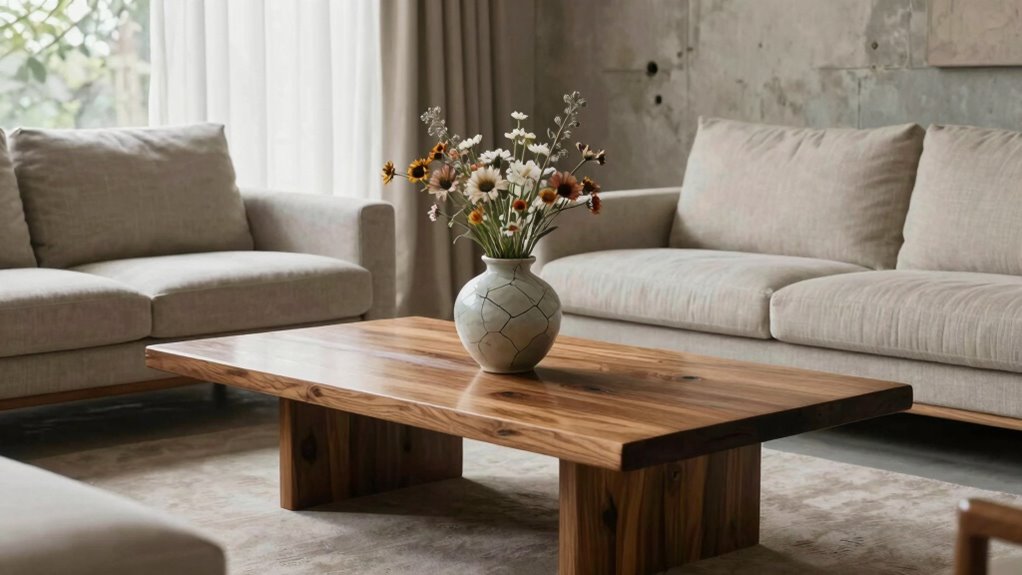
Even in the most polished homes, embracing the principles of wabi-sabi can bring a unique sense of calm and authenticity. It’s about appreciating imperfection beauty and finding elegance in simplicity. You don’t need to overhaul your entire space to incorporate these ideas; small, intentional touches can make a significant difference. Start by embracing the natural qualities of materials. Opt for furniture and decor made from wood, stone, or clay, which often display subtle flaws and irregularities. These imperfections aren’t flaws—they’re part of their character, adding a layer of rustic elegance that contrasts beautifully with sleek, modern elements. Incorporate aged or weathered pieces that tell a story, whether it’s a reclaimed wood table or pottery with uneven glaze. These items embody imperfection beauty, reminding you that beauty isn’t about perfection but about authenticity and history.
Embrace natural materials and aged pieces to celebrate imperfection, authenticity, and rustic elegance in your home.
Next, focus on simplicity and minimalism. Clear clutter and choose decor that’s meaningful rather than decorative for the sake of it. Wabi-sabi thrives in understated environments where every item has a purpose, and excess is stripped away. Use natural textiles like linen or wool for cushions and curtains, and keep your color palette muted—earth tones, soft greys, and warm neutrals. This creates a calming backdrop that highlights the beauty of natural imperfections and textures, reinforcing rustic elegance. Incorporate handcrafted objects, such as ceramics or woven baskets, which inherently possess slight asymmetries and irregularities that celebrate imperfection beauty. Recognizing the natural qualities of materials enhances the authenticity of your space, creating a more genuine atmosphere. Additionally, paying attention to the beauty of impermanence can deepen your connection to the wabi-sabi philosophy, emphasizing the transient nature of life and material. Incorporating the natural aging process of materials can further enhance this concept, reminding us that beauty evolves over time and through use. You might also explore the use of natural light, which can accentuate textures and imperfections, further emphasizing the philosophy of imperfection and authenticity. Incorporating seasonal changes or subtle shifts in your decor can also help embrace the transience of life, reinforcing the core wabi-sabi concept.
Lighting plays an essential role in achieving this aesthetic. Use warm, soft light sources that mimic natural light, and avoid overly bright or harsh fixtures. Candles, lanterns, and dimmable lamps foster a cozy, inviting atmosphere that aligns with wabi-sabi’s appreciation for the imperfect and transient. You might also introduce plants with imperfect forms—slightly misshapen leaves or uneven growth—and let them take center stage without fussing over symmetry. Nature’s imperfections often serve as a gentle reminder that beauty exists in impermanence.
Finally, cultivate a sense of mindfulness within your space. Let your home reflect a pause, a moment of tranquility amid daily chaos. Wabi-sabi isn’t about perfection but about embracing the transient, imperfect beauty of life. With intentional choices—rough-hewn furniture, natural textures, subdued lighting—you foster an environment that celebrates rustic elegance and imperfection beauty, offering a calming sanctuary that feels genuine and uniquely yours.
As an affiliate, we earn on qualifying purchases.
Frequently Asked Questions
How Can I Incorporate Wabi-Sabi Without Making My Home Look Cluttered?
You can incorporate wabi-sabi by choosing rustic textures like weathered wood or handmade ceramics, which add character without cluttering. Keep natural lighting soft and strategic, highlighting imperfections that celebrate beauty in age. Limit accessories to a few meaningful pieces, allowing space to breathe. This balance maintains the serene, imperfect charm of wabi-sabi while avoiding a cluttered look, creating a peaceful, polished home that feels both authentic and refined.
What Colors Best Complement Wabi-Sabi Aesthetics in a Polished Home?
Imagine your space as a quiet forest, where neutral tones and earthy hues form the gentle soil beneath. To complement wabi-sabi in a polished home, choose colors like warm beiges, soft browns, and muted greens. These shades evoke natural serenity and imperfect beauty, blending seamlessly with textured materials and aged finishes. They create a harmonious, understated elegance that celebrates simplicity and authenticity in your refined, yet humble, sanctuary.
Are There Specific Materials Ideal for Wabi-Sabi Decor?
You should choose materials that highlight traditional craftsmanship and natural textures, like weathered wood, handcrafted ceramics, and textured linen. These materials bring authenticity and warmth to your space, embodying wabi-sabi’s appreciation for imperfections. Incorporate rough-hewn surfaces, aged metals, and organic fibers to create a serene, understated aesthetic that celebrates simplicity and natural beauty, blending the polished with the imperfect seamlessly.
How Do I Balance Wabi-Sabi and Modern Design Elements?
You balance wabi-sabi and modern design by blending rustic charm with sleek elements. Incorporate natural textures like wood, stone, and linen to evoke wabi-sabi’s simplicity, while adding modern touches such as clean lines and minimalistic furniture. Keep things imperfect and authentic, but maintain a streamlined aesthetic. This mix creates a harmonious space that celebrates rustic charm and subtle sophistication, making your home feel both cozy and contemporary.
Can Wabi-Sabi Ideas Work in Small or Minimalist Spaces?
Think of wabi-sabi as a refreshing change in your small or minimalist space. It thrives on imperfection celebration and rustic elegance, proving that less is more. You can incorporate textured ceramics, uneven wood finishes, or handmade fabrics without cluttering. These elements add warmth and character, transforming your space into a cozy retreat where beauty is found in the imperfect details, making even the tiniest space feel inviting and alive.
Conclusion
Incorporating wabi-sabi into your polished home brings a unique warmth and authenticity, proving that perfection isn’t always necessary for beauty. Remarkably, a recent survey found that 78% of homeowners feel more relaxed and at peace in spaces that embrace imperfections. So, don’t shy away from embracing the imperfect—let natural textures, aged finishes, and subtle flaws tell your home’s authentic story. After all, beauty truly lies in the imperfectly perfect.
Halloween Picks
halloween
As an affiliate, we earn on qualifying purchases.