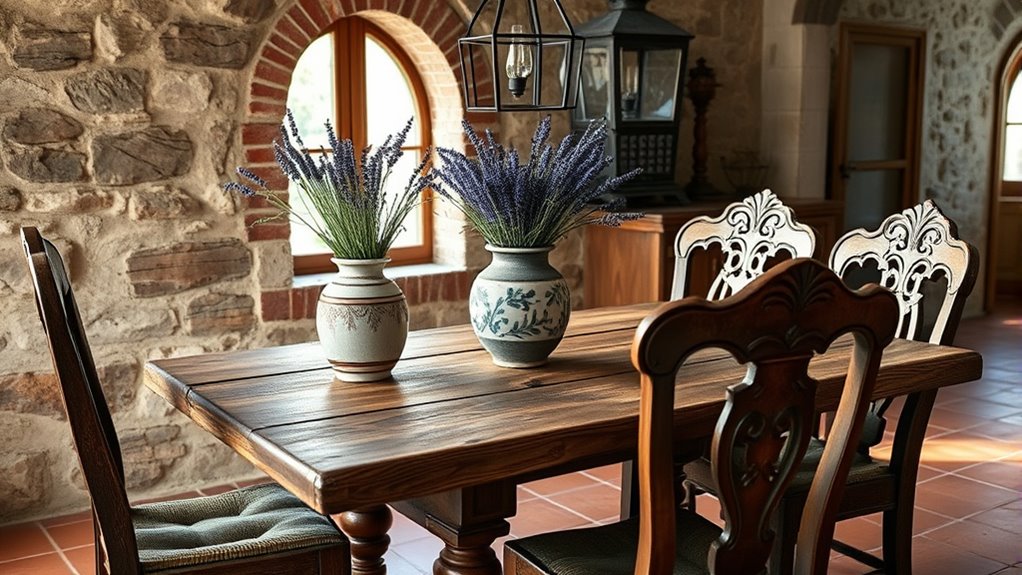

To update Tuscan or other old-world pieces, focus on preservation and authenticity. Carefully assess the piece’s condition, then gently clean with pH-balanced solutions to stabilize the surface. Use discreet repairs with matching, reversible materials, avoiding modern finishes. Choose hardware that complements the original design subtly. By respecting craftsmanship and historic features, you guarantee the piece’s integrity remains intact. Exploring these techniques further reveals how you can thoughtfully enhance your antique’s beauty and longevity.
Key Takeaways
- Preserve original craftsmanship by cleaning, stabilizing, and repairing antique finishes with gentle, non-abrasive techniques.
- Use subtle, historically appropriate finishes like matte or satin to refresh old-world pieces without obscuring details.
- Incorporate understated, compatible hardware or decorative updates that enhance without overpowering the original design.
- Document all modifications and ensure any repairs or refinishing respect the piece’s authentic character.
- Balance restoration with thoughtful enhancements to blend old-world charm with contemporary functionality.
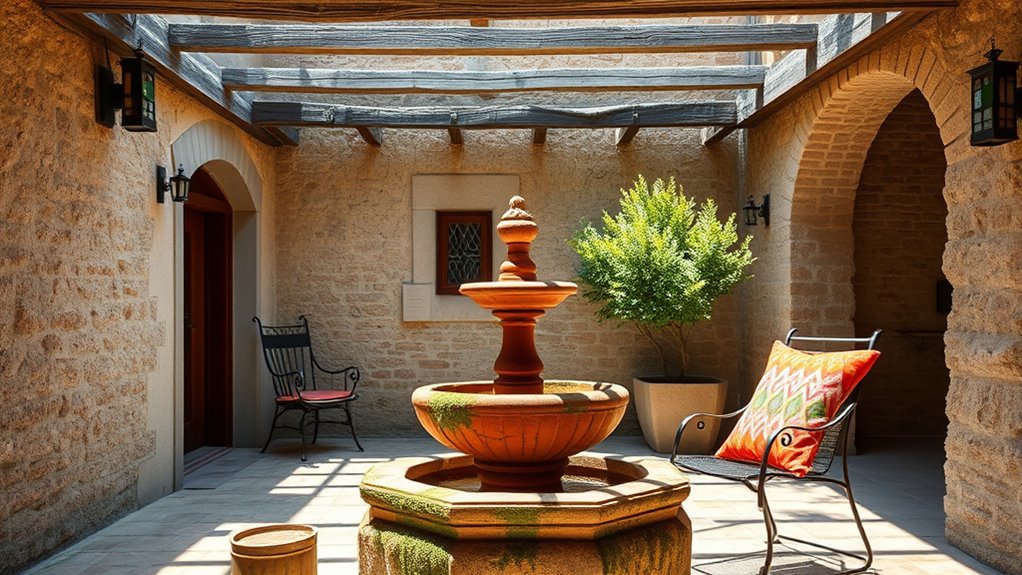
Have you ever considered how to refresh antique or vintage pieces while preserving their historical integrity? When updating old-world furniture, especially Tuscan-inspired pieces, every decision must be carefully weighed to maintain authenticity. The goal isn’t to erase history but to gently enhance it, allowing the piece to serve in a contemporary setting without losing its original charm. Start by thoroughly evaluating the piece’s condition, noting any damage, wear, or signs of age. This detailed inspection guides your approach, ensuring you don’t inadvertently remove or obscure key historic features.
Cleaning is the first critical step, but it must be done with precision. Use gentle, pH-balanced cleaners suitable for antique finishes to remove accumulated dirt and grime. Avoid abrasive scrubbing or harsh chemicals that can strip away original paint or veneer. In many cases, a soft brush or microfiber cloth combined with distilled water will suffice. For stubborn stains or old wax buildup, consider consulting a conservation specialist to prevent accidental damage. Preservation of original patina is crucial; it reflects the piece’s history and character. Any cleaning method should aim to stabilize this surface rather than alter it.
Gentle, pH-balanced cleaning preserves antique patina and safeguards historic character.
When it comes to refinishing, restraint is essential. If the existing finish is stable and visually appealing, it’s often best to leave it untouched. If you decide to reapply a protective coat, opt for a clear, matte or satin finish that mimics the original look. When repairs are necessary—such as filling cracks or stabilizing loose joints—use materials that match the original in composition and appearance. This approach ensures the repair is discreet and reversible, preserving the piece’s integrity over time. Avoid modern, high-gloss finishes or overly thick paint layers that can overshadow authentic details.
If you choose to update hardware or decorative elements, select replacements that are historically compatible. For instance, aged brass or wrought iron handles can enhance the Tuscan aesthetic without feeling out of place. When adding new elements, do so subtly, ensuring they complement the existing design rather than dominate it. The emphasis should be on harmony, not modernization for its own sake. Always document any changes you make, including materials and techniques, so that future caretakers can understand the history of the piece. Additionally, understanding the mechanics of pinball machines can inspire creative ways to incorporate vintage gaming elements into furniture decor, adding a unique touch of nostalgia.
Ultimately, updating Tuscan or vintage furniture calls for a delicate balance—respect for the craftsmanship and age, paired with thoughtful enhancements that allow the piece to thrive in a modern environment. Every decision should honor the original artisans’ intent, ensuring these treasures continue to tell their story for generations to come.
Frequently Asked Questions
How Do I Distinguish Authentic Tuscan Antiques From Reproductions?
To distinguish authentic Tuscan antiques from reproductions, examine craftsmanship closely. Authentic pieces feature aged patinas, hand-carved details, and historically accurate materials like terracotta or aged wood. Check for maker’s marks or stamps, and research provenance. Reproductions often lack wear consistent with age and may use modern adhesives or finishes. Trust your senses—authentic items feel heavier and have uneven textures, reflecting their handcrafted, old-world origins.
What Are the Best Modern Materials to Update Old-World Furniture?
You should consider using durable, modern materials like high-quality epoxy resins for repairs, natural linen or hemp for upholstery, and reclaimed wood for accents to preserve authenticity while updating. These materials blend seamlessly with old-world charm, ensuring longevity and maintaining the piece’s character. Opt for eco-friendly finishes like water-based stains or low-VOC paints to protect both the furniture and your environment. This approach keeps the integrity intact while modernizing effectively.
How Can I Preserve the Original Charm During Updates?
You can preserve the original charm by carefully cleaning and repairing existing details before updating. Use gentle methods that don’t strip patina or distressing, and select modern materials that complement the original wood or craftsmanship. When adding new hardware or finishes, choose subtle, vintage-inspired pieces. Maintain the piece’s character by avoiding over-restoration, ensuring that your updates highlight its history rather than overshadow it.
Are There Specific Finishes Recommended for Tuscan-Style Updates?
You’ll want to stick with matte or low-sheen finishes to honor the Tuscan charm. Think warm, earthy tones that mimic aged plaster or weathered wood—like a soft terracotta or antique gold. Avoid glossy surfaces, which scream modern. Instead, opt for hand-applied wax or natural oils to enhance the texture and patina. This way, your updates will glow with rustic authenticity, not a shiny, over-polished façade—preserving that old-world allure with a modern touch.
How Do I Match Contemporary Decor With Vintage Tuscan Pieces?
You should balance contemporary decor with vintage Tuscan pieces by choosing sleek, modern furnishings that highlight the rustic charm without overpowering it. Opt for neutral wall colors and minimalist accessories to create contrast, allowing the old-world details to stand out. Incorporate subtle metallic accents or glass elements to add a modern touch. Keep the arrangement uncluttered to preserve the vintage character while embracing a fresh, updated look.
Conclusion
By thoughtfully updating old-world pieces, you breathe new life into treasured artifacts, ensuring their beauty endures like a timeless river. Your careful preservation acts as a bridge between eras, honoring craftsmanship while adapting to modern tastes. Each restored detail becomes a whisper of history, inviting future generations to cherish these pieces. In this delicate dance of preservation and innovation, you safeguard the past’s soul while allowing it to flourish anew—truly, a symphony of respect and renewal.