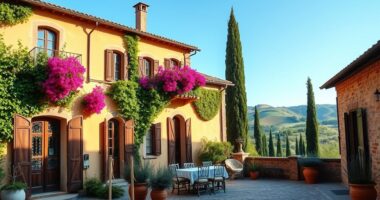
In Spanish Colonial Revival architecture, arches serve as both functional supports and aesthetic highlights, characterized by rounded, semi-circular forms influenced by Moorish designs, often complemented by thick, stuccoed edges. Plaster finishes, typically in earthy tones, provide a weather-resistant, textured surface that emphasizes authenticity and rustic charm while enhancing climatic comfort. Decorative tiles add vibrant, handcrafted details to floors and walls, reflecting cultural motifs and craftsmanship. Exploring these elements reveals how form, function, and cultural influence shape this distinctive style.
Key Takeaways
- Arches in Spanish Colonial Revival are rounded, semi-circular, often featuring voussoirs, and emphasize indoor-outdoor connectivity.
- Stucco plaster provides a smooth, textured surface in warm earth tones, enhancing authenticity and weather resistance.
- Arches serve both structural and aesthetic functions, creating shaded spaces and reflecting Moorish Spanish influences.
- Decorative tiles with intricate, colorful patterns accentuate floors, walls, and stair risers, adding visual interest and cultural storytelling.
- Proper application and maintenance of plaster and tiles preserve their rustic charm, durability, and historical authenticity.
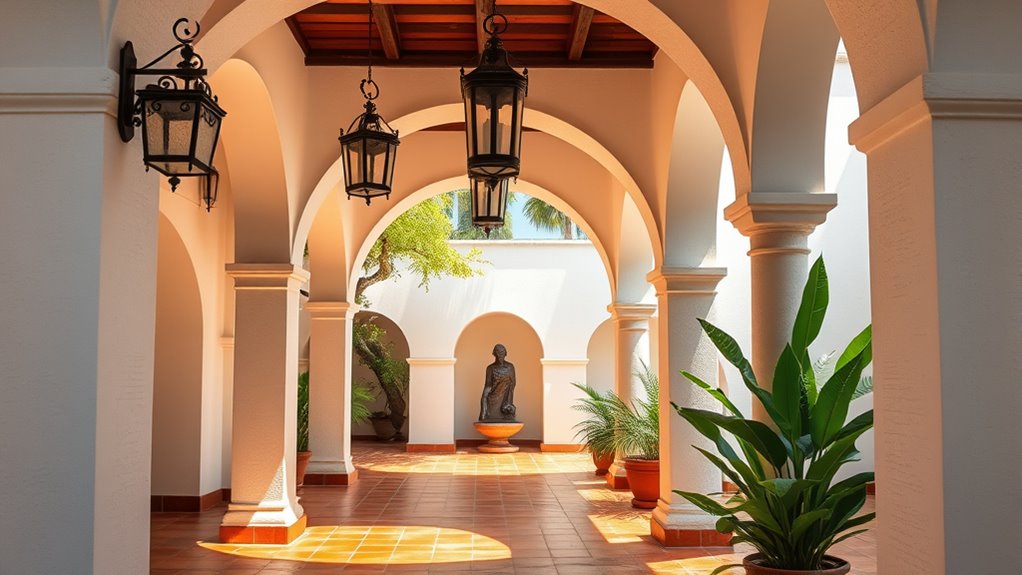
Spanish Colonial Revival is an architectural style that emerged in the early 20th century as a romanticized reinterpretation of Spanish Colonial architecture, emphasizing historical authenticity while adapting to modern needs. Within this style, the use of arches, plaster finishes, and decorative tiles forms the core elements that define its distinct aesthetic. These features are not merely ornamental but serve functional and symbolic roles, reflecting the cultural and climatic context of the regions that inspired the style. Understanding the detailed execution of these elements reveals the careful balance between tradition and innovation that characterizes Spanish Colonial Revival design.
Spanish Colonial Revival emphasizes authenticity through arches, plaster, and tiles, blending tradition with modern adaptation.
Arches are fundamental to this style, often serving as entryways, window surrounds, or porch supports. They are typically characterized by their rounded, semi-circular form, which evokes the Moorish influence on Spanish architecture. Crafted with precision, these arches often feature thick, stuccoed edges that emphasize their sculptural quality. In some cases, you might notice the use of voussoirs—wedge-shaped stones—arranged to create a harmonious curve, showcasing craftsmanship and structural integrity. Beyond aesthetics, arches facilitate the flow of indoor and outdoor spaces, creating shaded porches and courtyards that offer relief from the sun’s heat. This integration of form and function exemplifies how arches contribute to the comfort and visual coherence of the overall design. Additionally, climatic considerations influence the prominence of arches, helping to keep interiors cool in warmer regions.
The use of plaster, or stucco, is another hallmark, providing a smooth, matte surface that mimics traditional adobe walls. The plaster is applied in multiple coats, often with a textured finish that adds depth and visual interest, enhancing the rustic charm associated with Spanish Colonial Revival. This surface treatment not only preserves the building’s historical appearance but also offers weather-resistant qualities suitable for warmer climates. The color palette typically features warm earth tones—ochres, terracottas, and creams—that reinforce the style’s connection to natural materials. The application of plaster demands meticulous craftsmanship, ensuring uniformity and durability, which are essential for maintaining authenticity over time. Proper maintenance of plaster surfaces is crucial to prevent cracking and deterioration, ensuring longevity.
Decorative tiles are integral to the style’s aesthetic, particularly in flooring, stair risers, and accent walls. These tiles are often handcrafted, displaying intricate patterns inspired by Moorish, Spanish, and indigenous motifs. The vivid colors—azul, yellow, and red—contrast beautifully with the subdued plaster surfaces, creating focal points within the architectural composition. Tilework serves both decorative and functional purposes, as it resists moisture and wear in high-traffic areas. The placement of these tiles demonstrates a deliberate effort to evoke historical craftsmanship, blending artistry with practicality and reinforcing the style’s cultural narrative. Overall, arches, plaster, and tile work in concert to produce an authentic yet adaptable architectural language that continues to influence contemporary designs rooted in tradition.
Spanish Colonial Revival arch kit
As an affiliate, we earn on qualifying purchases.
As an affiliate, we earn on qualifying purchases.
Frequently Asked Questions
What Defines the Unique Color Palette of Spanish Colonial Revival Exteriors?
You notice that the unique color palette of Spanish Colonial Revival exteriors features warm, earthy tones like terracotta, adobe reds, and sandstone hues. These colors evoke a sense of warmth, tradition, and harmony with the natural environment. You’ll also observe the use of muted greens and deep blues, which complement the primary palette. This deliberate selection emphasizes authenticity and historical continuity, creating an inviting, timeless aesthetic characteristic of this architectural style.
How Do Interior Design Elements Complement the Architectural Style?
You can make interior design elements truly shine by choosing warm, earthy tones that echo the exterior palette, creating harmony throughout the space. Opt for handcrafted wooden furniture, wrought iron fixtures, and textured textiles to reflect authentic craftsmanship. Incorporate terracotta or decorative tile accents and plaster walls with subtle textures to enhance the style’s rustic charm. These thoughtful details serve as a bridge, tying the indoor environment to the rich, historical architectural roots.
Are There Specific Regions Where This Style Is Most Popular?
You’ll find Spanish Colonial Revival most prominently in California and the southwestern United States, where historical ties to Spanish colonization influence regional architecture. This style thrives in areas with warm, temperate climates, emphasizing outdoor living and regional materials. Its popularity stems from a desire to evoke historic charm and cultural heritage, making it a distinctive architectural choice. The regional adaptation highlights local materials and cultural influences, reinforcing a sense of place and tradition.
What Modern Materials Are Used to Replicate Traditional Plaster and Tile?
You can use modern materials like synthetic stucco and fiber-reinforced plaster to replicate traditional plaster, offering enhanced durability and ease of installation. For tiles, porcelain and glazed ceramic options closely mimic the look of authentic clay, while providing improved resistance to moisture and wear. These contemporary materials enable you to achieve the historic aesthetic of Spanish Colonial Revival architecture efficiently, with reduced maintenance and increased longevity.
How Does the Style Influence Landscaping and Outdoor Spaces?
Your outdoor space becomes a vibrant courtyard, echoing the style’s emphasis on harmony and craftsmanship. You’ll notice curved pathways, terracotta pots, and lush greenery framing stucco walls and ornamental tiles, creating a seamless blend of architecture and landscape. This style guides plant selection toward drought-tolerant, Mediterranean species, emphasizing natural materials and craftsmanship, fostering an ambiance of warmth and tradition. The result is an inviting, culturally rich environment that celebrates artisanal detail.

MaxPatch® 4 in. x 4 in. Self-Adhesive Surface Repair Patch, All-Purpose Galvanized Metal for Interior and Exterior Repairs, Ideal for Drywall, Plaster, Wood, Brick, Stucco, and More (3-Pack)
All-PURPOSE SURFACE REPAIR SOLUTION: MaxPatch 4 in. x 4 in. self-adhesive repair patches are ideal for fixing holes,…
As an affiliate, we earn on qualifying purchases.
As an affiliate, we earn on qualifying purchases.
Conclusion
Embracing the Spanish Colonial Revival style allows you to appreciate its timeless elegance rooted in history and craftsmanship. The arches, plaster surfaces, and intricate tile work serve as living attestations to a cultural dialogue that endures through architecture. Like a well-worn manuscript, these elements tell stories of tradition and artistry, inviting you to recognize how design can echo centuries of heritage while remaining remarkably relevant today. Ultimately, this style transforms spaces into enduring symbols of cultural continuity.

30 Pcs Mediterranean Style Peel and Stick Wall Tile Decals – Waterproof Vinyl Stickers for Kitchen Backsplash, Bathroom, Stair Riser Decor – Spanish Floral Pattern – 4×4 Inch
VIBRANT MEXICAN & TALAVERA STYLE: Instantly transform your kitchen, bathroom, or stairs! These colorful peel and stick tile…
As an affiliate, we earn on qualifying purchases.
As an affiliate, we earn on qualifying purchases.

Dura-Trel Wellington Arbor, Vinyl Garden Archway for Outdoors, White, 72" x 85" – Backyard Decorative Arch for Pathways & Entrances w/ Trellis Sides for Climbing Plants, Vines & Flowers
Contemporary Look: Modern grid-style arbor strong enough for any plant or climbing vine, complementing your surrounding garden or…
As an affiliate, we earn on qualifying purchases.
As an affiliate, we earn on qualifying purchases.