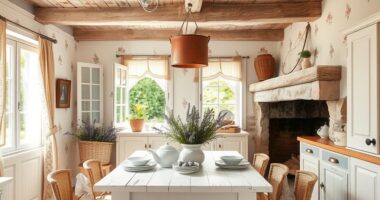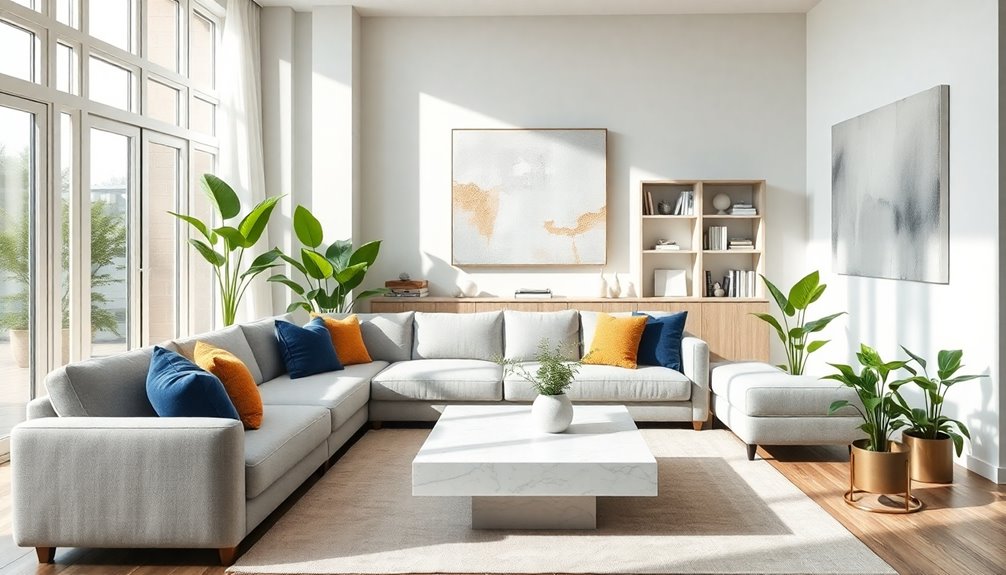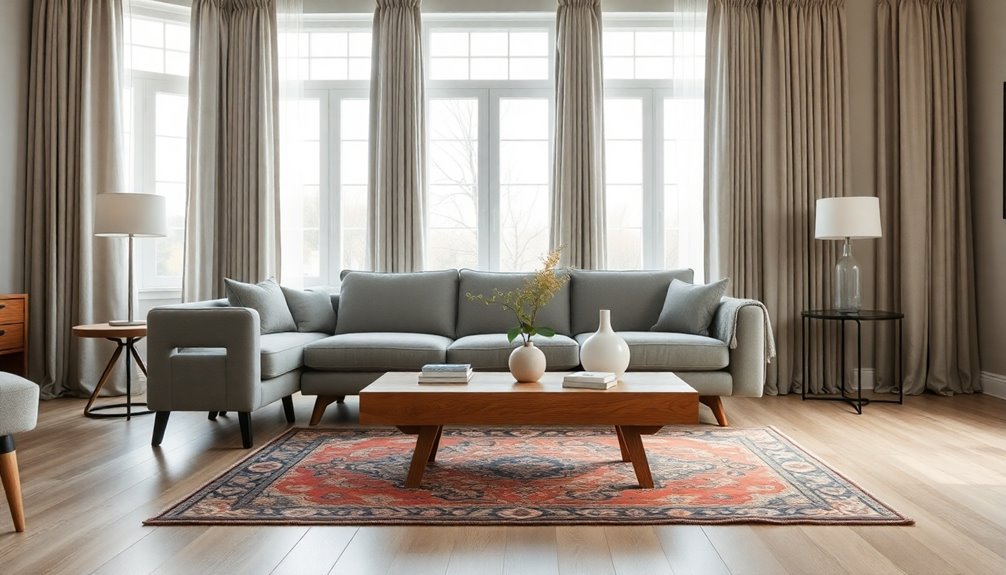
To add warmth and personality to your Scandinavian style, focus on incorporating various textures. Mix soft, plush fabrics like wool throws and linen cushions with natural materials like wood, stone, and woven baskets. Layer these textures carefully to create depth without clutter, balancing smooth and rough surfaces. Using earthy tones enhances the cozy vibe. Keep an eye on harmony and restraint—if you continue exploring, you’ll discover how to craft a truly soulful, inviting space.
Key Takeaways
- Incorporate natural textures like wood, linen, and woven fibers to add warmth and authenticity to Scandinavian spaces.
- Layer contrasting textures such as plush rugs with smooth wooden surfaces to create depth and tactile interest.
- Use a limited color palette of warm neutrals to harmonize textures and promote a cozy, inviting atmosphere.
- Balance soft fabrics with harder surfaces and avoid overmixing patterns to maintain visual clarity and calmness.
- Add artisanal, handcrafted details like textured ceramics and woven baskets to enhance soulfulness and tactile richness.
Why Texture Is the Secret to a Warm Scandinavian Look

Texture plays an essential role in creating a cozy Scandinavian aesthetic because it adds depth and warmth to your space. By incorporating textural contrast, you prevent your room from feeling flat or sterile. Mix smooth surfaces with rougher, more tactile elements to create visual interest and inviting tactile comfort. Soft wool throws, plush rugs, and textured cushions immediately make your space feel more welcoming. These elements invite touch, encouraging you to relax and unwind. Texture also balances the minimalistic nature of Scandinavian design, making the environment feel layered and lived-in. When you pay attention to tactile comfort, your space becomes more than just visually appealing — it becomes an oasis of warmth and coziness that truly feels like home. Incorporating natural materials can further enhance the tactile experience and overall ambiance. Paying attention to material selection can help create a more authentic and inviting atmosphere, especially when considering home maintenance and the durability of these materials over time. Using textural contrast thoughtfully ensures your space remains both stylish and functional. Additionally, choosing durable materials ensures your space maintains its cozy appeal through everyday use and seasonal changes.
Best Textures to Add Depth and Coziness to Your Space

To add depth and coziness to your Scandinavian space, focus on incorporating a variety of tactile materials that invite touch and visual interest. Textural contrast is key—you want a mix of smooth, rough, soft, and structured surfaces that keep the eye engaged. Think plush wool rugs underfoot, chunky knit throws draped over sofas, and matte ceramic vases paired with glossy metals. These textures create tactile appeal, making your space feel warm and inviting. Incorporate natural materials like wood and stone to enhance the organic vibe, adding both visual depth and a sense of grounding. Using at-home beauty tech devices alongside your decor can also introduce subtle layers of modern sophistication and enhance your self-care routine. Incorporating textural harmony ensures a balanced and cohesive look, preventing visual clutter. Avoid monotony by layering different textures, which subtly enriches your space without cluttering it. Being mindful of texture balance helps create a harmonious environment that feels both dynamic and restful. Paying attention to sensory engagement can further elevate the tactile experience of your space, fostering a sense of comfort and well-being. Additionally, experimenting with layered textures can bring unexpected visual interest and richness to your interior design. The right combination of textures transforms your room into a cozy, multi-dimensional retreat.
How to Mix and Layer Textures Without Cluttering

Mixing and layering textures can add visual interest and comfort to your Scandinavian space without making it feel cluttered. The key is to create textural contrast, balancing smooth and rough surfaces to keep the space lively yet cohesive. Use a variety of materials—such as a plush rug paired with sleek furniture—to add tactile harmony. Incorporate textural contrast to prevent the room from feeling monotonous, which is essential in maintaining a balanced aesthetic. Don’t overdo it; select a few textures as focal points and repeat them subtly throughout the room to maintain harmony. Mix soft fabrics like wool or linen with harder surfaces like wood or metal, ensuring they complement rather than compete. Incorporating local automation and smart lighting can further enhance the layered textures by highlighting their differences and creating dynamic atmospheres. Thoughtful consideration of material diversity can elevate the space, making it feel both curated and inviting. Additionally, paying attention to surface finishes can help unify the different textures and maintain a cohesive look. By thoughtfully layering textures and emphasizing contrast, you can achieve a rich, inviting atmosphere without sacrificing clarity or simplicity.
Natural Materials That Bring Authentic Warmth to Your Decor

Natural materials like earthy textures and fibers instantly add warmth and authenticity to your space. You can enhance this effect with warm natural color palettes that create a cozy atmosphere. Incorporating organic materials and craftsmanship brings a genuine, handcrafted feel that truly enriches your decor. Additionally, traditional craftsmanship techniques from Italy add a layer of cultural richness and uniqueness to your interior design. Paying attention to material durability ensures your decor remains timeless and resilient over years of use.
Earthy Textures and Fibers
Earthy textures and fibers instantly add warmth and authenticity to your decor, creating a cozy, inviting atmosphere. They offer a natural way to introduce textural contrast and tactile layering, making your space feel richer and more dynamic. To incorporate these elements, consider:
- Using jute or sisal rugs that add organic texture underfoot
- Incorporating woven baskets or linen cushions for tactile layering
- Choosing exposed wooden beams or clay pottery to enhance natural appeal
- Incorporating fiber-rich materials that naturally elevate the tactile warmth of your space
These materials ground your decor in authenticity, inviting you to touch and feel the difference. Earthy textures emphasize the natural beauty of your space, balancing sleek surfaces with tactile warmth. By thoughtfully layering these fibers and textures, you craft a cozy, soulful environment rooted in genuine natural materials.
Warm Natural Color Palettes
To enhance the warmth and authenticity you’ve introduced with earthy textures, selecting a palette of warm natural colors can elevate your decor further. Think soft beiges, warm taupes, gentle terracottas, and muted ochres—these hues create a cozy, inviting atmosphere. Incorporate handwoven textiles in these tones to add depth and tactile richness, inviting touch and comfort. Tactile wallcoverings in warm shades can further enhance the sensory experience of your space, providing visual warmth and subtle texture. These natural colors work harmoniously with organic materials, grounding your decor in authenticity. By sticking to a warm, earthy color palette, you create a balanced environment that feels both calming and vibrant, perfectly complementing the textured elements that give your space its soulful, Scandinavian-inspired character. Color palettes inspired by nature can serve as a guiding principle for choosing harmonious hues. Additionally, incorporating electric bikes with their sleek, natural-inspired designs can subtly complement your earthy aesthetic and promote sustainable living. Moreover, embracing the craftsmanship inherent in haute couture can inspire the detailed, artisanal approach to textures and finishes in your decor. Using vetted products and materials ensures your decor maintains quality and longevity, reinforcing the authentic and durable feel you aim for. Incorporating sustainable materials can further enhance your commitment to environmental stewardship.
Organic Materials and Craftsmanship
Incorporating handcrafted and organic materials into your decor instantly adds authentic warmth and character. Natural elements create a cozy, inviting atmosphere that feels genuine and lived-in. For example, consider:
- Handwoven rugs, which add texture and pattern while showcasing artisanal craftsmanship.
- Textured ceramics, bringing tactile interest and earthy tones to your space.
- Wooden accents, such as furniture or accessories, that highlight the warmth of natural timber.
These materials not only serve as aesthetic features but also connect you to traditional craft techniques. By selecting items like handwoven rugs and textured ceramics, you infuse your home with authenticity and soul. Sustainable sourcing ensures these organic materials are ethically obtained, supporting artisans and preserving traditional techniques. Additionally, understanding material properties can help you choose the most durable and suitable items for your environment. Incorporating authentic craftsmanship into your decor elevates the overall ambiance and ensures longevity.
Tips for Layering Textures for Visual Depth and Comfort

Layering different textures is key to creating a cozy, visually interesting Scandinavian space. Start by mixing soft fabrics like wool throws and linen cushions with smooth surfaces such as wooden furniture. Use contrasting interior colors to highlight textures—light, neutral tones can make layered textures stand out subtly, while darker shades add warmth and depth. Pay attention to furniture shapes; curved, rounded pieces soften the overall look, allowing textures to flow seamlessly. Combine different materials, like a plush rug over a sleek wooden floor, to add dimension. Incorporate tactile elements at varying heights—think wall hangings, cushions, and throws—to invite touch and visual interest. Additionally, understanding texture placement can help you balance the visual weight of different materials throughout the room. The goal is to create a balanced, inviting environment where textures complement each other and enhance comfort.
Common Texture Mistakes and How to Avoid Them

One common mistake in using textures is overdoing it, which can make a space feel cluttered and overwhelming rather than cozy. To avoid this, focus on balance and intentionality. First, don’t mix too many textures without a unifying element; too much texture contrast can disrupt harmony. Second, be cautious with pattern mixing—combine only two or three patterns to prevent visual chaos. Third, prioritize quality over quantity; select textures that complement each other and enhance the overall design. Remember, the goal is to add depth and warmth without overpowering the room. By carefully balancing texture contrast and pattern mixing, you create a cohesive, inviting space that feels thoughtfully curated rather than cluttered.
Balancing Simplicity and Texture for a Harmonious Space

To create a balanced space, you need to layer textures thoughtfully without overwhelming the room. Keep a close eye on how different materials interact so your design feels cohesive. When you maintain that balance, your space will feel both inviting and harmonious.
Layer Textures Thoughtfully
Balancing simplicity and texture is key to creating a harmonious space that feels both inviting and thoughtfully designed. To layer textures effectively, start with a foundation of minimalist color to keep the look clean. Then, add variety through subtle textures like soft throws or woven rugs. Incorporate geometric patterns in accessories or artwork to add visual interest without overwhelming the space.
Consider these steps:
- Use a neutral, minimalist color palette to unify different textures.
- Combine smooth and rough surfaces for tactile contrast.
- Integrate geometric patterns to introduce visual rhythm without clutter.
Keep Balance in Mind
Achieving harmony in your space requires careful attention to both simplicity and texture, ensuring neither overwhelms the other. Balance is key when mixing minimalist patterns with bold accents; too much of either can disrupt the flow. Use minimalist patterns to create a calm, cohesive foundation, then add bold accents like vibrant cushions or artwork to inject personality. These eye-catching elements should complement rather than compete with the overall simplicity. Keep textures varied but restrained, so the space feels layered yet uncluttered. Regularly step back and assess how each piece interacts, adjusting as needed to maintain a balanced look. Ultimately, your goal is a space that feels lively and inviting without sacrificing the serene, understated essence of Scandinavian design.
Stylish Textured Accessories to Complete Your Look

Adding textured accessories to your outfit instantly elevates your look with depth and visual interest. Incorporate pieces that stand out, like textured jewelry or patterned textiles, to create a layered, sophisticated vibe. Here are some stylish options to contemplate:
- Textured Jewelry – Opt for chunky, handcrafted pieces with intricate detailing to add tactile richness.
- Patterned Textiles – Incorporate scarves, bags, or shoes with subtle textures or prints for visual depth.
- Layered Accessories – Mix different textured elements, such as a beaded bracelet with a woven belt, to enhance your overall aesthetic.
These accessories bring a tactile dimension that complements minimalist decor and fashion, making your look feel thoughtfully curated and effortlessly chic.
Before-And-After: Transforming Your Space With Scandi & Soul Textures

Transforming your space with Scandi and Soul textures can turn a plain room into a warm, inviting sanctuary. By adding tactile harmony through layered textures, you create a cozy atmosphere that feels both curated and effortless. A before-and-after transformation highlights how introducing textural contrast—such as rough woven rugs paired with smooth wooden furniture—can elevate the room’s visual interest. You’ll notice how these textures work together to balance simplicity with depth, making the space feel more dynamic yet cohesive. Small changes, like swapping sleek cushions for plush throws or replacing flat surfaces with textured ceramics, can markedly impact the overall vibe. This approach not only enhances aesthetic appeal but also invites touch, making your home genuinely welcoming.
Frequently Asked Questions
How Do I Choose Textures That Suit My Personal Style?
To choose textures that suit your personal style, start by identifying what feels most authentic to you. Incorporate layered textiles like cozy throws or rugs, and add tactile accessories such as textured cushions or pottery. Mix smooth and rough surfaces to create depth, reflecting your personality. Trust your instincts, experiment with different textures, and let your space evolve naturally. This way, your home will truly mirror your unique style and comfort preferences.
Can Small Spaces Benefit From Textured Decor?
Small spaces definitely benefit from textured decor, with studies showing that tactile layering can increase perceived space by up to 30%. Using textural contrast in your decor creates depth and visual interest, making a cramped area feel more inviting. Incorporate different fabrics, rugs, and wall accents to add tactile layers, which draw the eye and soften sharp lines. This approach helps your space feel cozy without overwhelming it.
Which Textures Are Easiest to Maintain Over Time?
You’ll find that smooth, durable textures like leather, tightly woven fabrics, and sealed wood are easiest to maintain over time. To guarantee texture longevity, follow simple maintenance tips such as regular dusting, avoiding harsh cleaners, and using protective coatings when needed. These textures resist wear and tear better, helping your space stay stylish and fresh with minimal effort. Choosing low-maintenance textures keeps your decor looking great year after year.
How Do I Incorporate Textures Into Existing Minimalist Decor?
To incorporate textures into your minimalist decor, start by layering patterns like subtle weaves or embossed fabrics on your furniture and accessories. Mix materials such as wood, metal, and soft textiles to add depth without clutter. Keep the color palette simple to maintain the minimalist vibe, and focus on a few key textured pieces. This approach creates visual interest while preserving the clean, serene feel of your space.
Are There Seasonal Textures That Work Best Year-Round?
Yes, you’ll want to choose seasonal fabrications and color palettes that work year-round. Opt for natural textures like linen, cotton, and wool, which adapt well across seasons. Incorporate layered textiles in warm tones during winter and lighter shades in summer, but keep the textures subtle and versatile. This approach lets your minimalist decor stay cozy and stylish, no matter the season, without overwhelming your space.
Conclusion
Think of your space as a cozy forest clearing, where textures are the gentle rustling leaves and soft moss underfoot. When you layer these elements thoughtfully, your room becomes a sanctuary of warmth and harmony. Embrace natural materials and balance simplicity with richness, like a peaceful woodland scene. With each textured touch, you craft a haven that feels alive, inviting, and wonderfully balanced—your personal retreat nestled in a Scandi soul.