Japandi warmth combines the simplicity of Japanese design with Scandinavian coziness to create inviting, calming spaces. Focus on natural textures like light oak, linen, and wool, complemented by soft, warm lighting that enhances gentle tones. Keep your décor minimal yet meaningful, with greenery and handcrafted accents adding life. Every element should feel purposeful and soothing, balancing streamlined elegance with cozy comfort. Explore these principles further to transform your space into a tranquil haven.
Key Takeaways
- Combine neutral, minimalist palettes with earthy tones like terracotta to introduce warmth into Japandi spaces.
- Use natural materials such as light oak or walnut furniture paired with soft textiles for tactile comfort.
- Incorporate warm, diffused lighting with paper lanterns or warm bulbs to create a cozy ambiance.
- Add carefully selected greenery or ceramics to bring life and subtle color without clutter.
- Balance simplicity with inviting textures to evoke serenity and understated warmth in the overall design.
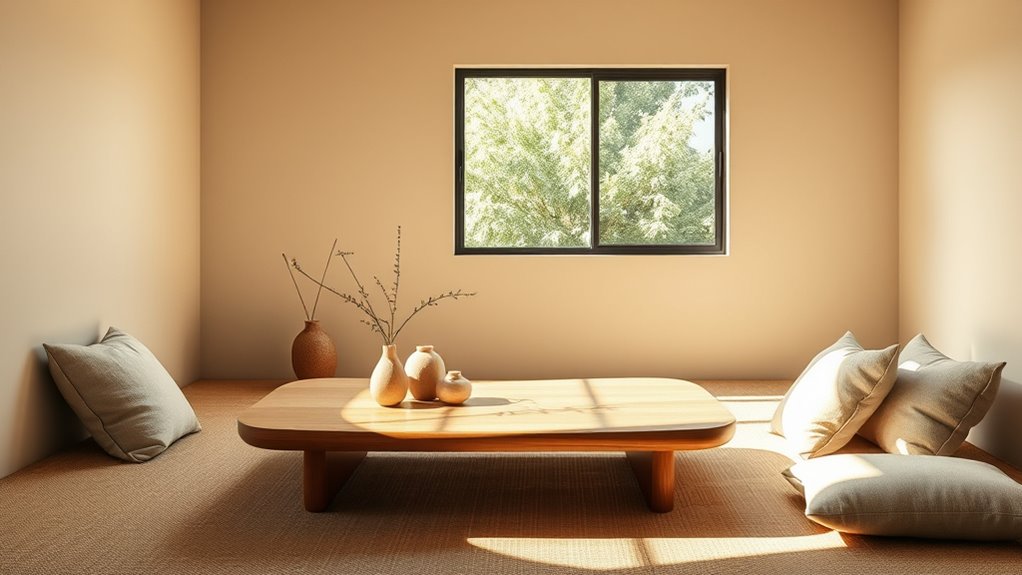
Have you ever wondered how to create a space that feels both serene and inviting? Achieving this balance is at the heart of Japandi warmth—a design philosophy that fuses the minimalist elegance of Japan with Scandinavian coziness. It’s about creating a sanctuary where simplicity meets comfort, where each element serves a purpose without sacrificing beauty. The key lies in choosing the right materials, colors, and textures that evoke calmness while inviting you to linger.
Creating a serene, inviting space through thoughtful simplicity and natural materials.
Start with a neutral palette. Soft beiges, warm greys, and muted browns form the foundation, providing a calming backdrop that feels natural and unobtrusive. These shades aren’t just visually soothing—they also reflect an appreciation for understated elegance. To add warmth, incorporate subtle touches of earthy tones like terracotta or warm wood accents. These hues evoke a sense of grounding and connection to nature, essential to the Japandi ethos. Keep your color scheme simple; too many contrasting shades can disrupt the serene flow you aim to establish.
Material selection is vital. Opt for natural, tactile surfaces that invite touch and foster comfort. Light oak or walnut furniture, with their smooth grain and warm undertones, bring a sense of refined simplicity. Pair these with soft textiles like linen or wool in cushions, throws, and rugs. These textures introduce a layer of coziness without cluttering the space. Remember, the goal is to create an environment that’s functional and calming. Clutter disrupts this harmony, so prioritize storage solutions that keep surfaces clear and maintain a streamlined appearance. Additionally, natural materials are central to creating authentic and durable Japandi interiors.
Lighting plays a pivotal role. Maximize natural light by keeping window treatments minimal and unobtrusive. When choosing artificial lighting, opt for warm, diffused sources. Paper lanterns, simple pendant lights, or sleek floor lamps with warm bulbs can soften the space, making it feel inviting. Thoughtful lighting highlights the natural beauty of your materials and creates a gentle glow that beckons you to unwind.
Finally, incorporate subtle decorative elements—plants, ceramics, or art—sparingly. They should complement the overall aesthetic without overpowering it. Greenery adds life and a touch of nature, reinforcing the Japandi connection to the outdoors. Keep decorative pieces simple, functional, and meaningful, emphasizing quality over quantity.
In essence, Japandi warmth is about crafting a space that’s streamlined yet inviting, where every detail is intentional. It invites you to slow down, breathe, and appreciate the quiet elegance of understated comfort. Creating such a space requires mindfulness and restraint, but the result is a sanctuary that feels both serene and profoundly welcoming.
Frequently Asked Questions
How Can I Incorporate Japanese and Scandinavian Art Styles?
You can incorporate Japanese and Scandinavian art styles by choosing clean, simple lines and natural materials. Opt for minimalist artwork that emphasizes balance and harmony, such as ink brush paintings or modern geometric designs. Use neutral tones with subtle accents to create a calm atmosphere. Keep your space uncluttered and functional, blending traditional Japanese motifs with Scandinavian simplicity to achieve an elegant, cohesive aesthetic that feels warm and inviting.
What Are the Best Plants for Japandi Warmth?
You should choose plants like fiddle leaf figs, snake plants, and peace lilies for Japandi warmth. These plants add a touch of nature’s simplicity and elegance, complementing the minimalist aesthetic. Opt for clean, sleek pots in neutral tones to enhance their beauty. Keep your plants healthy with proper lighting and watering, ensuring they become a subtle yet impactful part of your space, creating a warm, inviting atmosphere.
How to Balance Minimalism With Cozy Elements?
To balance minimalism with cozy elements, focus on simplicity and purpose. Choose a neutral color palette and clean lines, then add warmth through textured textiles like soft throws or rugs. Incorporate natural materials such as wood or stone for a grounded feel. Keep decor minimal but meaningful—select a few well-chosen accessories. This approach maintains elegance while creating a welcoming, comfortable space that feels both functional and inviting.
Are Sustainable Materials Important in Japandi Design?
Yes, sustainable materials are important in Japandi design. They align with the philosophy of simplicity and respect for nature, creating a harmonious space. By choosing eco-friendly woods, natural fibers, and recycled elements, you enhance the aesthetic while reducing environmental impact. This thoughtful approach adds authenticity and warmth, emphasizing quality over quantity. Incorporating sustainable materials makes your space not only beautiful but also responsible and enduring.
Can Japandi Warmth Suit Small Spaces?
Yes, Japandi warmth suits small spaces beautifully. Its minimalist, functional design creates an open, airy feel, making your space seem larger. Use warm, neutral tones and simple furnishings to add coziness without clutter. Incorporate natural materials like wood and soft textiles to enhance comfort. Focus on clean lines and strategic storage to keep your small area elegant and functional, embodying Japandi’s serene, inviting aesthetic perfectly.
Conclusion
You can effortlessly bring Japandi warmth into your space by blending sleek simplicity with cozy textures. Imagine a living room with clean lines, soft textiles, and natural wood accents—like a homeowner who added a plush throw to their minimalist sofa, instantly creating an inviting atmosphere. It’s all about balance: functional design meets subtle comfort. With mindful touches, your home becomes a serene retreat, embodying the perfect harmony of Scandinavian clarity and Japanese serenity.