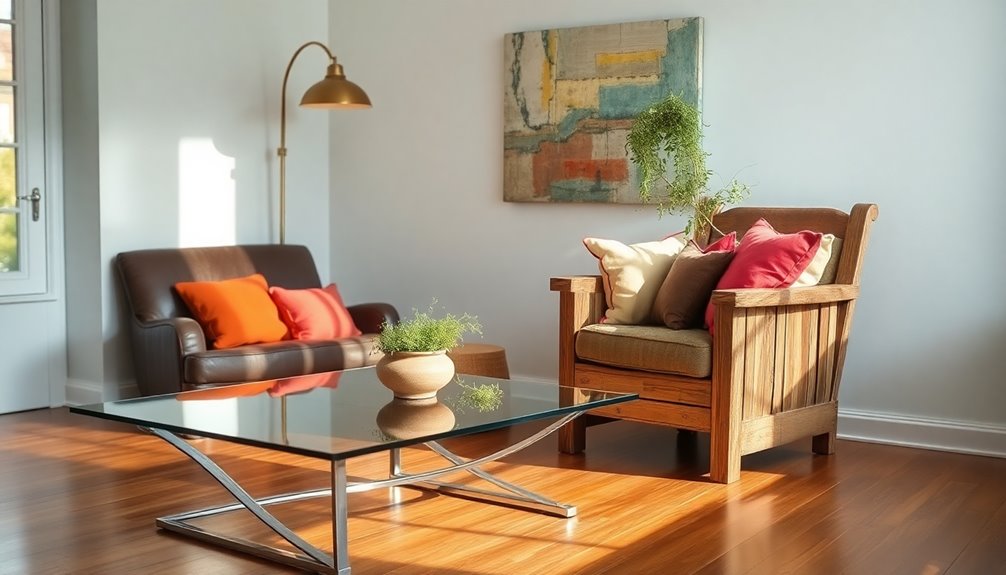
In Desert Modern design, you’ll notice the deliberate choice of materials like concrete, stone, and steel for durability and harmony with the landscape, often left exposed to showcase texture. The architecture emphasizes clean, geometric lines, with horizontal planes dominating and vertical elements punctuating the forms. Light is manipulated through large openings, overhangs, and deep-set windows, creating dynamic shadows and shifting atmospheres. To explore how these elements forge a resilient, minimalist aesthetic, keep examining these innovative principles.
Key Takeaways
- Desert Modern architecture features durable materials like concrete, steel, and stone, emphasizing texture and environmental harmony.
- It employs clean, geometric lines with horizontal dominance, complemented by vertical elements for visual interest.
- Light is manipulated through large openings, overhangs, and deep-set windows to control heat and create dynamic shadows.
- Materials and forms are designed for resilience, thermal performance, and seamless indoor-outdoor integration.
- Aesthetic principles focus on simplicity, material honesty, and linear forms that echo the landscape’s flatness and vastness.
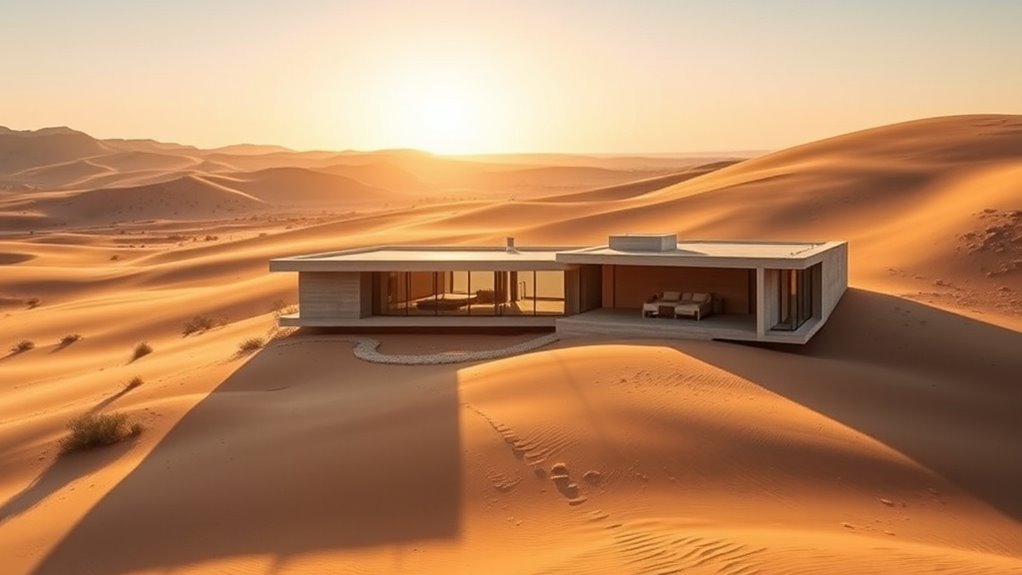
Desert Modern emerges as a compelling architectural movement that seamlessly integrates minimalist design with the stark beauty of arid landscapes. It challenges traditional notions of form and function, emphasizing harmony between built environments and their natural surroundings. At its core, this style prioritizes clarity, simplicity, and material honesty—elements that allow the landscape to speak through the architecture rather than overshadow it. You’ll find that every material, line, and use of light is purposefully chosen to enhance resilience, comfort, and aesthetic coherence amid the harsh desert climate.
Desert Modern harmonizes minimalist design with the desert’s stark beauty through material honesty and purposeful simplicity.
Materials in Desert Modern architecture are selected for their durability, thermal performance, and visual harmony with the environment. Concrete, steel, and stone dominate, offering structural robustness while blending seamlessly with the earth tones of desert terrains. These materials are often left exposed, showcasing their inherent textures and qualities. You may notice the use of rammed earth or adobe-like finishes, which not only reinforce insulation but also pay homage to traditional desert construction methods. Glass, when incorporated, is typically minimized or strategically positioned to control heat gain, with high-performance glazing that balances transparency with energy efficiency. The emphasis is always on creating a resilient shell that withstands temperature extremes and reduces reliance on mechanical systems.
Lines in Desert Modern architecture are clean, precise, and geometrically driven. Horizontal planes dominate, echoing the vast flatness of the landscape, while vertical elements punctuate the horizontality with deliberate purpose. You’ll observe that the architecture employs long, uninterrupted lines that draw your eye outward, establishing a visual dialogue between interior space and the expansive environment. These lines serve more than aesthetic functions—they optimize aerodynamics and wind resistance, and they facilitate seamless indoor-outdoor transitions. Flat roofs, cantilevered forms, and overhangs are commonplace, providing shade and protecting the interiors from intense desert sun without compromising the minimalist aesthetic.
Light plays an essential, almost sculptural role in Desert Modern design. You’re encouraged to notice how natural sunlight is manipulated through orientation and architectural features. Large, strategically placed openings allow for daylight penetration that minimizes artificial lighting needs during the day. Overhangs and deep-set windows filter harsh sunlight, casting dynamic shadows that animate the space and emphasize the linear qualities of the architecture. This deliberate control of light not only reduces energy consumption but also enhances the sensory experience, creating atmospheres that shift with the sun’s movement. In Desert Modern, light becomes an active participant in shaping spatial perception, elevating simplicity into a sophisticated interplay of shadow, form, and materiality.
Frequently Asked Questions
How Does Desert Climate Influence Material Selection?
The desert climate pushes you to select materials that withstand extreme temperatures and minimize heat transfer. You opt for thick, insulating walls, reflective surfaces, and durable, low-maintenance finishes that resist sun damage and sand intrusion. These choices help you maintain comfortable indoor conditions while reducing energy use. By integrating natural, breathable materials, you enhance ventilation and embrace the environment’s harsh yet beautiful characteristics, creating sustainable, resilient desert architecture.
What Are Key Design Principles of Desert Modern Architecture?
You should focus on simplicity, harmony with the environment, and climate responsiveness. Embrace clean lines and open spaces that maximize natural light while minimizing heat gain. Use local, durable materials that resist desert conditions, and incorporate passive cooling techniques. This approach not only reduces energy use but also creates a seamless connection with the landscape. By prioritizing sustainability and minimalism, you craft architecture that’s both functional and aesthetically compelling in desert settings.
How Does Natural Light Shape Interior Spaces?
Natural light transforms your interior spaces by enhancing spatial perception and emphasizing architectural details. It creates dynamic shadows, highlighting textures and materials, while guiding your eye through the design. You can manipulate light with strategic placement of windows, skylights, and open layouts to maximize daylight. This interplay fosters a sense of openness and connection to the environment, making your space feel more vibrant, alive, and intimately tied to its desert surroundings.
Are Sustainable Materials Used in Desert Modern Buildings?
Yes, sustainable materials are integral to desert modern buildings. You’ll find recycled concrete, reclaimed wood, and eco-friendly insulation used to minimize environmental impact. These choices not only reduce resource consumption but also enhance thermal efficiency, making structures more resilient against desert heat. By prioritizing sustainability, you create innovative designs that respect the environment while maintaining the sleek, functional aesthetic characteristic of desert modern architecture.
What Maintenance Challenges Are Unique to Desert Modern Homes?
You face the challenge of managing dust’s quiet persistence on sleek surfaces and ensuring that sun exposure doesn’t subtly wear down finishes. Regularly inspecting and sealing materials helps prevent thermal expansion and contraction from temperature swings. Wind-driven debris can cause minor surface abrasions, so proactive cleaning is essential. To preserve the aesthetic, you must balance routine maintenance with innovative solutions, keeping your home resilient amid the harsh beauty of the desert environment.
Conclusion
As you embrace Desert Modern’s innovative use of materials, lines, and light, remember that over 60% of desert dwellings now prioritize sustainable design. This shift not only reduces environmental impact but also elevates aesthetic simplicity and functionality. The style’s precise, analytical approach transforms barren landscapes into inspiring spaces, proving that thoughtful architecture can redefine even the harshest environments. Embrace this movement and see how modern design continues to push boundaries, blending nature’s raw beauty with human ingenuity.