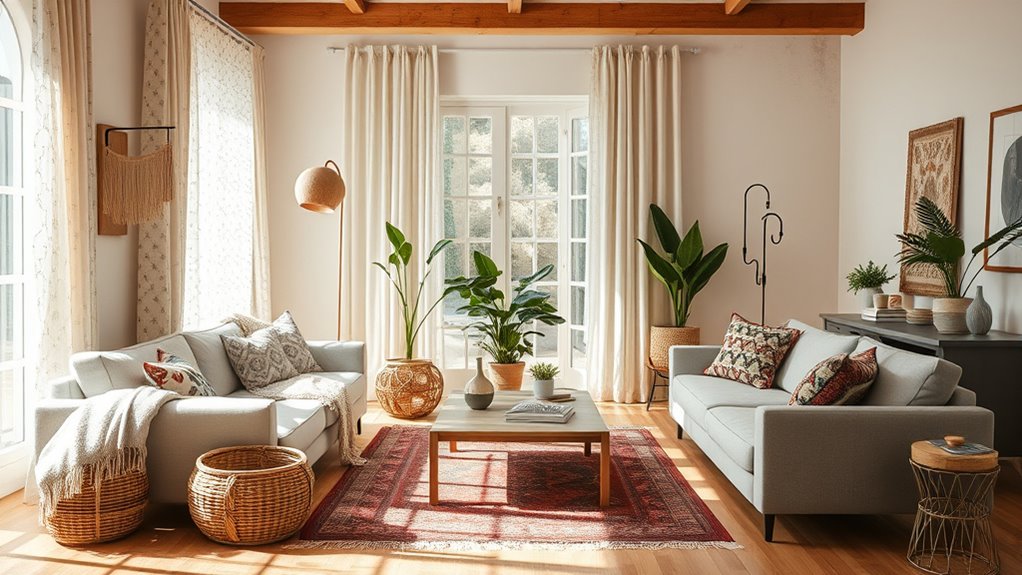

To shift from a bohemian to a curated style, focus on editing with intention. Be deliberate in your choices by asking if each item adds value or distracts from your overall vision. Reduce clutter and prioritize purpose over abundance, creating clarity and coherence. Trust your judgment to remove what doesn’t serve your authentic expression. If you adopt this mindful approach, you’ll craft spaces that reflect style and purpose—discover the details that make this shift just right.
Key Takeaways
- Focus on purpose by evaluating each element’s contribution to your overall aesthetic and removing what distracts.
- Ask if each piece adds value or enhances your space, fostering a more intentional and cohesive look.
- Shift from an eclectic, layered approach to a curated style by deliberately selecting meaningful items.
- Emphasize clarity by trimming excess, allowing your authentic voice and unique personality to shine through.
- Prioritize quality and intentional choices over quantity to create refined, expressive spaces that reflect your true style.

Editing with intention means approaching your work with a clear purpose and focused mindfulness. When you edit this way, every decision you make aligns with your ultimate goal, whether it’s refining a personal style or creating a polished presentation. Instead of rushing, you scrutinize each element, asking yourself if it serves the overall vision. This deliberate process sharpens your focus and ensures that your work is intentional, not accidental. It’s about stepping back and evaluating whether each piece contributes meaningfully or if it distracts from your core message. With this mindset, you move beyond superficial adjustments and explore the essence of your work, cultivating clarity and coherence.
Approach your work with purpose and mindfulness to create intentional, cohesive, and meaningful results.
Transitioning from a bohemian aesthetic to a curated one requires a conscious effort to refine your choices. The bohemian style often embraces an eclectic, layered approach—mixing textures, patterns, and colors freely. While expressive, it can sometimes become overwhelming or lack cohesion. To shift toward a curated aesthetic, you must be selective, choosing each piece with purpose. Ask yourself: does this item add value or distract? Does it fit within the story you want to tell? By focusing on intention, you start to pare down excess, favoring quality over quantity. This doesn’t mean losing personality; it means channeling it more thoughtfully. Every piece you keep or add should resonate with your evolving vision, creating a cohesive narrative that reflects your authentic style while maintaining a sense of refined balance.
Clarity emerges when you eliminate clutter and make deliberate choices. Editing with intention involves a critical eye that discerns what enhances your work and what detracts. This process might mean removing elements that feel out of place or unnecessary, even if they once seemed essential. It’s about trusting your judgment and being honest with yourself. As you curate your space or style, you develop a sense of precision that guides future decisions. This intentional editing also fosters confidence—knowing that every detail has been deliberately chosen. Over time, this practice transforms your approach from impulsive to deliberate, empowering you to craft environments and aesthetics that genuinely reflect your refined tastes. Recognizing the importance of unique and wicked planters can help you select statement pieces that elevate your space with creativity and purpose.
Ultimately, editing with intention is an act of self-awareness and discipline. It’s recognizing that less is often more and that every choice shapes your story. Moving from bohemian to curated isn’t about perfection but about purpose. It’s about trimming the excess, sharpening your focus, and allowing your authentic voice to emerge clearly. When you approach your work with intention, you create a space that’s both expressive and refined—an environment that truly speaks to who you are and what you value.
Frequently Asked Questions
How Can I Identify My Personal Editing Style?
To identify your personal editing style, start by examining your favorite images and noting common elements like color palettes, compositions, or mood. Pay attention to what resonates with you and feels authentic. Experiment with different editing techniques, then reflect on what consistently appeals to your eye. Over time, you’ll notice patterns that reveal your unique style, allowing you to refine your edits with intention and confidence.
What Tools Are Best for Digital Editing?
Like a painter with a palette, you should choose tools that give you control. Adobe Lightroom and Photoshop are top choices, offering precise adjustments and versatile features. Capture One is excellent for color grading, while DxO PhotoLab simplifies noise reduction. These tools empower you to craft intentional edits, sharpening your vision and style. Invest time learning their features, so your edits become deliberate expressions of your artistic voice.
How Do I Balance Trendiness With Timelessness?
To balance trendiness with timelessness, you should choose statement pieces that reflect current styles but have classic appeal. Limit trendy items to accent pieces rather than core wardrobe staples. Focus on quality and versatile silhouettes that won’t go out of style quickly. Regularly evaluate your wardrobe, removing fleeting trends and emphasizing items that can be styled in various ways over time. This approach keeps your look fresh yet enduring.
What Are Common Mistakes to Avoid During Editing?
Avoid over-editing your work; it can strip authenticity and make your content feel artificial. Don’t rely solely on trends; guarantee your edits enhance your unique voice. Ignoring clarity or flow can confuse your audience, so review your work carefully. Also, avoid inconsistent style choices that distract or detract from your message. Stay intentional, focus on purpose, and balance creativity with coherence to create polished, authentic content.
How Can I Maintain Authenticity While Curating?
Think of your authenticity as a guiding star, shining through every choice you make. To stay genuine while curating, trust your instincts and select pieces that truly resonate with your personality. Avoid trends that don’t feel right and focus on quality over quantity. Be intentional with your edits, ensuring each item reflects your unique style. This way, your curated space remains authentic, a true mirror of your essence.
Conclusion
Remember, editing is like sculpting a masterpiece—you carve away the excess to reveal the essence. When you choose each piece deliberately, your vision comes into focus, much like a painter refining a canvas. A study shows that curated content resonates more deeply with audiences. So, embrace intentional editing; it’s your tool to create authenticity and clarity. Just as a skilled artisan transforms raw material into art, intentional editing shapes your story into something truly impactful.