
TL;DR

Get furniture and decor delivered free with Prime
- Fast, free delivery on millions of items
- Prime Video, Amazon Music and more included
- Member-only deals all year
Spooky Halloween table decor works best when you choose one mood, layer a runner, place settings, and a compact centerpiece, then add a few contrasting textures and warm light. Keep serving space clear, keep decorations away from uncovered food, and use battery candles when fabric, foliage, children, or pets make open flames a concern.
A dinner table can go from everyday to eerie with one dark runner, a crooked branch, and the soft flicker of a battery candle. You don’t need a room full of props; a few deliberate choices can make guests feel the Halloween mood before the first dish hits the table.
This guide shows you how to choose a style, build the table in layers, pick a centerpiece that leaves room for dinner, and add spooky details safely. Whether you’re hosting children in bright orange or planning a candlelit gothic supper, you can make the table feel like yours.
Choose one mood and a limited palette, such as black and ivory or purple and orange.
Build the table from a runner to place settings, then add one compact centerpiece and a few accents.
Use a tray to move centerpiece objects quickly when serving dishes need the space.
Keep faux cobwebs and other loose decor away from uncovered food; choose battery candles around children, pets, or combustible materials.
Reuse textiles, jars, and glassware, then add one inexpensive handmade detail such as a painted pumpkin or name card.
Choose a Halloween mood before you buy anything
Spooky Halloween table decor looks intentional when you choose one mood and repeat its colors, textures, and motifs across the table. A palette does more than make objects match: it gives the eye a path through the scene, so guests notice the focal point instead of registering a jumble of unrelated props. Try gothic black and ivory, playful purple and orange, or natural dark green and brass, then treat each new decoration as a choice that should support that mood.
For an elegant dinner, start with a black runner, ivory plates, and a few brass accents. A small skull or burgundy napkins can supply the eerie note without turning the table into a costume shop. If children are joining, friendly ghost napkins and smiling pumpkins bring Halloween to the table without making it frightening. These choices also set expectations: playful colors signal a relaxed, family-friendly gathering, while restrained dark tones make the meal feel more formal.
Halloween falls on October 31, but decorating habits vary from home to home and country to country. Think about your guests and meal first: a family pizza night can handle cartoon bats, while a quiet dinner may call for glass, dark linens, and one restrained centerpiece. Starting with the occasion helps you spend on details that will be noticed and avoid decorations that create the wrong mood or get in the way once dinner is served.
Layer the table so it feels full, not crowded
Spooky Halloween table decor gains depth when you build from a broad base to smaller details: lay down a cloth or runner, add place settings, then arrange a centerpiece and a few accents. The order matters because each layer establishes a scale for the next. A runner gives small objects a defined area; place settings show how much usable space remains; only then can you judge how large a centerpiece the table can handle. Skipping that check often leaves a table that looks good before the meal but has nowhere for serving dishes to go.
Try a charcoal runner over a plain white tablecloth, matte black plates, and gauze tucked loosely beneath a tray. Add glass jars or a small pumpkin at the center, then stop before the decorations squeeze out serving dishes. Texture does a lot of the work: smooth glass beside wrinkled fabric and rough gourds gives the eye something to explore. Repeating a few textures also keeps the effect cohesive, while adding too many competing surfaces can make the table feel busy even when it holds few objects.
For a simple setup, use these steps:
- Set the base: Choose a tablecloth or runner that supports your palette. A full cloth softens the whole table; a runner leaves more of the tabletop visible and uses less fabric.
- Place the settings: Leave enough room for plates, glasses, and elbows. This is the practical test of the layout: if guests have to shift decorations to sit or eat, the table is already too full.
- Add one focal point: Group a few objects on a tray or low platter. A contained arrangement looks deliberate and can be moved quickly if serving space becomes more important.
- Finish sparingly: Add coordinated napkins or place cards, then clear anything that blocks dinner. These small details help the table feel complete without taking space needed for the meal.
A thrifted glass bottle and a fabric runner can look more personal than a cart full of matching plastic decorations, and you can bring both out again next year. Reusable pieces also let you change the mood with a small seasonal accent instead of replacing the whole setup.
Pick a centerpiece guests can see around
Spooky Halloween table decor needs a centerpiece that sets the scene while leaving sightlines and serving space open. A centerpiece competes for the table’s most valuable shared space, so its size and height affect how easily people talk, reach food, and pass dishes. For a dining table, keep tall arrangements narrow and move them off the table when the main dishes arrive; guests should be able to see the person across from them, not peer around a branch forest.
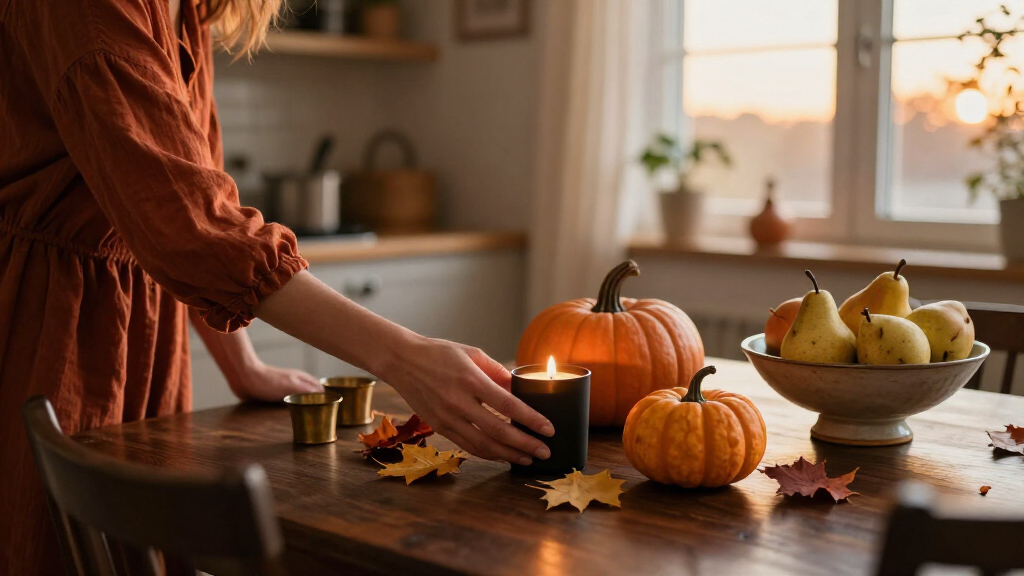
Group a few small pumpkins, potion-style bottles, or a skull on a tray so the whole arrangement can move in one lift. Bare branches in a sturdy vase add height at the end of a buffet, where they create drama without interrupting conversation, while low pumpkins and battery candles suit a table where people will be talking. The tray becomes a little stage, and each object gets its own place. Limiting the group to a few pieces makes each one easier to notice and keeps the arrangement simple to clear when the meal needs room.
For example, a family serving roast vegetables and bread might set three miniature gourds on a tray beside a glass jar of LED lights. When food comes out, one person can carry the arrangement to a sideboard. That small bit of planning turns a pretty table into a useful one: the decorations contribute atmosphere during arrival, then give way to the meal without requiring the host to dismantle the scene piece by piece.
Use lighting and texture to make the room feel eerie
Spooky Halloween table decor feels atmospheric when gentle light meets contrasting surfaces. Battery candles, warm string lights, and dimmed room lighting cast a soft glow across glass, gauze, velvet, and metallic accents; together, they make even a plain jar look like it holds a secret. The effect comes from contrast: low, warm light draws attention to shape and texture, while a bright overhead light tends to flatten those details. Keep enough general light for guests to see their food and move safely, especially if people will be passing dishes.
Try two or three battery candles among dark green branches, with a brass-toned bowl catching the light. Matte black absorbs it, while glass sends it back in little flashes. That contrast can make a simple pumpkin arrangement feel like a still from a ghost story. More lights do not necessarily make a stronger scene; too many bright points can compete with conversation and distract from the meal, so concentrate them around one focal area.
Real candles can add a familiar flame, but place them in stable holders and keep them well away from fabric, dried foliage, paper, and hanging decorations. Never leave a burning candle unattended. Around children, pets, or a crowded meal, LED candles offer the flickering look without an open flame. The tradeoff is straightforward: real flames provide natural movement and warmth, while battery candles reduce fire risk and are easier to use near decorations or during a busy dinner.
Let light set the mood, but keep the flame clear of anything that can burn.
Keep food, guests, and decorations safely apart
Spooky Halloween table decor should leave uncovered food and serving areas free from loose fibers, fragile props, and sharp edges. This protects the meal and makes serving less awkward: people need clear places to set platters, reach utensils, and pass food without brushing decorations. Keep artificial cobwebs away from food, and never put decorative materials directly on plates unless they’re labeled safe for food contact.
Imagine passing a bowl of mashed potatoes through a cloud of faux webbing: it may look theatrical, but fibers can drift onto dinner. Instead, confine cobwebs to a mantel or a sideboard. Use a clear section of table for serving utensils and platters, and move delicate glass props out of reach of little hands. Keeping themed decorations in separate areas lets them frame the meal without becoming part of it.
If children will sit at the table, choose sturdy, shatter-resistant decorations and skip small pieces that could become choking hazards. Keep cords and flames out of reach. These choices don’t flatten the fun; they give everyone room to enjoy the meal without worrying about a toppled skull or a hot candle. The right level of caution depends on who is attending: a quiet adult dinner may allow fragile accents, while a lively family gathering calls for pieces that can withstand curious hands and accidental bumps.
Make a memorable table without buying a cartload of decor
Spooky Halloween table decor can stay budget-friendly when you reuse what you own and spend effort on one focal point. A runner from another season, a thrifted bottle, and a pumpkin painted at home can look coordinated once you repeat one color in the napkins or place cards. Concentrating effort on a few visible pieces usually has more impact than spreading a small budget across many unrelated decorations.
Use a glass jar as a potion bottle by adding a handmade label, or arrange branches from your yard in a vase. Real pumpkins and gourds add seasonal color and texture; faux ones store easily and return each year. Fresh natural materials offer variation and a seasonal feel, but they can wilt, shed, or need replacing. Reusable fabric, thrifted glassware, and borrowed props cut down on single-use decorations without stripping away the atmosphere.
If you’re hosting a small dinner, write each guest’s name on a folded paper card and tuck it beside a napkin. That inexpensive touch makes the place setting feel personal, like each chair has been saved for a character in the evening’s story. It also gives you a chance to coordinate guests’ places with the layout, so the most fragile props or busiest parts of the table are not placed where they will be bumped most often.
Set the table early and finish it close to dinner
Spooky Halloween table decor is easier to manage when you set out durable pieces in advance and add fresh or perishable items shortly before guests arrive. Preparing in stages reduces last-minute work, but it also helps you notice practical problems before the table is occupied: a runner can be shifted, a centerpiece lowered, or space reserved for a serving dish while there is still time to adjust.
For instance, set the runner, napkins, and empty jars the night before a party. On October 31, add fresh flowers or seasonal food near serving time, check that candles sit securely, and clear a path for the main dishes. A quick final pass helps you spot anything that blocks a glass or sits too close to a flame. Saving perishable pieces for later keeps them fresh and means you can make the final layout fit the food you’re actually serving.
Keep a tray nearby if you expect to move the centerpiece. One lift clears the table, and after dinner you can return the arrangement to the center for dessert or photos. Planning for that change lets the table shift from decoration to dining and back again without making the host rebuild the whole scene.
Frequently Asked Questions
How do I decorate a Halloween table on a budget?
Start with a runner or cloth you already own, then add one focal point and a few small accents. A painted pumpkin, a labeled jar, and handmade paper place cards can make the table feel planned without much spending.
What colors work well for a Halloween tablescape?
Black and orange give you a classic look. For a softer or more refined mood, try black and ivory, purple and green, or burgundy and gold, and repeat the colors across the runner, napkins, and centerpiece.
What makes a good Halloween centerpiece?
A good centerpiece fits the table and leaves guests room to see each other and pass dishes. Try a low pumpkin arrangement, a candle cluster, or a themed tray you can move in one lift.
Can I use real candles on a Halloween table?
Yes, if you use stable holders, keep flames well away from linens, paper, dried foliage, and hanging decor, and never leave them unattended. Battery candles are a practical choice around children, pets, or a busy meal.
How can I make Halloween decor safer for children?
Choose friendly motifs, sturdy shatter-resistant decorations, and battery-powered lights. Keep small loose pieces, sharp props, cords, and open flames away from children, and leave clear space for food.
Conclusion
Choose a clear mood, give it a runner and one centerpiece, then leave enough room for dinner and conversation. A few well-chosen details can turn an ordinary table into the coziest haunted corner of your home.
Halloween Picks
halloween
As an affiliate, we earn on qualifying purchases.