Choosing between open shelves and closed storage for your pantry depends on your style and daily needs. Open shelves create a vibrant, personalized look by showcasing colorful jars and décor, making items easily accessible for quick access. Closed cabinets offer a sleek, minimalist feel, hiding clutter and maintaining a clean, organized appearance. Both options can be tailored to reflect your aesthetic preferences, and exploring these choices further will reveal how to optimize your space effectively.
Key Takeaways
- Open shelves enhance aesthetic appeal and accessibility but require regular tidying to maintain visual order.
- Closed storage provides a sleek, clutter-free look and hides less attractive items for a streamlined appearance.
- Open pantries showcase decorative jars and accessories, adding personality, while closed options support minimalist designs.
- Accessibility favors open shelves for quick item retrieval, whereas closed cabinets may involve more effort to access supplies.
- The choice depends on balancing style preferences, maintenance willingness, and organizational needs.

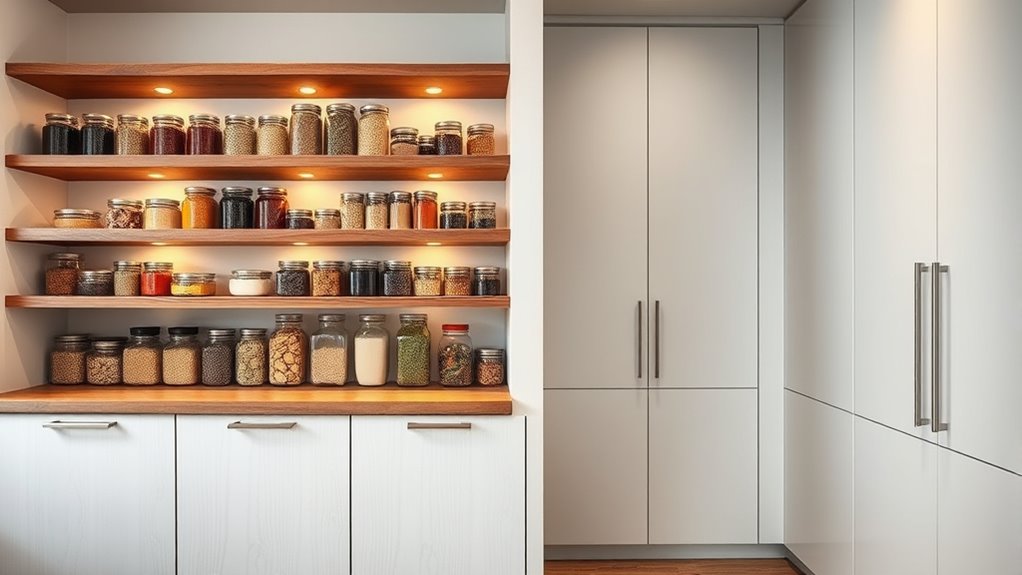
When designing a pantry, choosing between open shelves and closed storage can considerably influence both the functionality and aesthetic of your space. The decision hinges on how you intend to use the area, your style preferences, and the atmosphere you want to create. Open shelves invite you to display your collection of jars, cookbooks, and decorative elements, creating a lively, personalized vibe. You’ll find that with open shelving, accessibility becomes effortless—grab what you need without opening doors or rummaging through cluttered cabinets. The visual appeal is immediate: uniform, well-organized stacks of colorful cans, neatly labeled glass jars, and curated decorative pieces can transform your pantry into a focal point of your kitchen. However, this requires a consistent level of tidiness; cluttered shelves quickly diminish the aesthetic and make the space feel chaotic. You’ll need to dedicate time to keep everything visually appealing and orderly, which can be both a benefit and a challenge.
On the other hand, closed storage offers a sleek, minimalist look that emphasizes cleanliness and order. When you opt for cabinets or enclosed units, you hide away less attractive items and prevent dust or spills from accumulating on your supplies. This choice allows you to keep everyday essentials—like bulk packages, appliances, or less visually appealing items—out of sight, creating a streamlined appearance. The downside is that access becomes slightly less intuitive; you’ll have to open doors or drawers, which might slow down your routine. Still, with well-designed cabinetry, you can incorporate soft-close mechanisms and clever organizers inside to maximize efficiency and ease of use. Closed storage also gives you the flexibility to customize the interior with pull-out trays, baskets, or dividers, letting you tailor the space to your exact needs without sacrificing style. Additionally, understanding the various storage options, such as self-watering planters, can inspire innovative ways to keep your pantry organized and functional.
Ultimately, your choice should reflect your lifestyle and aesthetic preferences. If you love showcasing your curated collection and don’t mind maintaining tidiness, open shelves could be the perfect fit. But if you prioritize a sleek, uncluttered look with hidden storage that keeps your space looking pristine, then closed cabinetry will serve you better. Both options can be beautifully integrated into your kitchen design, offering different advantages that support your daily routines. When you pay close attention to the details—such as the materials, finishes, and organization tools—you ensure your pantry becomes not just a storage area but a thoughtfully curated extension of your home’s style. Whether open or closed, your pantry’s success lies in aligning its design with how you use and envision your space, making it both practical and visually compelling.
Top picks for "pantry open shelv"
Open Amazon search results for this keyword.
As an affiliate, we earn on qualifying purchases.
Frequently Asked Questions
Which Pantry Type Is More Budget-Friendly to Install?
Open shelves are more budget-friendly to install because they require fewer materials and simpler construction. You can often reuse existing furniture or build DIY solutions, cutting costs considerably. Closed storage units, like cabinets with doors, involve additional hardware, doors, and more complex installation, increasing expenses. If you want an aesthetic yet economical option, open shelves let you showcase your items while saving money on installation.
How Do Open Shelves Impact Pantry Cleanliness and Maintenance?
Open shelves make your pantry more visually inviting but require regular cleaning to stay tidy. Dust and crumbs settle easily, so you’ll need to wipe surfaces often and organize contents to prevent clutter. Clear containers help maintain cleanliness and add aesthetic appeal. While they make access simple and display your neatly arranged items, staying on top of dust and spills ensures your pantry remains inviting and hygienic.
Are There Specific Pantry Styles That Suit Small Kitchens Better?
In a small kitchen, a vertical pantry acts like a compact closet, maximizing every inch. Slim, pull-out cabinets and open shelving create an airy feel, making your space seem larger and more organized. You’ll love the ease of access and visual appeal, turning storage into a decorative feature. Opt for light colors and sleek designs to keep the area bright and inviting, transforming tight quarters into a functional, stylish haven.
Can Open Shelves Improve Kitchen Organization Compared to Closed Storage?
Open shelves can boost your kitchen’s organization by making frequently used items easily accessible and visually appealing. You’ll find it easier to see what’s available at a glance, streamlining your cooking process. However, to keep them tidy, you’ll need to regularly tidy up and choose attractive storage solutions. This style adds a modern, airy feel, encouraging you to curate a stylish, functional space that reflects your personality.
What Are the Best Materials for Durable Pantry Shelving Options?
You should opt for stainless steel, solid wood, or high-quality melamine for durable pantry shelving. Stainless steel resists moisture and corrosion, guaranteeing longevity in humid environments. Solid wood offers natural beauty and robustness, especially when properly sealed. Melamine shelves are lightweight yet sturdy, with a smooth finish that’s easy to clean. Whichever you choose, make sure the material can withstand weight, humidity, and daily use, keeping your pantry organized and stylish.
Conclusion
Ultimately, choosing between open shelves and closed storage boils down to your personal style and organizational needs. Open shelves transform your pantry into a visual feast, turning everyday essentials into artful displays, while closed cabinets offer a sanctuary of clutter-free serenity. Whichever you select, remember that your pantry’s design shapes your daily rhythm—making it feel like a well-orchestrated symphony rather than chaos. With thoughtful curation, your pantry becomes a sanctuary as harmonious as a masterpiece.