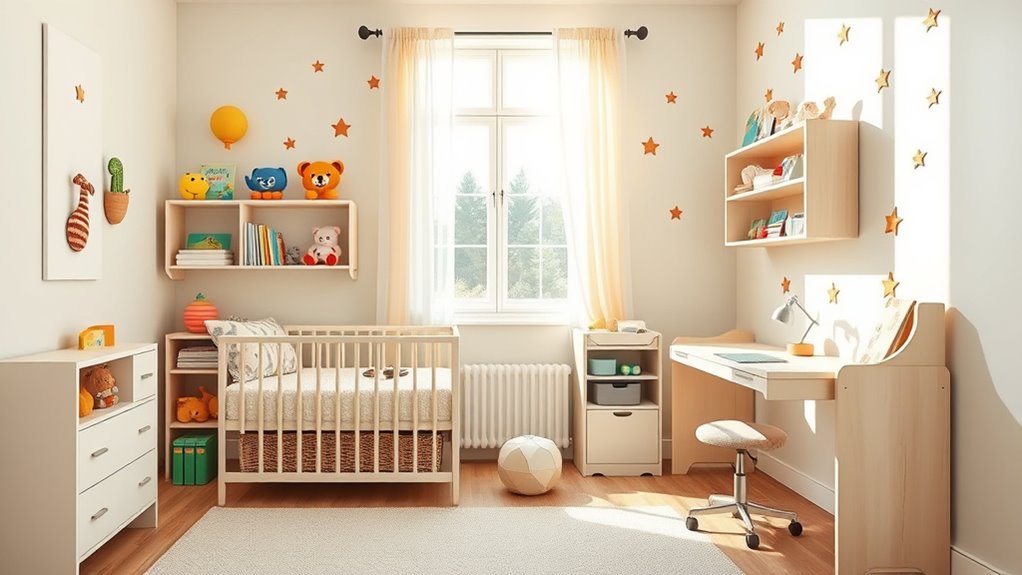
To create a kid room that grows with your child, focus on flexible layouts and versatile furniture. Choose neutral colors and classic pieces that can easily be updated with accessories or new decor. Incorporate adjustable desks, convertible beds, and modular storage to adapt as your child develops. Position furniture to maximize space and designate zones for play, sleep, and study. If you want practical tips on designing a lasting, adaptable space, keep exploring these ideas.
Key Takeaways
- Use versatile, convertible furniture like cribs that transition to toddler and full beds for long-term use.
- Design neutral, adaptable color schemes and decor that can be refreshed with accessories over time.
- Create flexible layouts that maximize open space and include multi-purpose furniture for different needs.
- Incorporate modular storage solutions to easily update organization as your child grows.
- Plan zones for play, study, and sleep to support developmental changes and foster independence.
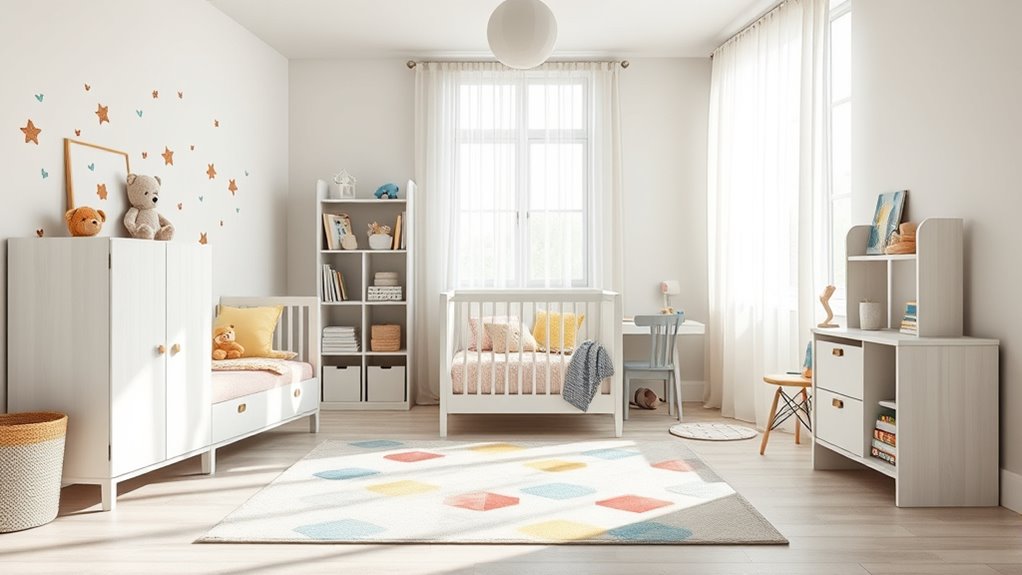
Have you ever wondered how to create a kid’s room that’s both fun and functional? The key lies in designing a space that adapts as your child grows, saving you time and money while supporting their development. Grow-with-me layouts focus on flexibility, allowing you to transform the room easily to keep pace with changing needs, interests, and sizes. Starting with a neutral foundation, such as versatile furniture and adaptable layouts, sets the stage for a space that can evolve over years. Instead of committing to specific themes or colors that may quickly go out of style, opt for timeless elements like neutral walls or classic furniture pieces that can be personalized with accessories and decor. This approach gives you the freedom to change the look without starting from scratch.
Design a flexible, neutral kid’s room that adapts easily as your child grows.
Furniture choices play a critical role in creating a grow-with-me room. Invest in a sturdy crib that transitions into a toddler bed, then into a full-sized bed, or choose a convertible piece that adapts as your child ages. Similarly, desks and storage units should be modular and adjustable. A desk with height-adjustable features allows your child to work comfortably as they grow, and versatile storage options like open shelving or modular cubbies can be reconfigured to suit different needs. Keep in mind that investing in quality, durable furniture ensures it will withstand years of use, making it a practical choice for long-term planning. Additionally, selecting convertible furniture can further enhance the room’s adaptability.
Color schemes and decor should also be chosen with growth in mind. Neutral tones or subtle patterns provide a calming backdrop that can be easily updated with new accessories, wall decals, or artwork. As your child’s preferences change, you can add personality through removable wallpaper, framed art, or themed accessories without overhauling the entire room. This flexibility not only saves money but also encourages your child’s independence in personalizing their space, fostering a sense of ownership and creativity.
Lastly, consider the layout for adaptability. Position furniture to maximize open space, making it easier to rearrange as needed. Incorporate multi-purpose pieces, like a bed with built-in drawers or a fold-out sofa, to maximize functionality without clutter. Creating zones within the room—such as a dedicated play area, study corner, and sleeping space—helps your child develop routines and keeps the room organized as they grow. By focusing on adaptable furniture, neutral bases, and flexible layouts, you can craft a kid’s room that seamlessly transitions through childhood stages, providing both comfort and practicality at every age.

Dream On Me Synergy 5-in-1 Convertible Full-Size Baby Crib with Toddler, Day & Full Bed Conversion in White, GreenGuard Gold & BSA, 3 Mattress Heights, Sustainable Pinewood
5-in-1 Convertible Crib – The Synergy grows with your child, transforming from a baby crib (mattress sold separately)…
As an affiliate, we earn on qualifying purchases.
As an affiliate, we earn on qualifying purchases.
Frequently Asked Questions
How Can I Maximize Small Kid Room Space Effectively?
To maximize small kid room space, you should prioritize multifunctional furniture like beds with storage drawers or desks that double as play areas. Use vertical space by installing shelves and hooks for toys and books. Keep clutter minimal by organizing regularly and choosing slim furniture pieces. Incorporate adaptable layouts that can evolve as your child grows, ensuring the room remains functional and inviting without feeling cramped.
What Safety Features Are Essential in Grow-With-Me Rooms?
Imagine you’re a modern-day explorer, and safety is your compass. In grow-with-me rooms, you’ll want to install outlet covers, secure furniture to walls, and use cordless window coverings. Keep small objects out of reach and choose non-toxic, durable materials that grow with your child. Regularly check for hazards and guarantee sharp edges are softened. These steps create a safe, adaptable space where your child can thrive and explore confidently.
Which Materials Are Safest for Children’s Furniture?
You should choose furniture made from non-toxic, low-VOC paints and finishes to guarantee safety. Solid wood or sustainably sourced materials are ideal, as they’re durable and free from harmful chemicals. Avoid particleboard or MDF with formaldehyde emissions. Check for certifications like Greenguard or FSC, which guarantee safer, eco-friendly materials. Prioritize rounded edges and smooth surfaces to prevent injuries, creating a safe environment as your kid grows.
How Often Should I Update the Room Layout as They Grow?
You should update your child’s room layout roughly every 1 to 2 years, or whenever they experience a significant growth spurt or change in interests. Regular updates guarantee the space remains safe, functional, and stimulating. Keep an eye on their development and preferences, and adapt furniture and organization accordingly. Flexibility is key, so choose adjustable pieces and versatile layouts to grow with your child and make shifts seamless.
What Are Budget-Friendly Ideas for Versatile Kid Room Decor?
You can keep decor budget-friendly and versatile by choosing neutral paint colors and simple furniture that grows with your child. Add fun, inexpensive accessories like themed bedding, wall decals, or adaptable storage solutions. Reusing or repurposing items conserves money and encourages creativity. Swap out or rearrange decor as they grow, making the space feel fresh without major expenses. This approach ensures your child’s room remains functional and engaging over time.

COSVALVE Adjustable Kids Desk with Hutch and Drawers, 47" Wide Multifunction Ergonomic Study Table, with Two Storage Drawer, Tilt Desktop, Height Adjust for Home or School Use, for Girls Boys (Grey)
Adjustable Height: The desk is designed with an adjustable height feature, allowing it to grow with your child….
As an affiliate, we earn on qualifying purchases.
As an affiliate, we earn on qualifying purchases.
Conclusion
Designing a grow-with-me kid’s room is like planting a seed that blooms over time. Just as a sturdy root system supports a thriving plant, flexible layouts nurture your child’s development and changing needs. When you create adaptable spaces, you’re giving them room to grow, explore, and flourish. Think of it as building a foundation for endless possibilities—because with the right setup, your child’s room can evolve as beautifully as they do.

Neprock 16 Cubby Storage Organizer, Closet Clothes Storage Organizer, Cube Shelves Closet Organizers and Storage Shelves for Clothing Storage with Hammer, Bookshelf for Kids(Black)
Large Capacity: Featuring 16 spacious cubes (each 11.8" x 11.8" x 11.8"), this cube storage organizer boasts ample…
As an affiliate, we earn on qualifying purchases.
As an affiliate, we earn on qualifying purchases.

Children's Factory As We Grow Chair and Couch, Flexible Seating for Daycare or Preschool, Kids Reading Couch, Playroom Furniture, Sage
COMFY KIDS CHAIR AND SOFA: This soft, vegan leather kids chair and sofa set is the perfect comfy…
As an affiliate, we earn on qualifying purchases.
As an affiliate, we earn on qualifying purchases.