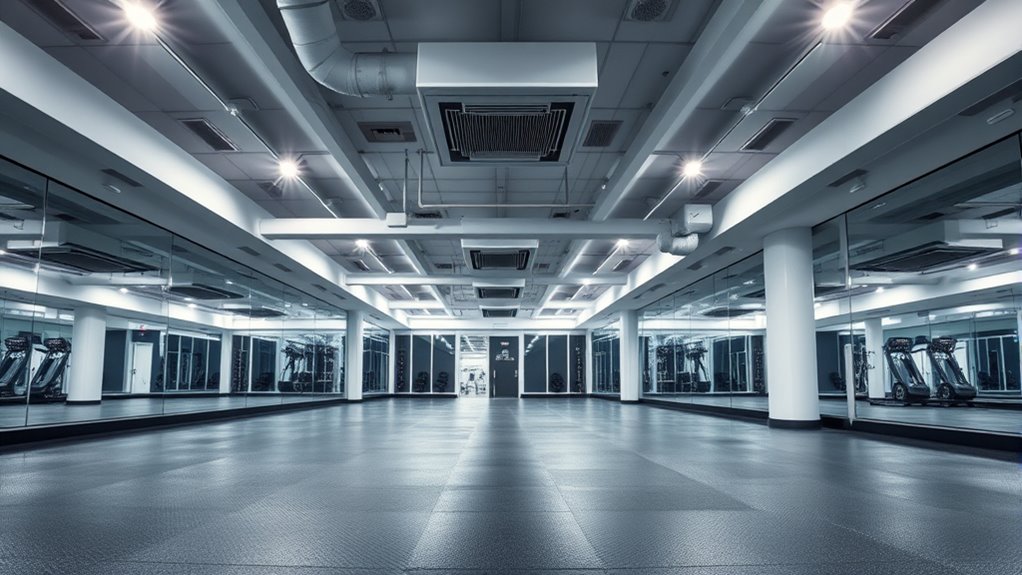
To optimize your gym environment, select durable flooring like rubber for weightlifting areas to reduce damage and joint stress, while foam tiles work well for cardio zones to minimize fatigue. Strategically position large mirrors at eye level to promote safety and motivation, ensuring secure mounting and glare-resistant finishes. Implement an efficient airflow system with properly sized HVAC units, exhaust fans, and well-placed vents to maintain air quality and comfort. Continuing further will reveal detailed strategies for integrating these critical components seamlessly.
Key Takeaways
- Durable, shock-absorbing flooring like rubber and foam enhances safety and minimizes equipment damage.
- Properly placed, secure mirrors at eye level improve workout technique and safety.
- Adequate lighting and anti-glare coatings on mirrors reduce visual distractions and discomfort.
- Strategic ventilation, including HVAC and exhaust systems, maintains optimal air quality and temperature.
- Correct placement of vents and ductwork ensures effective airflow, reducing stale air and humidity buildup.
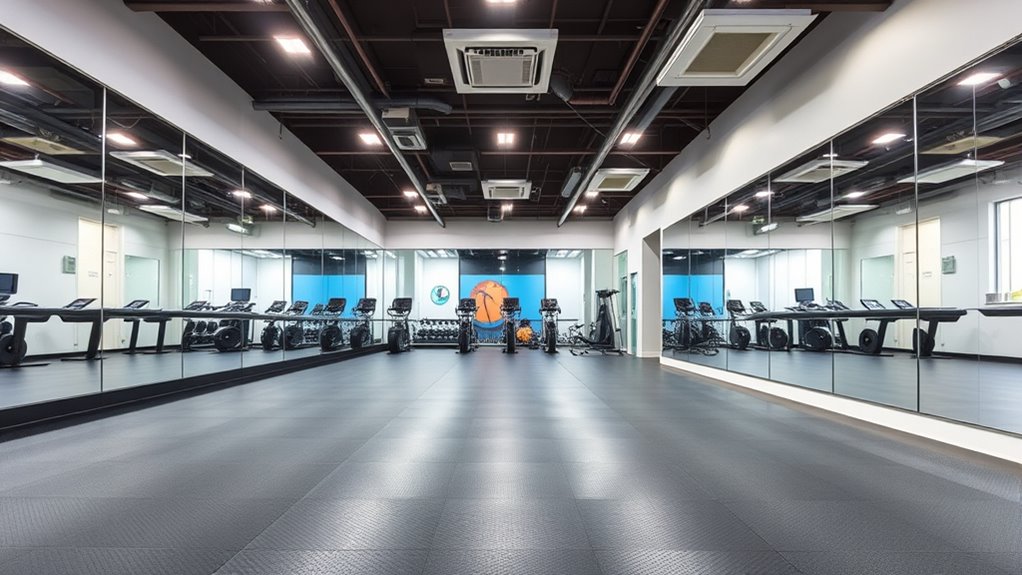
When designing a gym, selecting appropriate flooring, mirrors, and airflow systems is crucial to guarantee safety, functionality, and comfort. The flooring serves as the foundation for all activities, so it must be durable, shock-absorbent, and suitable for various training types. High-impact areas, like weightlifting zones, benefit from rubber flooring, which minimizes damage to both equipment and joints. For cardio sections or stretching areas, interlocking foam tiles provide a softer surface that reduces fatigue. Consider the flooring’s coefficient of friction to prevent slips, especially in moisture-prone zones. Additionally, seamless installation minimizes trip hazards and simplifies cleaning, which is essential for maintaining hygiene standards. Edge trims and beveled transitions between different flooring materials prevent tripping and facilitate wheelchair accessibility.
Mirrors are a critical component for guaranteeing proper form and technique during workouts. They should be strategically placed at eye level along walls with adequate height to accommodate different exercises. The size and placement of mirrors influence both safety and motivation; large, wall-mounted mirrors allow users to monitor their movements comprehensively. It’s important that mirrors are securely fixed to withstand impact and vibrations from equipment use. Anti-glare coatings or matte finishes reduce reflections that could cause visual discomfort or distraction. Proper spacing between mirrors and equipment maintains clear sightlines, preventing accidental collisions. Incorporate sufficient lighting around mirrors to improve visibility without creating glare, which can distort perception or cause strain.
Effective airflow systems are essential for maintaining a safe and comfortable environment, especially in high-density gyms. Ventilation must be designed to promote consistent air exchange, removing excess heat, humidity, and airborne contaminants. Mechanical systems, such as HVAC units, should be appropriately sized based on the gym’s square footage and occupancy levels. Incorporate exhaust fans and air purifiers with HEPA filters to improve air quality further. Directional airflow should be optimized to prevent stale air pockets and ensure fresh air reaches all zones. Ductwork and vents need to be strategically positioned, avoiding obstruction by equipment or structural elements. Consider integrating humidity controls to prevent mold growth and maintain an ideal environment for both users and equipment longevity.

ProsourceFit Puzzle Exercise Mat ½ in, EVA Interlocking Foam Floor Tiles for Home Gym, Water-Resistant Mats Workout Equipment, Floor Padding for Kids, Black, 24 in x 24 in x ½ in, 48 Sq Ft – 12 Tiles
PROTECTIVE GYM FLOOR MAT: Durable, non-skid gym flooring for home gym that covers and protects your floor or…
As an affiliate, we earn on qualifying purchases.
As an affiliate, we earn on qualifying purchases.
Frequently Asked Questions
How Often Should Gym Flooring Be Replaced?
You should replace gym flooring every 5 to 10 years, depending on usage and material quality. Regular inspections for wear, tears, or permanent indentations are essential. High-traffic areas may require more frequent replacement, while durable rubber or vinyl floors tend to last longer. Proper maintenance, such as cleaning and repairing minor damages promptly, extends lifespan. Keeping detailed records helps determine when replacement or refurbishment is necessary, ensuring safety and ideal performance.
What Mirror Types Are Best for Fitness Centers?
You should choose wall-mounted or frameless mirrors for your fitness center, as they provide a sleek, seamless look that visually enlarges the space. These mirrors are made from tempered safety glass, ensuring durability and safety during intense workouts. Opt for anti-fog coatings to maintain clarity, and position them at appropriate heights for all users. Properly installed, these mirrors become both functional tools and aesthetic enhancements, reflecting professionalism and safety throughout your gym.
How Can I Improve Airflow in a Small Gym?
You can improve airflow in your small gym by installing high-quality exhaust fans and strategically placing intake vents to promote cross-ventilation. Use ceiling fans to circulate air effectively and consider adding portable air purifiers with HEPA filters to enhance air quality. Keep doors open during workouts, and avoid overcrowding to prevent stale air buildup. Regular maintenance of HVAC systems ensures peak performance and consistent airflow throughout the space.
Are There Eco-Friendly Flooring Options for Gyms?
You can choose eco-friendly gym flooring options like cork, bamboo, or recycled rubber. Cork is renewable, soft, and durable, ideal for high-impact areas. Bamboo flooring is sustainable, hard, and low-maintenance, providing a natural aesthetic. Recycled rubber repurposes old tires, offering shock absorption and resilience. These materials are non-toxic, promote healthier indoor air quality, and reduce environmental impact, making them excellent choices for eco-conscious gym owners seeking sustainable flooring solutions.
What Maintenance Is Required for Gym Mirrors?
You need to clean your gym mirrors daily with a streak-free glass cleaner and microfiber cloth to prevent smudges and dust buildup, ensuring crystal-clear reflections. Regularly inspect for cracks or chips and address scratches promptly to maintain safety and aesthetics. Dust frames weekly using a soft brush or cloth, and occasionally check mounting hardware to prevent loosening. Proper maintenance guarantees your mirrors stay pristine, reflective, and safe for all users.

TRAHOME Home Gym Mirror for Wall,48x24x3PCS Full Length,Glass Frameless Body Large Mirror for Home Gym,Workout,Bedroom,Garage(Silver)
Mirror Measurement: Each mirror tile is 48 x 24 inches, total 3 PCS, which edge is advanced polished,…
As an affiliate, we earn on qualifying purchases.
As an affiliate, we earn on qualifying purchases.
Conclusion
Ensuring proper flooring, strategically placed mirrors, and ideal airflow creates a safe, efficient gym environment. Prioritize shock-absorbing surfaces to reduce injury risk, position mirrors to enhance technique without causing distractions, and maintain ventilation systems for consistent air quality. Are you ready to optimize your workout space for safety and performance? Thoughtfully addressing these elements not only elevates user experience but also promotes long-term health and sustainability within your gym.

HG Power 6 Inch Exhaust Fan, 308CFM Wall Exhaust Fan for Kitchen, Metal Extractor Fan for Attic, Garage, Window Ventilation, HVAC System
Efficient Ventilation: HG Power 6 inch exhaust fan quickly removes exhaust gas. Perfect for workshops, basements, warehouses, apartments,…
As an affiliate, we earn on qualifying purchases.
As an affiliate, we earn on qualifying purchases.

bemaxx Gym Mats Set – 18 pcs EVA Interlocking Foam Floor Tiles (12.6"x12.6"x0.4") 18sqft Protective Gym Flooring Sports Home Workout Exercise Mats Puzzle Garage Fitness Play-Room Pool Treadmill Bike
💪 #𝟭 𝗣𝗥𝗢𝗧𝗘𝗖𝗧𝗜𝗩𝗘 𝗙𝗟𝗢𝗢𝗥 𝗠𝗔𝗧 𝗦𝗘𝗧 𝗪𝗜𝗧𝗛 𝟭𝟴 𝗣𝗨𝗭𝗭𝗟𝗘 𝗣𝗜𝗘𝗖𝗘𝗦 + EDGE PIECES FOR PERFECT FLOOR PROTECTION -…
As an affiliate, we earn on qualifying purchases.
As an affiliate, we earn on qualifying purchases.