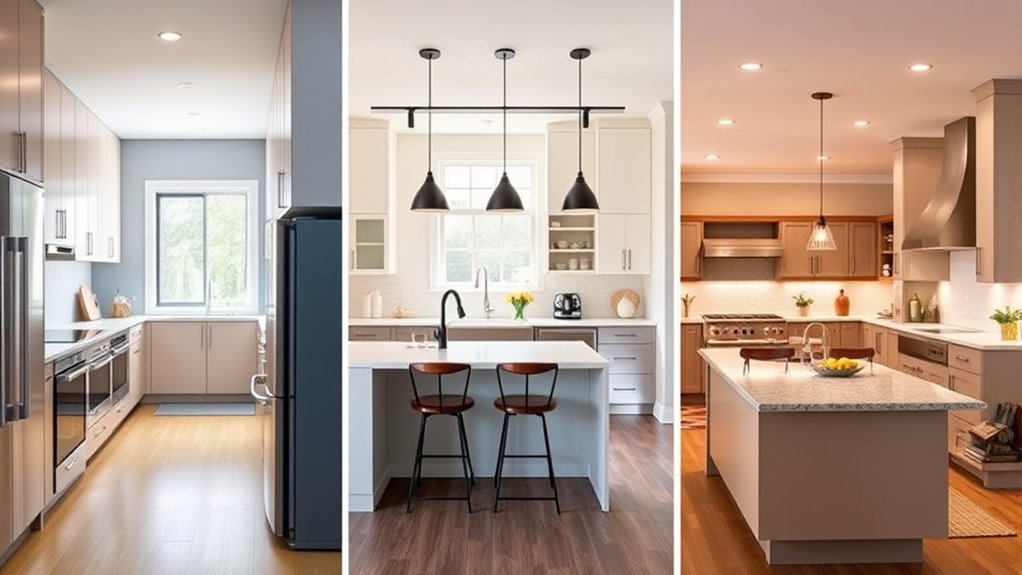

If you’re choosing between galley, L-shape, and U-shape kitchens, consider how you cook and move. In a galley, efficiency is key with two parallel counters perfect for solo or quick tasks, but it’s tight for more hands. L-shape offers flexibility and social vibes, ideal for moderate space. U-shape provides a high-functioning hub for complex meals, with everything close at hand. To craft the best flow for your needs, explore each layout’s details further.
Key Takeaways
- Galley kitchens optimize efficiency in small spaces but limit capacity for multiple cooks, focusing on streamlined workflows.
- L-shape layouts offer flexible zones for prep and cooking, ideal for open-plan designs and social interactions.
- U-shape kitchens maximize workspace with enclosed areas, supporting complex meal prep and multi-tasking.
- Workflow in all layouts benefits from strategic placement of appliances, tools, and maintaining clear, unobstructed pathways.
- Choice depends on kitchen size, cooking style, and user needs, with each layout offering unique workflow advantages.
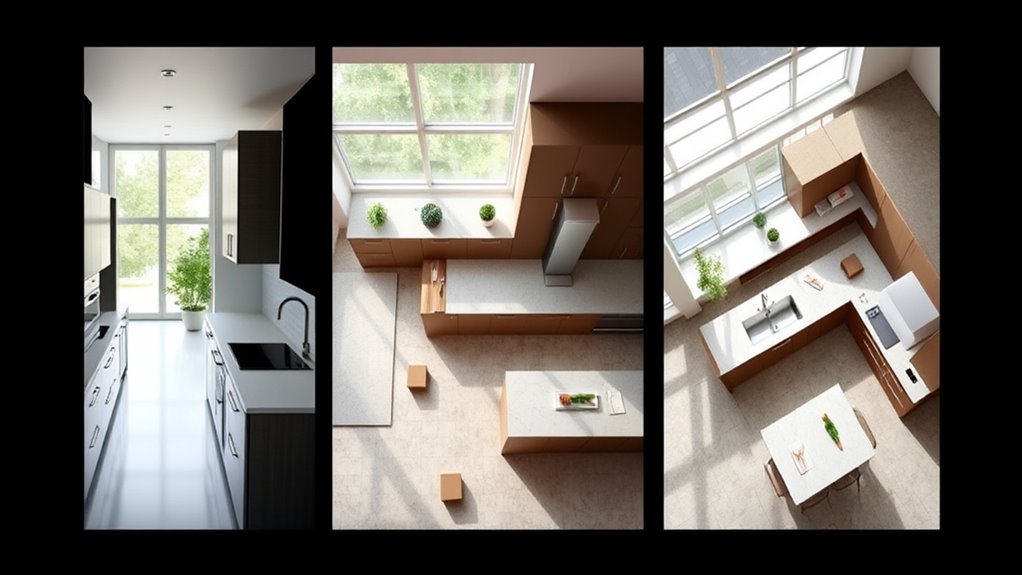
A well-organized kitchen workflow transforms chaos into efficiency, turning meal prep from a stressful chore into a smooth, enjoyable process. When designing your kitchen layout, understanding how the galley, L-shape, and U-shape configurations influence movement and task flow is key. Each layout offers unique advantages and challenges, and choosing the right one depends on your cooking style, space, and how you work best.
Picture yourself in a galley kitchen, where two parallel countertops create a narrow corridor. This setup is perfect if you like a compact, efficient space. You’re likely to find that your movements are streamlined—everything you need is within arm’s reach, minimizing steps. However, this can also mean limited space for multiple people to work simultaneously. If you often cook alone or enjoy quick, focused meal prep, the galley layout keeps things tight and organized. To optimize workflow here, keep your frequently used items—pots, utensils, spices—close to your primary cooking zone. Clear clutter and maintain a logical sequence of zones along the corridor, such as prep, cooking, and cleaning, to make facilitate transitions seamless and intuitive.
In an L-shape kitchen, you have a bit more flexibility. You’re working with two adjoining walls, which allows for a natural division of tasks. For instance, you might set up your prep area on one side and your cooking zone on the other, creating a logical flow from chopping to stove to sink. This layout encourages social interaction if you have an open space or an adjacent dining area, making it easier to entertain while you cook. To maximize efficiency, position your sink, stove, and refrigerator in a classic work triangle, minimizing travel time between these key points. Keep frequently used tools within reach of each zone, and consider incorporating an island or a small cart if space allows, adding extra prep or storage capacity.
A U-shape kitchen envelops you with countertops on three sides, creating a highly functional workspace. If you enjoy multitasking or prepare complex meals, this configuration can be a game-changer. You’re rarely far from any station, so your workflow becomes fluid. Keep your main work zones—prep, cook, clean—organized on opposite sides of the U to avoid congestion. Use the central area for staging ingredients or assembling dishes, reducing back-and-forth trips. The U-shape layout encourages a natural, cyclical flow: gather ingredients, cook, clean, and repeat without unnecessary movement. To fully optimize it, guarantee the placement of appliances and storage encourages a logical sequence, and keep the pathways clear to prevent bottlenecks during busy cooking sessions.
Additionally, incorporating natural materials such as wood or stone in your kitchen can enhance the aesthetic and functional warmth of the space. Each layout shapes your workflow differently, but the goal remains the same: creating a space where every movement feels natural and purposeful. By understanding your needs and how each configuration channels your actions, you can craft a kitchen that boosts efficiency, reduces stress, and makes cooking a pleasure rather than a chore.
As an affiliate, we earn on qualifying purchases.
Frequently Asked Questions
Which Kitchen Layout Is Best for Small Spaces?
For small spaces, a galley kitchen is your best bet. It maximizes efficiency by placing counters and appliances on two parallel walls, creating a compact, functional zone. You can move seamlessly between prep, cooking, and cleaning without excess walking. Choose this layout if you want to optimize every inch, keep things organized, and enjoy a practical, cozy kitchen where everything’s within arm’s reach.
How Do I Maximize Storage in Each Layout?
You can access hidden storage potential in any layout by optimizing vertical space, using clever cabinetry, and adding hooks or racks. In galley kitchens, install tall cabinets and narrow pull-out shelves; in L-shapes, utilize corner units and under-counter drawers; in U-shapes, consider hanging pots and investing in multi-functional furniture. Embrace every inch, think vertically, and you’ll turn your small kitchen into a surprisingly spacious, well-organized haven.
What Are the Cost Differences Between Layouts?
You’ll find galley kitchens often cost less due to simpler construction and fewer materials, making them budget-friendly for small spaces. L-shape layouts usually fall in the mid-range, offering efficient use of corner space but sometimes requiring extra cabinetry. U-shapes tend to be more expensive because they need more cabinetry, countertops, and possibly structural modifications. Your choice depends on your budget, space, and desired workflow, balancing cost with functionality.
How Do I Choose Based on My Cooking Style?
Did you know that around 60% of home cooks prefer U-shaped kitchens for their versatility? To choose the right layout, consider your cooking style: if you love prepping with multiple appliances, a U-shape offers ample counter space. For quick meals, a galley keeps everything within reach. If you entertain often, an L-shape creates a social hub. Match your workflow to your habits for a kitchen that truly works for you.
Are Open-Concept Kitchens Suitable for All Layouts?
Open-concept kitchens work well with L-shape and U-shape layouts, offering spaciousness and social flow. They might not suit galley designs, which thrive in narrower spaces, because open areas can feel cluttered or noisy. Think about your cooking habits—if you love entertaining or cooking with friends, an open plan enhances interaction. But if you prefer quiet, compartmentalized spaces, consider balancing openness with walls or islands for privacy.
Conclusion
Think of your kitchen as a bustling river, where each workflow style is a different current guiding your flow. Whether you’re steering the straight, swift corridor of a galley, the gentle arcs of an L-shape, or the expansive loops of a U-shape, choosing the right flow keeps your culinary journey smooth. When you align your space with your rhythm, cooking becomes a dance — effortless, efficient, and truly enjoyable. Your perfect kitchen flow is waiting to be discovered.