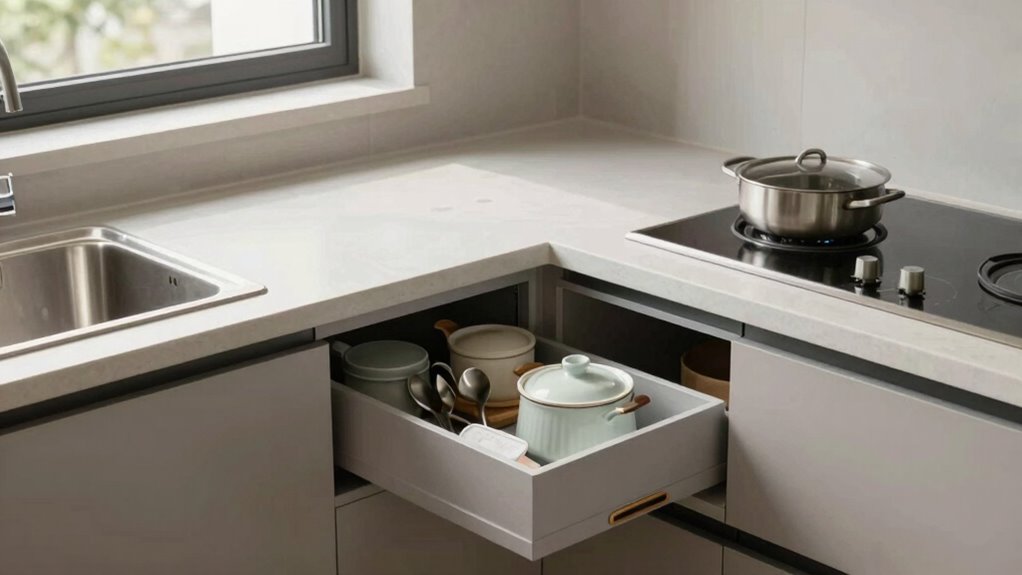

To save your knees and sanity, keep your frequently used items at waist level and clear clutter from counters and cabinets. Reorganize your space with easy-access drawers, wall-mounted racks, and adjustable shelves to minimize bending and reaching. Incorporate ergonomic countertops and thoughtful layout design to streamline your workflow. Regularly reassess your kitchen to maintain order, and consider DIY tweaks or professional upgrades if needed. If you want to learn simple strategies for a more comfortable, safe kitchen, continue exploring.
Key Takeaways
- Store seldom-used items in cabinets or pantry to keep countertops clear and reduce reaching or bending.
- Use open shelves and wall-mounted racks for easy access and vertical storage.
- Adjust countertop height to waist level (36-42 inches) for comfortable, knee-friendly work surfaces.
- Incorporate built-in appliances and ergonomic drawers to minimize stretching and heavy lifting.
- Regularly declutter and reorganize to maintain a safe, efficient, and clutter-free kitchen environment.
Identify Why Cluttered Cabinets Make Cooking Difficult and Unsafe

Cluttered cabinets can make cooking both difficult and dangerous because they force you to dig through piles of items to find what you need. When your cabinets are disorganized, it’s common to accidentally knock over dishes or utensils, increasing the risk of breakage or injury. This chaos often leads to cluttered counters, as you try to lay out what you’re searching for or temporarily store misplaced utensils. The mess can slow down meal prep and cause frustration. furthermore, reaching into a crowded cabinet might result in you pulling out heavy, unstable items, risking spills or injuries. Keeping cabinets tidy helps you locate tools quickly, reduces accidents, and creates a safer, more efficient cooking environment.
Evaluate Your Kitchen Space and Storage Needs

Organizing your kitchen starts with evaluating the space you have and understanding your storage needs. Measure your available area and identify what items need easy access versus those used less frequently. Proper appliance placement can free up counter space and reduce clutter. Consider lighting improvements to brighten dark corners, making it easier to find what you need without bending or stretching. Use the table below to reflect on your space:
| Storage Needs | Appliance Placement | Lighting Improvements |
|---|---|---|
| Frequently used items | Place appliances at eye level | Brighten work areas |
| Rarely used items | Store bulky appliances out of sight | Add task lighting |
| Vertical storage | Utilize wall space | Install under-cabinet lights |
| Drawer organization | Keep counters clear | Maximize natural light |
| Access convenience | Group related appliances | Ensure even illumination |
This helps tailor your kitchen to fit your habits and improve safety. Additionally, incorporating proper ventilation considerations can help prevent moisture buildup and keep your space comfortable. Good ventilation not only reduces excess humidity but also helps maintain the longevity of your appliances and surfaces. Proper ventilation practices support the overall air quality of your kitchen, ensuring a healthier environment for you and your family. Incorporating air purifiers can further enhance indoor air quality by reducing airborne pollutants and allergens.
Top Strategies to Clear Countertops and Maximize Storage
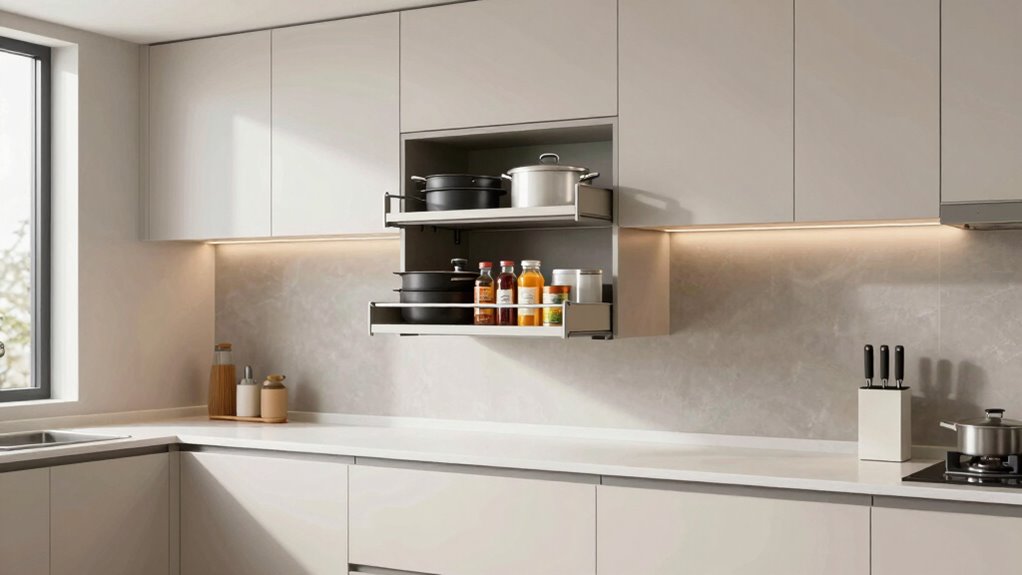
To effectively clear your countertops and maximize storage, start by identifying items that can be stored elsewhere or kept out of sight. Rearranging appliance placement is key—store rarely used gadgets in cabinets or pantry shelves to free up space. Keep daily essentials like the coffee maker or toaster accessible but off the counter by designating specific storage spots. Improving lighting can also make your space feel larger and more organized, highlighting open areas and reducing visual clutter. Under-cabinet lighting, for example, illuminates work zones and makes it easier to see what you’re doing, encouraging you to keep counters clear. Additionally, incorporating free floating storage solutions such as open shelves or wall-mounted racks can provide easy access and help declutter your kitchen surfaces. Regularly reassess your countertop items to maintain a tidy, functional kitchen that supports your knees and sanity.
Choose Easy-Access Storage Solutions for a Knee-Friendly Kitchen

To keep your kitchen knee-friendly, opt for accessible shelves and drawers that bring essentials within easy reach. Pull-out storage solutions make it simple to access items at the back without bending or kneeling. These smart choices help you stay comfortable while keeping everything organized.
Accessible Shelves and Drawers
Have you ever struggled to reach items stored on high shelves or deep drawers? Accessible shelves and drawers make your kitchen safer and easier to use. Position frequently used items at waist level, reducing the need to stretch or bend. Incorporate cabinet lighting to improve visibility, so you can see everything clearly without squinting or leaning in. Use drawers with smooth gliding mechanisms for easy access. Consider integrating appliances into lower cabinetry to keep counters clear. Additionally, electric power generation solutions like built-in appliances can help reduce the need for heavy lifting and improve overall kitchen ergonomics. Here’s a quick guide:
| Solution | Description | Benefits |
|---|---|---|
| Low, open shelves | Easy reach, good visibility | Reduces bending, quick access |
| Pull-out drawers | Smooth, accessible storage | Saves space, enhances access |
| Appliance integration | Built-in appliances at knee level | Keeps counters clear, safe use |
Choosing these options can help create a more ergonomic and functional kitchen that minimizes strain on your knees.
Pull-Out Storage Solutions
Pull-out storage solutions transform your kitchen by making items easily accessible without the need to reach or bend awkwardly. They streamline appliance placement, keeping frequently used gadgets within arm’s reach while reducing clutter. These solutions also help you organize decorative accents, ensuring they add charm without obstructing functional space. With pull-out shelves and drawers, you don’t have to crawl into deep cabinets or grip hard-to-reach corners. Instead, everything is neatly tucked into sliding units that glide smoothly open. This not only saves your knees but also creates a more efficient workflow. Plus, you can customize these solutions to fit your style, blending practicality with decorative appeal. Overall, pull-out storage makes your kitchen safer, more functional, and visually appealing. Organizational systems are key to maintaining a clutter-free environment with minimal effort.
Design an Ergonomic, Knee-Friendly Kitchen Layout

To create a knee-friendly kitchen, start by optimizing counter height so it reduces strain during tasks. Make sure your storage solutions are accessible without bending or kneeling deeply, and place work surfaces where you can reach easily. Properly positioning these elements makes your kitchen both ergonomic and comfortable to use. Incorporating ergonomic design principles can further enhance comfort and minimize fatigue during prolonged use. Additionally, considering user-centered design ensures that the kitchen accommodates your specific needs and movements for greater ease and safety. Using accessible storage options can also help reduce unnecessary bending and reaching, making daily tasks more manageable. Implementing adjustable features allows you to customize the environment to suit your individual height and mobility requirements, further improving ergonomic comfort. Being mindful of work triangle efficiency can optimize your kitchen layout for easier movement and less strain during cooking tasks.
Counter Height Optimization
Optimizing counter height is essential for creating a kitchen that’s both comfortable and ergonomic. When you focus on counter height adjustment, you reduce strain on your knees and back, making tasks like chopping or prepping much easier. An ergonomic countertop should be at a height that allows your elbows to bend comfortably at approximately 90 degrees, minimizing awkward postures. If your counters are too high or low, you’ll find yourself leaning or stretching, which can cause discomfort over time. Adjusting your counters to match your height guarantees a more natural workflow, reducing fatigue and preventing injury. Consider custom or adjustable options if standard heights don’t fit your needs. Proper counter height not only improves safety but also enhances your overall kitchen experience.
Accessible Storage Solutions
Designing accessible storage solutions is key to creating a kitchen that’s easy on your knees and back. Custom cabinetry lets you tailor storage to your needs, placing frequently used items at waist level for quick access. This accessible design reduces unnecessary bending and minimizes strain. Use decorative accents to make functional storage attractive, blending practicality with style. Incorporate pull-out shelves, lazy Susans, or deep drawers to maximize space and keep everything within reach. Avoid high cabinets that require a step stool, opting instead for open shelving or lower cabinets. Smart storage design keeps your essentials organized and accessible, preventing unnecessary bending or stretching. Integrating ergonomic principles into your layout further enhances comfort and efficiency. Considering user-friendly features can significantly improve your daily kitchen experience. By focusing on ergonomic design strategies and thoughtful details, you create a kitchen that’s both ergonomic and inviting, making everyday tasks easier and less physically taxing.
Work Surface Placement
Have you ever struggled to find a comfortable height for your work surfaces? Proper placement is key to protecting your knees and maintaining efficiency. Aim for countertops at about waist to chest level—roughly 36 to 42 inches—so you don’t bend or stretch unnecessarily. Consider these factors:
- Choose durable countertop materials like quartz or granite that support frequent use.
- Incorporate backsplash designs that make cleaning easy, preventing buildup that forces awkward movements.
- Adjust work surface height based on your height and task, ensuring a comfortable, ergonomic stance.
- Use sizing and load‑planning tools to determine the optimal countertop height for your specific needs and kitchen layout.
- Being aware of ergonomic design principles can further help in creating a safe and comfortable workspace.
DIY Hacks to Maximize Your Kitchen Space Quickly

When you need to make the most of limited kitchen space quickly, DIY hacks can be a game-changer. Start by decluttering countertops and using clear containers to organize essentials, instantly improving kitchen aesthetics. Rearrange appliance placement to maximize counter space—store infrequently used gadgets in cabinets or on wall mounts. Install inexpensive hooks or rails to hang utensils, pots, and pans, freeing up drawers and counters. Use shelf risers to add vertical storage, making small spaces more functional. Repurpose items like magazine holders for spice racks or under-shelf baskets for additional storage. These quick fixes not only enhance your kitchen’s appearance but also keep everything within reach, reducing clutter and making your space more efficient in no time.
When Should You Consider Professional Kitchen Remodeling?

If your quick DIY hacks no longer provide the space or functionality you need, it might be time to contemplate professional kitchen remodeling. Consider this step if:
- Your appliances require frequent maintenance, and your current layout makes repairs cumbersome.
- You struggle with color coordination, feeling your kitchen looks disjointed or outdated.
- Your workspace lacks ergonomic design, causing discomfort or inefficiency during meal prep.
- Upgrading your electrical and networking infrastructure can ensure your appliances and smart devices function reliably, reducing troubleshooting and enhancing safety. networking infrastructure Additionally, a professional remodel can incorporate safe electrical wiring to prevent hazards and ensure compliance with safety standards. Ensuring proper electrical wiring is critical to avoid fire risks and maintain system integrity. Properly designed electrical systems can also improve energy efficiency and support future technological upgrades. A professional remodel can optimize appliance placement for easier maintenance, create a cohesive color scheme, and improve overall flow. This ensures your kitchen isn’t just visually appealing but also highly functional. When DIY fixes no longer suffice, a tailored renovation can transform your kitchen into a space that saves your knees and preserves your sanity. Moreover, implementing ergonomic kitchen design can significantly reduce strain and improve comfort during cooking tasks.
Maintain Your Organized Kitchen for Long-Term Sanity
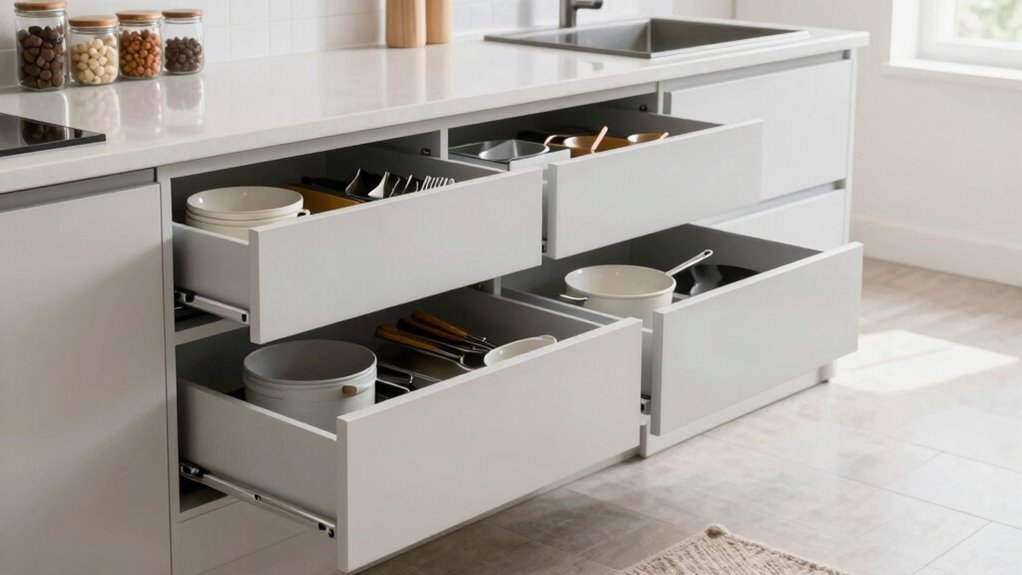
Maintaining an organized kitchen requires ongoing effort, but the rewards are well worth it when it comes to long-term sanity. Regularly revisit your pantry organization to ensure items are visible and easily accessible, reducing clutter and saving time. Keep frequently used appliances in convenient storage spots, but avoid cluttering countertops. Use clear bins or labels to maintain order and quickly find what you need. Dedicate a few minutes each week to tidy up, putting items back in their designated spots. This habit prevents messes from piling up and keeps your kitchen functional. Smart appliance storage prevents unnecessary clutter and minimizes the need to dig through cabinets. Consistent organization not only helps preserve your mental clarity but also makes your kitchen a more enjoyable and stress-free space to cook in. Incorporating outdoor wisdom principles, such as regular maintenance and preparedness, can further enhance your kitchen’s efficiency and safety.
Frequently Asked Questions
How Often Should I Declutter My Kitchen Cabinets?
You should declutter your kitchen cabinets every 3 to 6 months to keep utensil clutter manageable and prevent pantry pests. Regularly check for expired items and organize your essentials, making it easier to find what you need. This routine helps you spot potential pest problems early and keeps your space tidy. Staying consistent guarantees your kitchen remains functional, pest-free, and clutter-free, saving you time and stress.
What Are the Best Tools for Organizing Kitchen Storage?
You should use clear, stackable containers for pantry optimization, making it easy to see and access your food. Invest in drawer dividers or utensil trays to keep utensils organized and prevent clutter. Adjustable shelves help maximize space, while lazy Susans make corner storage more accessible. These tools streamline your kitchen, reduce clutter, and keep everything within reach, so you can cook efficiently without hunting for items.
Can Small Kitchen Adjustments Improve Safety and Comfort?
Ever wondered if small tweaks could boost your kitchen safety and comfort? Absolutely. You can improve ergonomics by adding ergonomic seating for easy breaks and adjusting counter heights for better posture. Plus, lighting enhancements help you see better, reducing accidents. These simple adjustments make a big difference, preventing strain and injuries. Isn’t it worth investing in your comfort and safety? Small changes today can transform your kitchen experience tomorrow.
How Do I Choose Durable Storage Solutions on a Budget?
To choose durable storage solutions on a budget, look for budget-friendly shelving made from sturdy materials like metal or thick plastic, which last longer. You can also find affordable container options such as stackable bins or clear plastic jars that maximize space and keep things organized. Shop during sales or check secondhand stores for quality pieces at lower prices. Prioritize durability and versatility to get the best value for your money.
What Signs Indicate It’s Time for a Professional Kitchen Remodel?
When your kitchen feels more like a burden than a space for creativity, it’s time for a professional remodel. Cracked cabinets, outdated appliances, or persistent leaks signal the need for a renovation. Use remodeling tips to plan efficiently and avoid costly mistakes. If your kitchen no longer meets your needs or hampers your daily routines, a full kitchen renovation can transform it into a functional, beautiful space you’ll love.
Conclusion
By decluttering and organizing your kitchen, you can reduce injuries and make cooking more enjoyable. Did you know that cluttered countertops can add up to 20 pounds of unnecessary stress? Staying organized not only saves your knees and sanity but also boosts your efficiency. Keep up with regular maintenance and consider professional upgrades if needed. With these simple steps, you’ll create a safe, functional space where cooking feels like a breeze every day.