To achieve balanced proportions, consider ceiling height relative to room size—generally, a 12-13 foot ceiling works well in a 20-foot-wide space, creating harmony. Use beams that complement this scale: slim, light materials suit higher ceilings, while larger beams can overwhelm lower ones. Pay attention to material choices and detailing to maintain visual weight. Proper proportional relationships and structural considerations guarantee your space feels both functional and aesthetically pleasing; exploring these relationships further will reveal how to perfect your interior design.
Key Takeaways
- Higher ceilings (around 12-14 feet) create spaciousness, requiring proportionally larger beams for visual balance.
- Beams should complement ceiling height using proportional guidelines like the golden ratio for harmony.
- Slim, lightweight beams suit high ceilings, while darker, heavier beams enhance large, open spaces.
- In low-ceiling rooms, avoid oversized beams to prevent a cramped feel; opt for lighter or narrower profiles.
- Material and finish choices influence visual weight; natural textures like wood or stone add warmth and balance proportions.
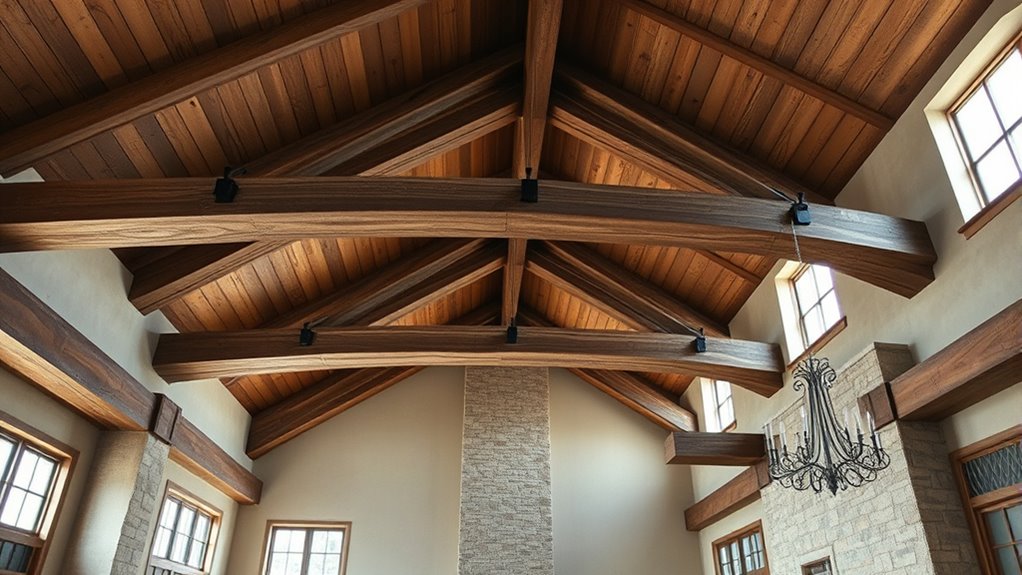
Understanding the relationship between ceiling heights, beams, and proportions is essential for optimizing both structural integrity and aesthetic appeal in interior design. When planning a space, you must consider how these elements interact to create a balanced environment that is both functional and visually harmonious. Ceiling height fundamentally influences spatial perception; higher ceilings generate a sense of openness and grandeur, while lower ceilings foster coziness and intimacy. Beams, whether structural or decorative, serve as visual anchors that can either emphasize or diminish the perceived scale of a room. Properly proportioned beams should complement the ceiling height without overwhelming the space or appearing insignificant.
In terms of structural considerations, the placement and size of beams must align with load-bearing requirements. Oversized beams in a low-ceilinged room risk crowding the space and creating a cramped feeling, whereas slender beams in a high-ceiling environment can appear insubstantial. For example, in a room with a 10-foot ceiling, beams roughly one-third of the ceiling height—around 3 to 4 feet in width—tend to strike a visual balance. Conversely, in a space with a 14-foot ceiling, beams can be proportionally larger, around 4 to 6 feet wide, maintaining visual coherence without diluting the structural expression.
Proportions also influence the rhythm and flow within a room. Using the principles of classical proportion, such as the golden ratio, can help you achieve a pleasing relationship between ceiling height, beam size, and other architectural features. When the height of the ceiling is in harmony with the width and depth of the space, the overall environment feels more natural and well-balanced. For example, if the width of a room is 20 feet, a ceiling height of approximately 12 to 13 feet creates a proportionate environment. Beams added to this space should then follow similar proportional guidelines, neither dominating nor disappearing into the surroundings. Utilizing natural materials like wood or stone for beams can further enhance the visual harmony and texture in a farmhouse bedroom setting.
Furthermore, the visual weight of beams can be manipulated through material choice, finish, and detailing. A heavy, dark wood beam will visually anchor the room and add weight, suitable for high ceilings and large open spaces. Lighter finishes or slim profiles can make beams feel less intrusive, ideal for smaller or low-ceilinged spaces. Consistency in proportion, material, and placement ensures that beams enhance the spatial design rather than detract from it. Ultimately, by understanding these relationships and applying precise proportional principles, you’ll craft interiors that feel intuitively “right,” balancing structural necessity with aesthetic harmony.

Heritage Timber Salvaged Timber Faux Wood Beam, 3-Sided (U-Beam), 5 1/2"W x 5 1/2"H x 72"L, Kona Brown Finish
Item Description: Heritage Timber Salvaged Timber Faux Wood Beam, 3-Sided (U-Beam), 5 1/2"W x 5 1/2"H x 72"L,…
As an affiliate, we earn on qualifying purchases.
As an affiliate, we earn on qualifying purchases.
Frequently Asked Questions
How Do Ceiling Heights Influence Room Acoustics?
Higher ceilings typically improve room acoustics by reducing sound reflection and echo, creating a more spacious feel. Conversely, lower ceilings can cause sound waves to bounce more, increasing reverberation and noise levels, which may hinder speech clarity. You should consider ceiling height in relation to room size and function; ideal heights balance sound absorption and reflection, enhancing acoustic comfort. Proper design ensures sound behaves predictably, improving overall auditory experience.
What Materials Are Best for Visible Ceiling Beams?
You should choose materials like solid wood, engineered wood, or steel for visible ceiling beams, as they provide strength, durability, and aesthetic appeal. Solid wood offers natural warmth and visual texture, while engineered wood provides stability and cost efficiency. Steel beams are modern and sleek, ideal for contemporary designs. Confirm the material’s acoustic properties align with your room’s needs, minimizing sound reflection and enhancing overall acoustics.
How Do Proportions Affect the Perceived Size of a Room?
Proportions directly influence how large or small a room feels. When you use a balanced ratio, like a 2:3 width-to-length or height-to-width, it creates a harmonious space that feels right. Larger proportions can make a room seem more expansive, while smaller ones can make it cozy. Precise proportions guide the eye naturally, reducing visual clutter and emphasizing spatial clarity, ultimately shaping your perception of room size.
Can Ceiling Height Impact Energy Efficiency?
Yes, ceiling height impacts energy efficiency by influencing heating and cooling loads. Taller ceilings require more conditioned air to maintain comfortable temperatures, increasing energy consumption. Conversely, lower ceilings reduce volume, decreasing heating and cooling demands. Proper insulation, air sealing, and HVAC system adjustments are essential to optimize energy use regardless of ceiling height. By selecting appropriate ceiling heights and implementing efficient systems, you can improve overall energy performance and reduce utility costs.
Are There Design Tips for Low Ceilings?
You should maximize space perception by painting ceilings a light color and avoiding heavy drapes, which can shrink the room visually. Use vertical lines like tall bookshelves or narrow artwork to draw the eye upward, creating a sense of height. Incorporate multi-functional furniture to optimize space, and guarantee proper lighting that eliminates shadows, making the room feel larger. These strategies make low ceilings feel expansively spacious, transforming your room into an airy oasis.

5ft Faux Wood Beam Strap,Flexible Beams Gap Hiding Strap, Wood Beams Metal Look Strap,Architectural Products for Faux Wood Beams,Ceiling Beam and Cabin Shutters Accessories (2.36"Width)
Quality Material: Our flex beam straps made from faux leather material ,they are not pre-formed in a "U"…
As an affiliate, we earn on qualifying purchases.
As an affiliate, we earn on qualifying purchases.
Conclusion
Ultimately, the interplay of ceiling heights, beams, and proportions shapes your space’s harmony. Mastering these elements is essential, but the true impact lies in understanding how subtle adjustments influence perception. As you refine each detail, remember that the perfect balance might be closer than you think—yet just out of reach. The key is to recognize when the design’s silent cues evoke the feeling of “rightness.” Will you uncover the secret that transforms a good space into a truly resonant one?

Ekena Millwork 5 1/2"W x 5 1/2"H x 144"L 3-Sided (U-Beam) MENA HeritageTimber Faux Wood Ceiling Beam, Natural White Oak
Dimensions: 5-1/2 in. Width x 5-1/2 in. Height x 144 in. Length
As an affiliate, we earn on qualifying purchases.
As an affiliate, we earn on qualifying purchases.

Bargeni Flush Mount Ceiling Light with Remote,Matte Black with Gold Inside,24W/2700K-6000K/with Night Light Mode,12.5 inch LED Flush Mount Light for Bedroom,Living Room,Kitchen
Timeless Modern Design:Elevate your home decor with the chic and minimalist design of the ceiling light with remote….
As an affiliate, we earn on qualifying purchases.
As an affiliate, we earn on qualifying purchases.