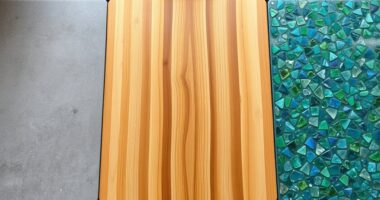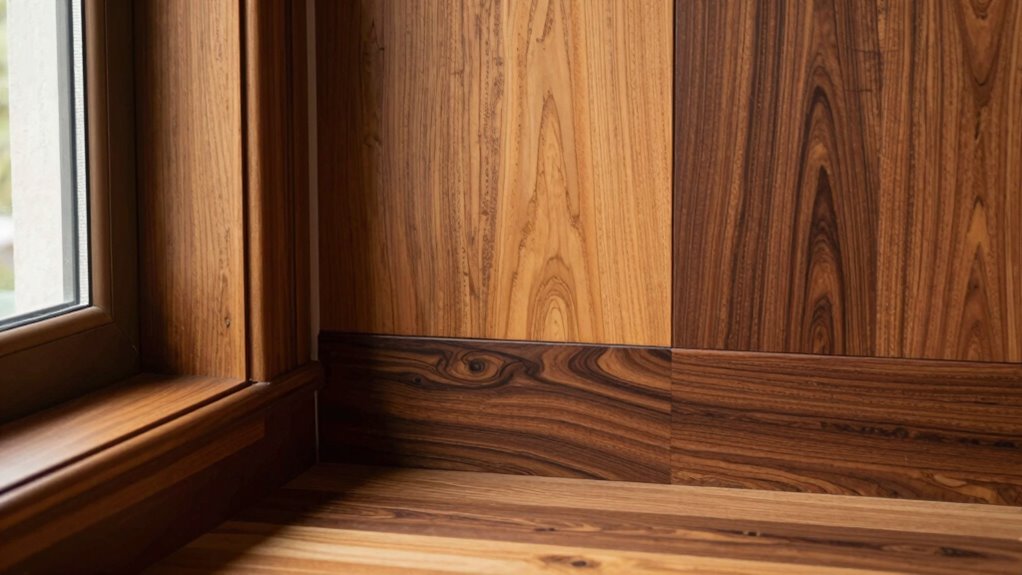

To prevent a flat-looking room, use the Wood Tone Rule by mixing different wood tones and grain variations intentionally. Combining lighter and darker woods, along with natural grain patterns, creates visual interest and movement. This approach avoids monotony and adds warmth, personality, and depth to your space. By embracing natural diversity and arranging wood pieces thoughtfully, you can craft a dynamic and inviting environment. Keep exploring to discover even more ways to bring life to your design.
Key Takeaways
- Incorporate a variety of wood tones and grains to add depth and visual interest.
- Use natural stain variations to emphasize the unique character of each wood piece.
- Mix different wood species and textures to create layered, dynamic arrangements.
- Embrace natural imperfections and diversity to prevent a monotonous, flat appearance.
- Strategically combine light and dark wood elements for contrast and visual richness.
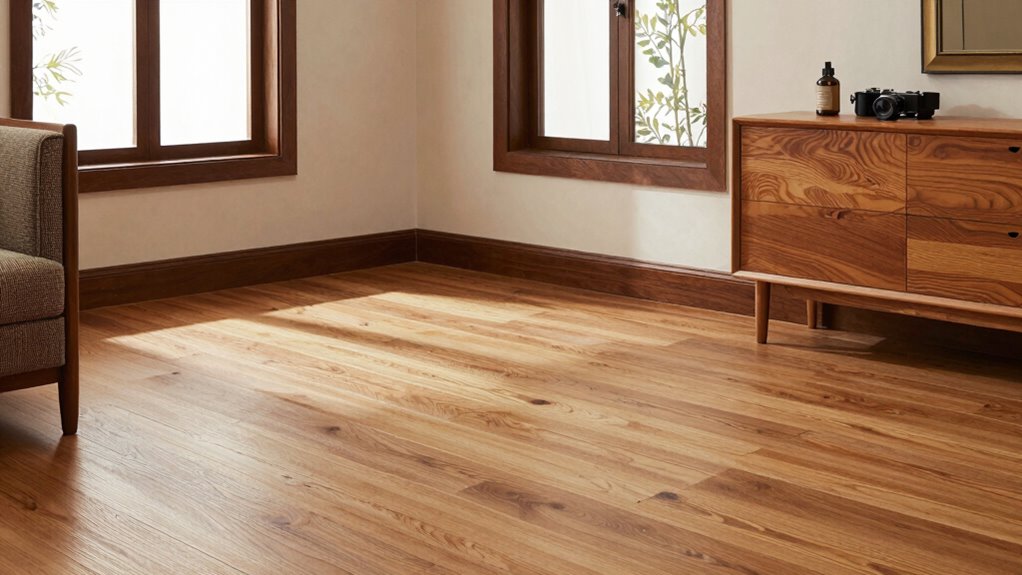
Have you ever wondered how to create a balanced and natural look in your interior design or woodworking projects? The secret often lies in understanding the wood tone rule, which helps you avoid that flat, lifeless appearance that can make a room feel dull. One key aspect of this rule involves paying attention to the wood grain and stain variation. When you select and arrange wood pieces thoughtfully, you can achieve a rich, layered look that adds depth and warmth to any space.
The wood grain plays an essential role in how your finished project looks. Each piece of wood has unique grain patterns—swirls, lines, and textures—that add character. If you use planks or furniture with uniform grain, your design might look too monotonous, lacking visual interest. Instead, intentionally mixing different wood grains creates movement and complexity, preventing that flat effect. Combining straight-grain oak with the more dynamic, wavy grain of walnut, for instance, introduces natural variation that catches the eye and enlivens the room. Understanding wood grain diversity can help you make more informed choices in your projects. Recognizing and emphasizing these natural differences enhances the overall aesthetic and prevents the appearance of sameness.
Stain variation is another vital element. When you stain wood, it’s tempting to aim for consistent color, but doing so can flatten the overall aesthetic. Instead, embrace the natural differences in how wood absorbs stain. Some areas may take on a darker hue, while others stay lighter, emphasizing the wood’s innate beauty. This variation mimics nature’s randomness and ensures your project doesn’t look overly uniform. To maximize this effect, select woods with inherent stain variation or apply multiple stain colors strategically to highlight different sections. Developing an understanding of natural wood characteristics allows you to better predict how your wood will respond to staining techniques. Additionally, experimenting with different staining techniques can further enhance the visual interest.
To truly avoid that flat look, you should also consider how you arrange your wood pieces. Mixing various tones, grains, and stain effects creates a layered, textured appearance. Think of it as a visual dialogue between different wood elements—a conversation that invites the eye to explore and discover detail. This approach helps your space feel more dynamic and inviting, rather than sterile and predictable. Additionally, paying attention to proportion and balance in your arrangements can further enhance visual interest and harmony.
In practice, the wood tone rule encourages you to intentionally select woods, stains, and arrangements that celebrate variation. By doing so, you harness the natural beauty of wood and prevent your project from appearing dull or lifeless. When you understand how wood grain and stain variation work together, you’ll craft interiors or woodworking pieces that exude warmth, personality, and depth. Recognizing the importance of natural diversity can guide you in creating more engaging and harmonious designs. Ultimately, this rule reminds you that embracing natural imperfections and diversity is what makes a space truly engaging. For example, understanding the wood tone rule can help you make smarter choices in selecting and combining different wood elements for a cohesive yet vibrant look.

Thboxes Furniture Repair Kit Wood Markers, 13 Pcs Marker Set and Wax Sticks with Sharpener, 6 Colors Furniture Markers Touch Up for Scratches Stains Holes Bedposts Floors Tables Cabinets Desks
13-PIECE FURNITURE REPAIR KIT–Includes 6 furniture repair markers, 6 wax filler sticks, and 1 sharpener. These wood markers…
As an affiliate, we earn on qualifying purchases.
As an affiliate, we earn on qualifying purchases.
Frequently Asked Questions
Can the Wood Tone Rule Be Applied to Painted Walls?
Yes, you can apply the wood tone rule to painted walls by creating contrast through color and texture pairing. Use a darker or warmer paint color to complement wood tones, adding depth and visual interest. Incorporate textured finishes or layered materials to enhance contrast, preventing a flat look. This approach emphasizes the wood’s warmth and richness while making your space feel more dynamic and inviting.
What Are Common Mistakes When Choosing Wood Tones?
When choosing wood tones, you often stumble over mismatched grain patterns and inconsistent finishes. Imagine trying to blend a smooth satin finish with a rustic, knotty grain—your room ends up looking chaotic. Common mistakes include ignoring these grain patterns and finishing inconsistencies, which can make the space feel disjointed. To avoid this, select woods with similar grain patterns and finishes to create harmony and depth in your room.
How Does Lighting Affect Wood Tone Perception?
Lighting profoundly influences how you perceive wood tones through light reflection and color temperature. Warm lighting enhances golden or reddish hues, making wood appear richer and more inviting, while cool lighting can mute these tones, giving a flatter look. Bright, direct light emphasizes natural wood grain and color variations, whereas softer or indirect lighting smooths out differences. Adjusting your lighting helps you achieve the desired warmth and depth in your room.
Are There Specific Wood Types That Work Best Together?
You’ll find that pairing rich, dark woods like walnut with lighter tones such as oak creates stunning tone harmony, preventing your space from looking flat. Exotic woods like teak also blend beautifully with softer shades, adding depth without overwhelming. Some woods clash, but sticking to classic combinations—like cherry and maple—ensures a vibrant, cohesive look. Your room becomes a visual symphony of tones, each piece amplifying the other’s beauty.
Can This Rule Be Used in Small Rooms Effectively?
Yes, you can definitely use this wood tone rule effectively in small rooms. It helps with space optimization by creating visual depth and avoiding flatness. By coordinating furniture and flooring in complementary or contrasting wood tones, you add interest without overwhelming the space. Just keep the color palette balanced and avoid overly dark or busy patterns. This approach makes your small room feel more dynamic, inviting, and thoughtfully designed.

Boncart Water-Based Wood Stain, 8.45FL.OZ/250mL Stain for Wood, Suitable for Staining Indoor and Outdoor Wooden Items and Furniture, Non-Toxic, Multiple Finishes (Teak)
Water-Based Formula & Long-Lasting Staining: Boncart water-based wood stain features safety, non-toxicity, high concentration, and strong permeability. It…
As an affiliate, we earn on qualifying purchases.
As an affiliate, we earn on qualifying purchases.
Conclusion
Now that you know the Wood Tone Rule, you might think you’re set to avoid flat, dull rooms forever. But isn’t it ironic? Just when you master the perfect wood tones, you could still end up with a space that feels as flat and lifeless as a painted plywood. So, while your eye for color improves, remember that even the most carefully curated room can secretly look like a staged set—until you add that final, unexpected touch.

ADDMES 11.8 Inch Sun Wall Decor, Wooden Mandala Wall Art, Hollowed-out Sun Hanging Sign, Multi-layers Lotus Flower Wall Decor, Spiritual Room Decor for Bedroom, Living Room, Farmhouse Decor
[Sun & Lotus Design] The Sun wall art skillfully combines the sun and lotus to form the delicate…
As an affiliate, we earn on qualifying purchases.
As an affiliate, we earn on qualifying purchases.

Light Brown Wood Stain Repair Kit, Brush-On Touch-Up Stain Bottles, Golden Oak, Early America, Cherry, Red Oak, Interior and Exterior Wood, 4 fl oz Total by spot.
Penetrating Wood Stain Formula: Brush-on wood stains absorb into scratched or worn areas to blend naturally with surrounding…
As an affiliate, we earn on qualifying purchases.
As an affiliate, we earn on qualifying purchases.