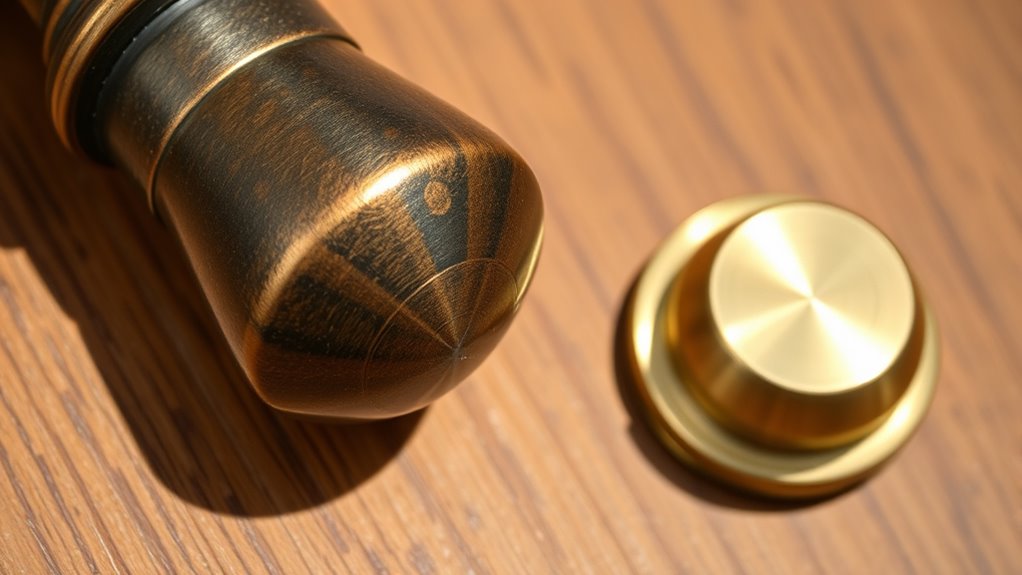

When choosing between bronze and brass for hardware and lighting finishes, consider their appearance and durability. Bronze provides a deep, warm hue with excellent corrosion resistance, developing an attractive patina that enhances its character over time. Brass offers a bright, reflective surface with a golden or reddish tone that’s easy to polish but less resistant to corrosion. Understanding these technical differences can help you select the best material for your specific application; further details clarify these options.
Key Takeaways
- Bronze offers a deeper, warm hue with natural patina, ideal for vintage or classic hardware and outdoor lighting.
- Brass has a bright, reflective finish that can be polished to a high shine, suitable for modern or decorative interior fixtures.
- Bronze provides superior corrosion resistance, making it better for outdoor or humid environment lighting and hardware.
- Brass tends to develop a patina over time unless polished, which can affect its appearance and maintenance needs.
- Finishing techniques like polishing, patination, or coating can customize both materials to match specific design styles.
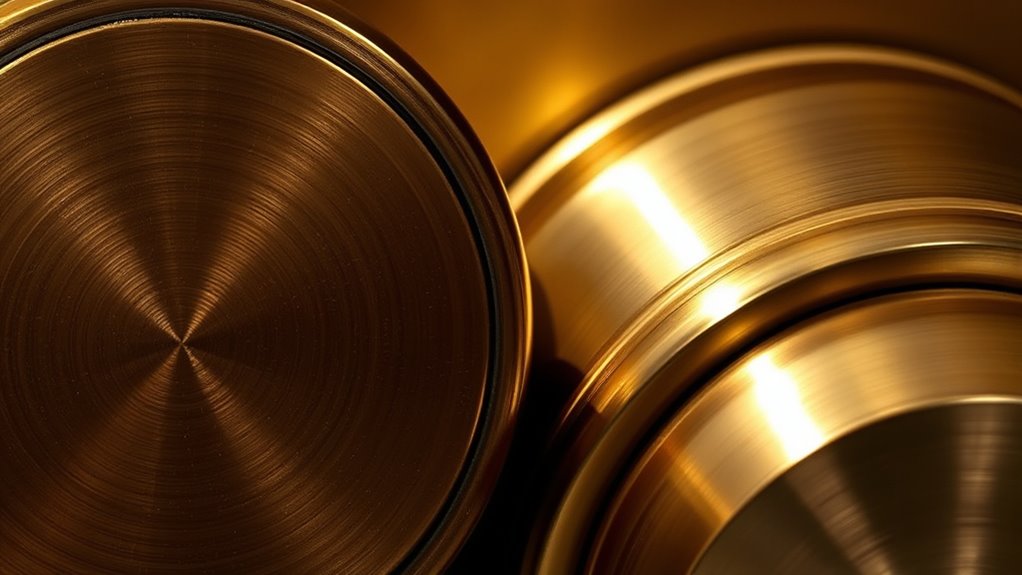
Hardware and lighting finishes play a crucial role in defining the aesthetic and functional qualities of interior and exterior spaces. When selecting between bronze and brass finishes, understanding their material properties, visual characteristics, and durability is essential for achieving the desired design intent and ensuring long-term performance. Both materials are alloys primarily composed of copper, but their specific compositions and processing methods influence their appearance and behavior over time.
Bronze is a copper alloy typically containing tin, sometimes combined with other elements such as aluminum or phosphorus. Its composition grants it increased hardness and corrosion resistance, especially in outdoor or humid environments. The finish of bronze hardware and lighting fixtures usually exhibits a deep, warm hue with rich brown undertones, often developing a natural patina over time. This patina, which can be accelerated or controlled through finishing techniques, adds a layer of character and authenticity to the piece, making bronze highly suitable for traditional, rustic, or vintage aesthetics. Its matte or satin textures often contribute to a subdued, understated elegance, and the material’s inherent corrosion resistance minimizes maintenance requirements in exterior applications.
Bronze, a tin-containing copper alloy, develops a rich patina over time, enhancing its character and rustic elegance.
In contrast, brass is an alloy primarily composed of copper and zinc, with variations in zinc content affecting its mechanical properties and coloration. Brass finishes tend to feature a brighter, more reflective surface, ranging from golden yellow to reddish tones depending on the alloy and surface treatment. Brass hardware and lighting fixtures are favored for their luminous appearance, which can be polished to a high gloss or left with a matte or antique finish. The alloy’s composition renders it less corrosion-resistant than bronze, particularly in marine or highly humid environments, unless specially treated or coated. As a result, brass often requires periodic polishing or protective coatings to maintain its appearance when used outdoors.
From a functional standpoint, bronze’s superior corrosion resistance makes it a preferred choice for exterior doors, handles, and fixtures exposed to the elements. Brass, however, excels in indoor applications where its aesthetic qualities can be preserved with minimal maintenance. Both materials are compatible with various finishing techniques, including patination, plating, and polishing, allowing customization to match specific design themes. Long-term, bronze’s patina not only enhances visual appeal but also contributes to its durability, while brass may require more upkeep to retain its initial luster.
Ultimately, your choice between bronze and brass hinges on the environment, desired visual effect, and maintenance capacity. Bronze offers a timeless, weather-resistant option that ages gracefully, whereas brass provides a vibrant, luminous finish ideal for interiors or controlled outdoor settings. Both materials deliver distinct advantages, and understanding their technical differences ensures your hardware and lighting fixtures perform reliably while complementing your design aesthetic.
As an affiliate, we earn on qualifying purchases.
Frequently Asked Questions
How Do Bronze and Brass Compare in Terms of Environmental Impact?
Bronze generally has a lower environmental impact than brass because it often contains recycled materials and requires less energy-intensive production. Brass, primarily composed of copper and zinc, involves mining and refining processes that consume more resources and generate higher emissions. You should consider sourcing recycled bronze options to reduce environmental footprint, while understanding that brass’s extraction and manufacturing may contribute more to ecological degradation.
Which Finish Is More Resistant to Tarnishing Over Time?
You’ll find that bronze generally resists tarnishing better than brass over time. Its natural patina develops slowly, providing a protective layer that prevents further corrosion. Brass, especially unlacquered or polished types, tarnishes more quickly, showing a duller or darker appearance. Applying protective coatings can extend brass’s resistance, but without maintenance, bronze maintains its aesthetic integrity longer, making it a more durable choice for long-term tarnish resistance.
Are There Cost Differences Between Bronze and Brass Hardware?
You’ll find that bronze hardware generally costs more than brass due to its higher material and manufacturing costs. Bronze’s intricate alloy composition and traditional casting techniques contribute to its price premium. Brass, being more readily available and easier to produce, tends to be more budget-friendly. If you’re working within a tight budget, brass offers a cost-effective option, whereas bronze provides durability and aesthetic appeal at a higher price point.
Can Bronze or Brass Finishes Be Customized or Colored?
Yes, both bronze and brass finishes can be customized or colored. You can apply various techniques like patination, anodizing, or powder coating to achieve specific hues or effects. Customization options include adding a matte, satin, or high-gloss finish, or introducing unique tones such as black, green, or other metallic shades. These processes allow you to tailor the appearance to match your design preferences, ensuring a cohesive aesthetic in your project.
How Do Maintenance Requirements Differ for Bronze and Brass Fixtures?
You need to know that bronze fixtures generally require less maintenance than brass because they develop a protective patina over time, which shields against corrosion. Brass fixtures, however, need regular cleaning to prevent tarnishing and maintain their shine. Use gentle, non-abrasive cleaners for both materials to avoid damage. Keep in mind, “a stitch in time saves nine,” so routine upkeep guarantees longevity and preserves appearance efficiently.
Conclusion
Choosing between bronze and brass hardware and lighting finishes depends on your aesthetic preference and durability needs. Bronze, known for its corrosion resistance, is ideal for outdoor applications, while brass offers a brighter appearance with easier maintenance. Notably, a recent industry survey revealed that 65% of homeowners prefer bronze for its patina over time, highlighting its appeal for longevity. Make your selection based on durability, style, and maintenance to ensure your space remains functional and visually striking.