
TL;DR
Designers use a mitered edge to make a kitchen countertop appear substantially thicker without using one oversized slab. The finish joins a horizontal worktop to a matching vertical strip, but careful templating, cutting and material matching are needed for the seam to appear continuous. Cost, weight and final pricing depend on the material and project.
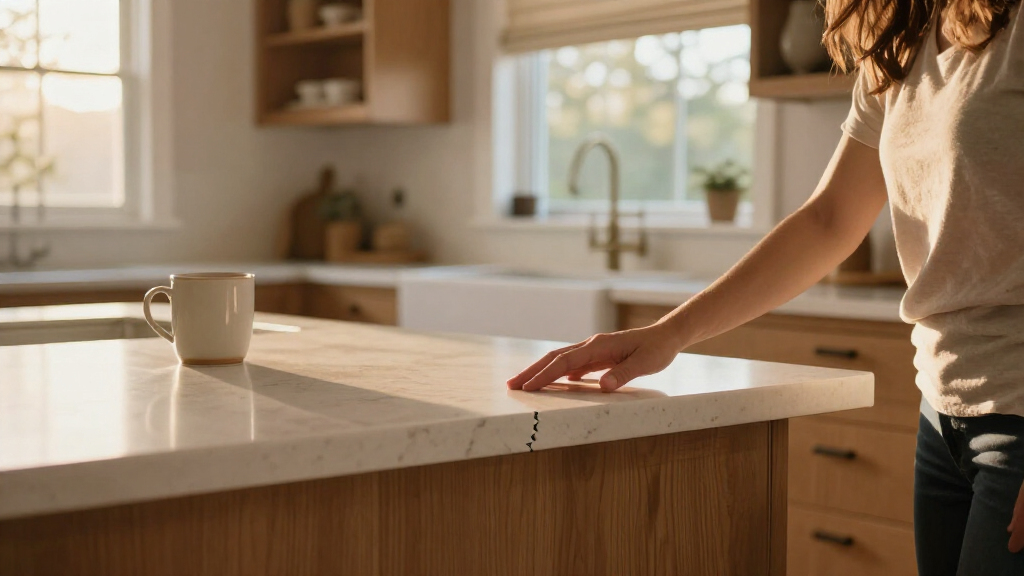
A mitered countertop edge creates the appearance of a thick, solid kitchen worktop by joining a standard-thickness surface to a matching vertical strip, according to designers quoted in a recent design explainer. The detail can give an island or counter a more substantial profile while using less material and weight than a single oversized slab, though its cost and appearance depend on the chosen material and the quality of the installation.

Get furniture and decor delivered free with Prime
- Fast, free delivery on millions of items
- Prime Video, Amazon Music and more included
- Member-only deals all year
Roundhouse head of sales and design Hayley Robson describes the construction as joining the countertop surface to a matching vertical piece, with both cut at 45-degree angles. The pieces meet along the edge to form a deep profile that is intended to read visually as one slab. The join is still there; precise cutting and a close match between the pieces make it less apparent.
Getting that meeting point right requires accurate measurements and fabrication. Naked Kitchens co-founder Jayne Everett says the worktop must be carefully templated so the vertical and horizontal miters meet cleanly. With natural stone, Harvey Jones designer Lewis Buckley says material selection and cutting also affect whether the stone’s veining continues across the join. The source describes the result as a bespoke detail, not a simple trim that can be added without planning.
The technique is often used on kitchen islands, where a deeper-looking edge can make the work surface more visually prominent alongside other kitchen design choices. Designers cited in the explainer say it can be made with standard-thickness slabs, which may widen the material choices, including countertop materials, and make pieces easier to handle than an extremely thick solid slab. The source does not provide project prices, savings figures or a cost comparison, so the size of any financial advantage will vary.
Why Designers Use the Mitered Edge On Kitchen Countertops
A mitered edge makes a countertop look thicker by joining the horizontal worktop to a matching vertical strip. Its seamless appearance depends on precise fabrication and material matching.
How the Edge Is Built
The two pieces meet at an angle to create the appearance of one deeper slab.
Accurate measurements help the horizontal and vertical pieces meet cleanly.
Both pieces are cut at 45 degrees and fitted together.
For natural stone, selection and cutting affect how veining meets across the seam.
Why Designers Choose It
The detail can give an island a more substantial profile without using one oversized slab.
A thicker look
The deep edge can make a work surface more visually prominent and give cabinetry an architectural finish.
More flexibility
The profile can use standard-thickness slabs, with depth tailored to the island or cabinetry.
Less weight
Designers say it can create the thick-slab appearance with considerably less weight than a solid slab.
What Shapes the Result
- Careful templating and accurate fabrication
- Close matching between the horizontal and vertical pieces
- Planned veining on patterned natural stone
- Material selection and availability
- Edge depth, seam placement and support
- Fabrication, installation and labor costs
Before the Material Is Cut
Ask your kitchen designer and fabricator to confirm the details for your specific project.
| Ask about | What to confirm |
|---|---|
| Profile | Depth and how the edge meets the cabinetry |
| Material | Availability and how the pieces will be matched |
| Quote | Written comparison covering material, fabrication and installation |
A Thicker Look With Less Stone
The appeal is a mix of visual impact and practical constraints. A thick countertop can anchor an island and give cabinetry a more architectural finish, but a single solid slab at that depth may require substantial material and be difficult to move. Robson says a mitered edge offers the appearance of a thick slab with considerably less weight; Everett says a solid slab would be expensive and very heavy.
For homeowners, that can make the look worth discussing during design and fabrication, particularly when comparing options for an island. A mitered edge may reduce the amount of material needed for the visible profile and can allow the edge depth to be tailored to the cabinetry. But those points do not establish that every mitered counter costs less overall: fabrication, installation, stone selection and labor all affect the final price. The technique trades some material demands for greater precision at the join.
Material choice also shapes the result. On a strongly veined stone, a well-planned seam may let the pattern appear to continue around the edge, while a mismatch can make the construction more visible. The detail is therefore both an aesthetic choice and a fabrication decision. Readers considering it should ask a kitchen designer or fabricator how the material will be selected, where seams will fall and how the edge will be supported.
Products Worth Considering

Dyson V9 Motorbar Cordless Vacuum

Bose TV Speaker (2nd Gen) – Compact Soundbar with Bluetooth and HDMI‑ARC Connectivity, Clear Dialogue, Dolby Atmos, Deep Bass, Remote Contro

Roborock Q7 M5+ Robot Vacuum and Mop
As an affiliate, we earn on qualifying purchases.
How the Edge Is Built
The source presents the mitered edge as an established kitchen-design technique rather than a newly announced product or development. Designers at Roundhouse, Naked Kitchens and Harvey Jones describe its construction and use in modern kitchens. The provided material offers no dates for when the technique became popular and no sales or survey data measuring how often homeowners choose it.
In a typical mitered profile, the exposed edge is formed from a separate vertical strip cut to meet the horizontal worktop at an angle. When the pieces are aligned and finished, the edge can resemble a thicker single piece. That visual effect depends on the cut, the fit and, for patterned materials, the way the surface is matched. The method is different from using one solid block of material for the full depth.
Designers also point to flexibility: the profile depth can be adjusted to suit an island or cabinet proportions, and standard-thickness slabs can be considered. The source does not set out technical specifications for particular stones, engineered surfaces, adhesives or support systems. Those details need to be confirmed with the fabricator for the specific countertop and kitchen design.
“A mitered edge is created by joining the worktop surface to a matching vertical strip, with both pieces cut at 45 degrees.”
— Hayley Robson, head of sales and design at Roundhouse
Costs and Material Limits
The source does not give price ranges, savings estimates or installation timelines, so it cannot establish how much a mitered edge would save on a particular kitchen. Its cost advantage is presented by designers as a comparison with using a solid oversized slab, not as a guarantee that the finished countertop will be inexpensive.
It is also unclear from the material which countertop products are suitable for every version of the detail, or what fabrication and support requirements apply to specific materials. The source says natural stone calls for careful selection and cutting, but does not provide technical guidance for individual stones or other surfaces. The appearance of the seam, including whether veining can be matched, will depend on the actual slab and workmanship. Homeowners should request a project-specific quote and drawings from their designer or fabricator.
Questions to Ask Before Fabrication
The source announces no upcoming product launch, policy change or scheduled industry milestone. For homeowners planning a renovation, the next step is a discussion with the kitchen designer and countertop fabricator before the material is ordered or cut. They can confirm the intended profile depth, material availability, seam placement, edge detail and installation requirements.
Ask for a written comparison between a mitered edge and a solid thick slab, including material, fabrication and installation costs. For patterned stone, request that the fabricator explain how the pieces will be selected and positioned to handle the veining at the join. A drawing or sample can help clarify how the finished edge will meet the cabinetry and whether the proposed look fits the kitchen.
Key Questions
What is a mitered edge on a kitchen countertop?
It is an edge detail made by joining the horizontal worktop to a matching vertical strip, commonly with both pieces cut at 45-degree angles. Together, they make the counter appear thicker than the top surface alone.
Does a mitered edge use one solid, thick slab?
No. The technique creates the appearance of a thick slab by joining separate pieces. Designers quoted in the source say it can use a standard-thickness worktop surface and a vertical strip rather than one oversized solid piece.
Is a mitered countertop edge cheaper?
It may cost less than using a solid oversized slab because it can use less material and weigh less, but the source gives no prices or guaranteed savings. Material, fabrication and installation costs vary by project.
Why does a mitered edge require careful workmanship?
The horizontal top and vertical strip must meet precisely for the seam to look clean. With natural stone, fabricators may also need to select and cut pieces carefully so the veining appears to continue across the join.
Source: livingetc.com