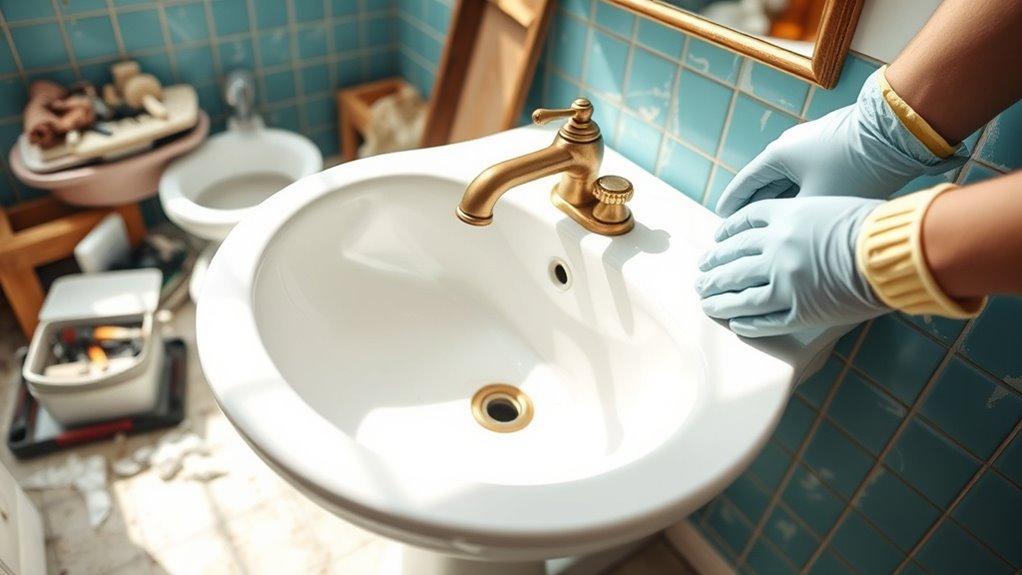

Swapping a sink involves turning off water supply valves, removing the old fixture carefully, and inspecting plumbing components for damage or corrosion. Make certain the new sink fits correctly and is aligned with your plumbing rough-in before securing it with mounting hardware. Connect the drain and supply lines properly, then turn the water back on to check for leaks. Properly sealing and securing everything prevents future issues, and continuing involves mastering each step to ensure lasting functionality and appearance.
Key Takeaways
- Turn off water supply and disconnect existing sink to prepare for replacement.
- Choose a new sink that fits the space and matches plumbing rough-ins for easy installation.
- Seal the new sink with silicone caulk around the flange for a watertight fit.
- Connect drain and supply lines securely, checking for proper alignment and leaks.
- Test the setup for leaks and functionality before finalizing and cleaning the area.

Replacing an outdated or damaged bathroom sink can be an effective way to restore functionality and improve the space’s appearance without the expense of a full renovation. This process involves removing the existing fixture, preparing the plumbing connections, and installing the new sink with attention to detail to guarantee proper operation. Begin by shutting off the water supply valves beneath the sink to prevent leaks during removal. Place a bucket underneath the drain assembly to catch residual water, then disconnect the water supply lines using a wrench, taking care to retain or replace compression washers if necessary. Next, detach the sink from the wall or countertop by removing mounting clips, brackets, or screws, depending on the fixture’s installation method.
Once the old sink is removed, inspect the plumbing fixtures and connections for corrosion, wear, or damage. If any components are compromised, replace them to guarantee a secure, leak-free connection with the new sink. Prepare the mounting surface by cleaning and verifying flatness; uneven or dirty surfaces can lead to instability or leaks. Before installing the new sink, confirm that it fits the designated space and that the drain opening aligns with the plumbing rough-in. Apply a bead of high-quality silicone caulk around the perimeter of the sink’s mounting flange to create a watertight seal and prevent water infiltration behind the fixture.
Position the new sink onto the mounting surface, ensuring it is level and properly aligned with the drain opening. Secure it with the appropriate mounting hardware, tightening clips or brackets to specifications without over-tightening, which could crack the porcelain or acrylic. Connect the drain assembly, ensuring all gaskets and washers are properly seated to prevent leaks. Attach the water supply lines to the faucet’s inlet ports, tightening fittings securely but without excessive force. Turn on the water supply valves gradually and inspect all connections for leaks, tightening fittings as needed.
Finally, test the drain for proper flow, checking below for any signs of leakage, and run water through the faucet to confirm consistent pressure. To ensure long-term durability, consider regularly cleaning your plumbing fixtures and using proper maintenance techniques. Clean the area thoroughly, removing any excess silicone or debris. Replacing a bathroom sink with precision and proper procedures enhances both functionality and aesthetics, extending the fixture’s lifespan while maintaining plumbing integrity. This targeted approach minimizes disruption and provides a cost-effective upgrade that can considerably improve your bathroom’s overall condition and appearance.
Frequently Asked Questions
How Long Does a Typical Sink Replacement Take?
A typical sink replacement takes about 2 to 4 hours, depending on your plumbing setup and sink type. First, you shut off the water supply, then disconnect the existing sink and remove it. You’ll install the new sink, connect the plumbing fixtures, and check for leaks. Proper preparation and tools can streamline the process, but unforeseen issues like damaged plumbing may extend the timeline.
Can I Install a New Sink Myself or Hire a Professional?
You can install a new sink yourself if you have basic plumbing skills and the necessary tools, but hiring a professional guarantees proper installation and minimizes leaks. Assess your experience with plumbing tasks, including disconnecting and reconnecting water supply lines and drain assemblies. If you’re confident, follow manufacturer instructions carefully. Otherwise, hiring a licensed plumber guarantees code compliance and prevents potential water damage or warranty issues.
What Are the Most Durable Materials for Bathroom Sinks?
You should choose bathroom sinks made from porcelain, stainless steel, or granite composite for maximum durability. Porcelain offers resistance to scratches and stains, making it ideal for longevity. Stainless steel is highly resistant to impact and corrosion, suitable for heavy use. Granite composite combines natural stone and resin, providing strength and scratch resistance. These materials guarantee your sink can withstand daily wear and tear, reducing replacement frequency and maintaining aesthetic appeal over time.
How Do I Prevent Future Leaks After Replacing My Sink?
An ounce of prevention is worth a pound of cure. To prevent future leaks after replacing your sink, guarantee all fittings are securely tightened using a torque wrench. Check the washer and sealant for wear or damage, replacing them if necessary. Use high-quality plumber’s tape on threaded connections, and test the system for leaks before finishing. Regularly inspect connections for signs of wear to catch issues early.
Are There Eco-Friendly Options for New Bathroom Sinks?
Yes, eco-friendly bathroom sinks include models made from sustainable materials like recycled glass, reclaimed wood, or biodegradable composites. Look for low-flow aerators and water-saving designs to reduce water consumption. Choose fixtures with WaterSense labels, which guarantee efficient water use without sacrificing performance. Additionally, select durable, non-toxic finishes that minimize harmful chemicals and extend the sink’s lifespan, promoting environmental sustainability and reducing the need for replacements.
Conclusion
By swapping your sink, you’re not just upgrading your bathroom—you’re transforming it into a masterpiece of efficiency and style. This simple action can amplify your space’s value and functionality exponentially, turning a mundane room into a luxurious retreat. With precise installation and careful attention to detail, you’ll achieve professional-quality results that last for years. Remember, a single sink replacement can revolutionize your entire bathroom experience—don’t underestimate the power of this small but impactful upgrade.