
To style built-ins beautifully, blend books and objects with deliberate negative space to create harmony. Mix vertical and horizontal book arrangements to add visual interest, and select objects that reflect your personality, grouping them for liveliness. Use empty areas to breathe and highlight individual pieces, balancing scale and color for cohesion. Play with textures and keep an authentic, spontaneous feel. Want ideas to elevate your display? Keep exploring for inspiring tips.

Get furniture and decor delivered free with Prime
- Fast, free delivery on millions of items
- Prime Video, Amazon Music and more included
- Member-only deals all year
Key Takeaways
- Mix vertical and horizontal book placements to create visual interest and surface space.
- Group objects in clusters or use bold pieces as focal points for lively displays.
- Incorporate negative space strategically to provide breathing room and highlight individual items.
- Choose a cohesive color palette and diverse textures to unify the arrangement.
- Balance order with spontaneity by layering and adjusting objects for an authentic, harmonious look.

Built-in components are the silent canvas of modern design, blending seamlessly into your space while offering endless opportunities for personalization. They serve as the backdrop for your personality, where every book, ornament, or empty space communicates something about who you are. The key to styling these features isn’t just about filling shelves—it’s about creating a visual rhythm that balances beauty and function. Think of your built-ins as a curated gallery, where each element plays a role in shaping the overall aesthetic.
Built-in shelves are your personal gallery—balancing beauty and function with curated style.
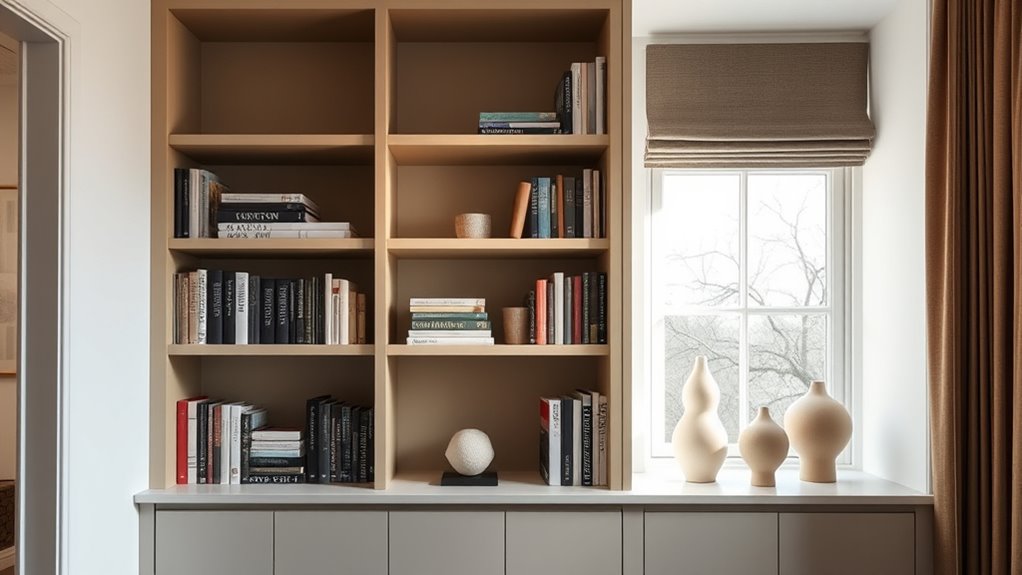
Start by considering the purpose behind your display. Are these shelves meant for everyday use, or are they primarily decorative? If they’re functional, keep the essentials within easy reach, but don’t shy away from adding a few standout pieces that elevate the look. When it comes to books, don’t just line them up in uniform; mix vertical stacks with horizontal layers. Horizontal stacks create visual interest, giving you space to add small objects or art atop them. Varying the orientation prevents the display from feeling monotonous, inviting the eye to explore each nook and cranny.
Objects are your chance to inject personality into the space. Select pieces that resonate with your style—vintage vases, modern sculptures, or travel souvenirs—each telling a story. Play with scale and grouping; a cluster of small items feels lively, while a single bold piece can anchor the display. Don’t be afraid of negative space. The empty or lightly filled areas are just as important as the objects themselves, providing breathing room and emphasizing the curated nature of your arrangement. Negative space acts as a pause, guiding the viewer’s eye and preventing clutter from overwhelming the design.
Layering is your secret weapon. Place taller items at the back or along the edges, with smaller pieces in the front. For a more polished look, incorporate trays or shallow boxes to group similar objects, adding a sense of cohesion. Keep color palettes in mind—monochromatic schemes create serenity, while contrasting tones add vibrancy. Texture matters, too; combine smooth ceramics with rougher textiles or metallic accents to add depth. Additionally, understanding relationships can help in arranging objects harmoniously, ensuring each piece complements the others rather than competing for attention.
Ultimately, styling built-ins is about balancing order with spontaneity. You want your shelves to look intentional, yet inviting. Be patient—arrange, tweak, step back, and refine until the display feels authentic and harmonious. When you master the dance between books, objects, and empty space, your built-ins transform from mere storage into a personalized, aesthetic statement—an ever-evolving canvas that reflects your unique taste.
As an affiliate, we earn on qualifying purchases.
Frequently Asked Questions
How Can I Personalize Built-In Styling for Different Room Themes?
To personalize built-in styling for different room themes, you’ll want to choose elements that reflect your unique vibe. Incorporate colors, textures, and decorative objects that resonate with each theme—think vintage books and brass accents for a classic look or sleek, minimal accessories for modern spaces. Play with arrangement, layering, and negative space to create visual interest. Let your personality shine through by mixing meaningful keepsakes with carefully curated pieces.
What Are Common Mistakes to Avoid When Styling Built-Ins?
You should avoid cluttering your built-ins, which can make the space feel chaotic and overwhelming. Steer clear of overcrowding with too many objects or mismatched styles that clash visually. Don’t neglect balance—distribute books, art, and decor thoughtfully to create harmony. Also, resist the urge to ignore negative space; it’s essential for highlighting key pieces and maintaining an airy, curated feel that elevates your room’s aesthetic.
How Do I Balance Functionality and Aesthetics in Built-In Designs?
Imagine your built-in as a well-tuned orchestra, where each element plays a crucial role. You balance functionality and aesthetics by carefully selecting objects that serve a purpose yet add beauty, like a conductor choosing harmonious instruments. Keep clutter at bay, allowing negative space to breathe and highlight key pieces. Prioritize your daily needs while maintaining visual interest, creating a space that’s both practical and inspiring—a symphony for your home.
What Materials Work Best for Decorative Objects on Built-Ins?
You’ll want to choose materials that evoke warmth and texture, like ceramic, wood, or metal, to create visual interest. Incorporate glazed ceramics for a glossy finish, distressed wood for rustic charm, or matte metals for modern flair. Mixing these materials adds depth and personality to your display. Remember, tactile qualities draw the eye, so select objects that invite touch and complement your overall aesthetic, balancing beauty with purpose.
How Can I Update Built-In Styling Without Major Renovations?
Did you know that small updates can boost your space’s appeal by 30%? To refresh your built-ins, start by swapping out or repositioning existing objects, creating new layers of visual interest. Incorporate fresh books, artistic objects, or vases in varying heights. Play with negative space, add a pop of color, or change the arrangement of accessories. These simple tweaks give your shelves a stylish, updated look without any major renovations.
Conclusion
As you step back, the carefully styled built-in transforms into a quiet symphony of order and chaos—books teetering beside delicate objects, negative space whispering calm amidst the visual buzz. It’s a dance between fullness and breath, where each element finds its place, creating a living portrait of personality and grace. In this delicate balance, your shelves become more than storage—they become a canvas for stories, a sanctuary of style, and a reflection of your unique aesthetic.
Halloween Picks
halloween
As an affiliate, we earn on qualifying purchases.