
TL;DR

Get furniture and decor delivered free with Prime
- Fast, free delivery on millions of items
- Prime Video, Amazon Music and more included
- Member-only deals all year
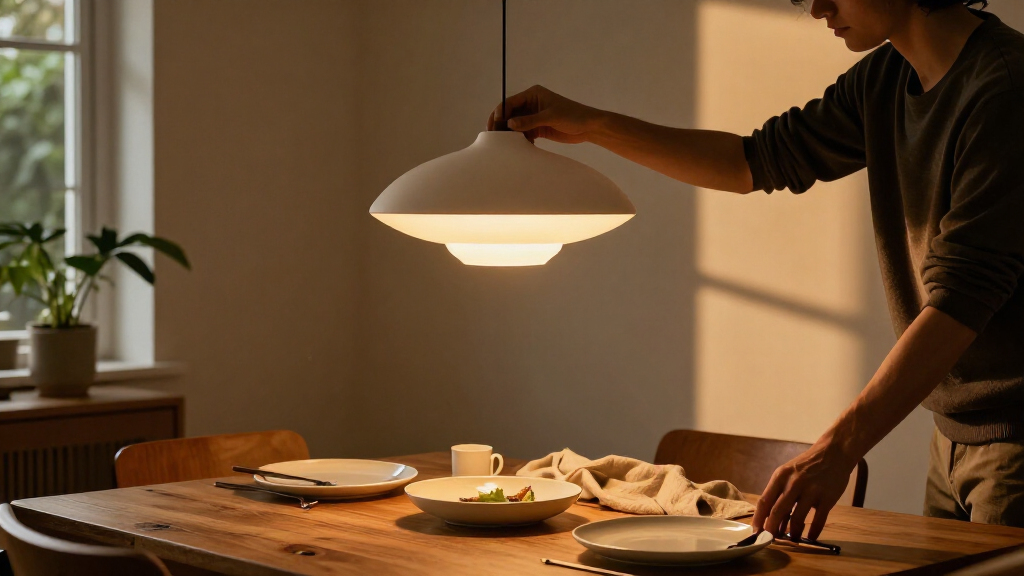
PINCH designer Russell Pinch says the Anders pendant began in 2009 as a light for a studio photo shoot and took five years to perfect. Made with layered banana fiber and still assembled by hand, it later became one of the studio’s most requested designs and has been adapted into a wall light.
PINCH’s Anders pendant, a layered, sculptural light made from banana fiber, began as a prop for a studio photo shoot in 2009 and took five years to perfect, designer Russell Pinch told Livingetc. The studio now describes it as one of its most requested designs and has developed a wall-light version, extending a product that was initially not intended for sale.
Russell Pinch told Livingetc that he needed a light to hang above a table during a shoot of furniture from the young studio, founded in 2004. An image of a Lanvin dress in a fashion magazine supplied the starting point: its outer skirt lifted in motion to reveal layers beneath. Pinch made a rough model from fabric to explore that shape. He said the design was conceived for the photograph, not as a product.
Turning the model into a workable shade proved difficult. Pinch said a creative director at Jasper Conran advised him to consult a milliner rather than a tailor, directing the work toward the construction techniques needed to create the lamp’s draped appearance. Manufacturers had offered to make it in plastic, he said, but he wanted a material that retained the softness of fabric. The eventual use of banana fiber, according to Pinch, gave the shade a translucency that diffuses light through its layers.
The finished shade is still made by hand. Livingetc reports that its individual layers are cut, stiffened, sewn and pinned, then shaped into place. Pinch said makers check the angle of each drape, even though the finished arrangement is meant to look loosely formed. He told the publication the development took five years; the report does not give a more detailed production timeline or explain how the design was tested.
How Handwork Shapes the Light
The Anders shows how a product’s visual simplicity can depend on detailed making. Its folds are not simply decorative: the layered fiber shapes how light passes through the shade, producing areas of varying brightness. Pinch described the result as a warm, soft glow, while designer Lonika Chande, quoted by Livingetc, said the material creates a distinctive atmosphere in a room.
That construction also helps explain why the design has remained part of PINCH’s collection despite a slow start. Pinch said sales were initially modest and that the studio might have discontinued it if it had not continued using the lamp in its own photography. Its later demand suggests the design found an audience over time, although the report provides no sales figures or market comparisons. The new wall-light version indicates the studio is applying the Anders’s visual language beyond its original pendant format.
handmade banana fiber pendant light
As an affiliate, we earn on qualifying purchases.
As an affiliate, we earn on qualifying purchases.
From Photo Prop to PINCH Design
PINCH was founded in 2004, and the Anders emerged five years later while the studio was photographing early furniture designs. The lamp therefore began as part of a specific styling need, rather than as a planned addition to a lighting range. Its development depended on finding a way to reproduce the movement of the original fabric model in a durable shade.
According to Livingetc, the pendant spent almost a decade in the collection without becoming a major commercial success. The studio kept making and showing it, and interest grew gradually. The report describes installations in private homes and commercial settings, including a Texas yoga studio and a project by Chande. PINCH has also introduced an Anders wall light. The article does not specify when that version launched or how it differs in construction from the pendant.
“I wanted it to have the drape of a dress.”
— Russell Pinch, designer, speaking to Livingetc
Sales and Production Details Missing
The Livingetc account does not provide sales totals, the number of lights made, current order volumes or pricing. Pinch characterized the early sales as just sufficient to justify keeping the design, but the report offers no figures with which to measure its later popularity. It also does not identify the banana fiber’s source or explain the shade’s care, durability or environmental impact. Those details cannot be confirmed from the supplied material.
The article says the lamp took five years to perfect but does not lay out each stage or give a specific completion date. It also mentions a wall-light version without a launch date, technical specifications or information about whether it uses the same assembly process as the pendant.
The Anders Range Continues to Evolve
PINCH’s stated next development in the supplied report is the Anders wall light, which extends the design beyond its pendant form. The article does not announce another product, give a release schedule or say whether further versions are planned. Readers interested in specifications, availability or pricing would need current information from PINCH or its retailers; no such details are included in the report.
Key Questions
How did the Anders pendant begin?
Russell Pinch told Livingetc that he designed it in 2009 as a light for a PINCH furniture photo shoot. He later developed the shade as a product.
Why did the design take five years to perfect?
The report says the challenge was translating a loose fabric model into a finished shade with the intended draped appearance. Pinch said the studio explored construction methods and settled on banana fiber; individual layers are still cut, stiffened, sewn, pinned and shaped by hand.
What is the Anders shade made from?
Livingetc describes the shade as made from banana fiber. The supplied report does not identify its source or provide further material specifications.
Did the Anders become popular immediately?
No. Pinch told Livingetc that sales were initially limited and grew gradually. He said it became one of PINCH’s most requested designs, but the report gives no sales figures.
Is there an Anders light besides the pendant?
Yes. The Livingetc report says PINCH has introduced an Anders wall-light version. It does not state the launch date, price or technical specifications.
Source: rss
Fall Picks
fall essentials
As an affiliate, we earn on qualifying purchases.