
To achieve sustainable decor with low-impact looks, choose furniture made from reclaimed or FSC-certified sustainable materials, and opt for natural fibers like jute, hemp, or organic cotton for accessories. Incorporate energy-efficient LED lighting and maximize natural sunlight to cut down energy use. Add greenery with native plants in eco-friendly pots to improve air quality. Supporting local artisans and vintage pieces also reduces waste and transportation emissions. Keep exploring for more ideas to make your space eco-conscious and stylish.
Key Takeaways
- Choose furniture made from reclaimed, recycled, or certified sustainably sourced materials like FSC or PEFC wood.
- Incorporate natural fiber textiles and vintage or thrifted decor items to reduce environmental impact.
- Use energy-efficient LED lighting and maximize natural daylight to lower electricity consumption.
- Support brands with responsible sourcing practices and opt for recycled or reclaimed materials.
- Add indoor plants in eco-friendly pots to enhance air quality and create a natural, sustainable aesthetic.
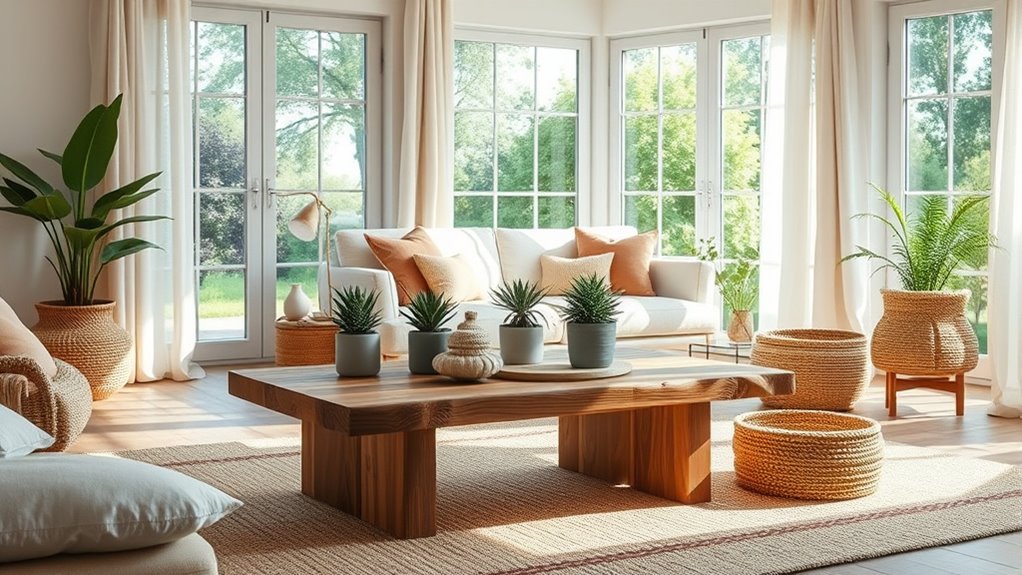
Have you ever wondered how your home decor choices can impact the environment? Every element you select — from furniture to accessories — influences your carbon footprint and the health of the planet. Embracing sustainable decor isn’t just about style; it’s about making mindful decisions that reduce waste, lower energy consumption, and support eco-friendly practices. When you choose low-impact looks, you’re not only creating a beautiful space but also contributing to a healthier world.
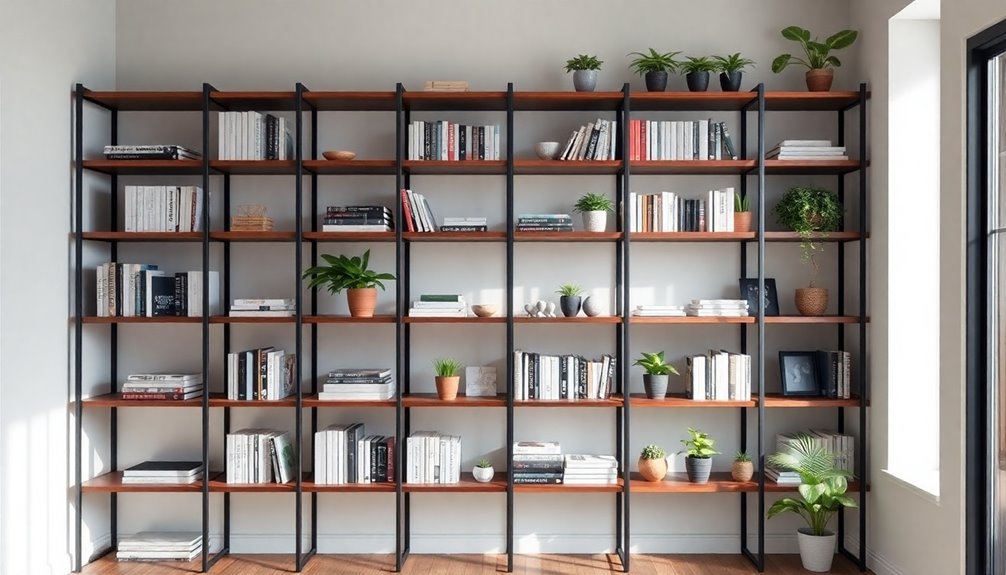
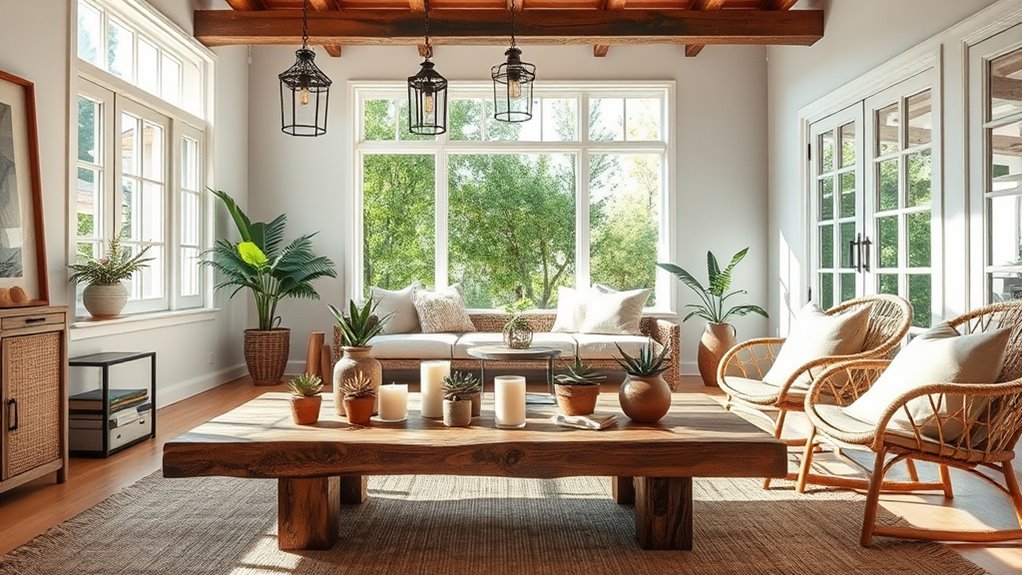
One of the easiest ways to start is by opting for furniture made from reclaimed or recycled materials. Instead of buying brand-new pieces, look for items crafted from salvaged wood, recycled metal, or repurposed plastics. These choices prevent waste from ending up in landfills and reduce the demand for virgin resources. Additionally, many furniture brands now focus on using sustainably harvested wood, which ensures forests remain healthy and vibrant. When shopping, check for certifications like FSC (Forest Stewardship Council) or PEFC (Programme for the Endorsement of Forest Certification). These labels guarantee that the materials come from responsibly managed sources.
Another impactful step is selecting decor accessories that are eco-conscious. Natural fibers like jute, hemp, organic cotton, and linen make excellent choices for rugs, curtains, and upholstery. These materials are biodegradable, often require fewer chemicals during production, and have a lower environmental footprint. When you choose handmade or locally produced items, you further cut down on emissions caused by transportation and support small artisans and communities. Vintage and thrift store finds are also fantastic options, allowing you to give old pieces new life while reducing demand for fast furniture.
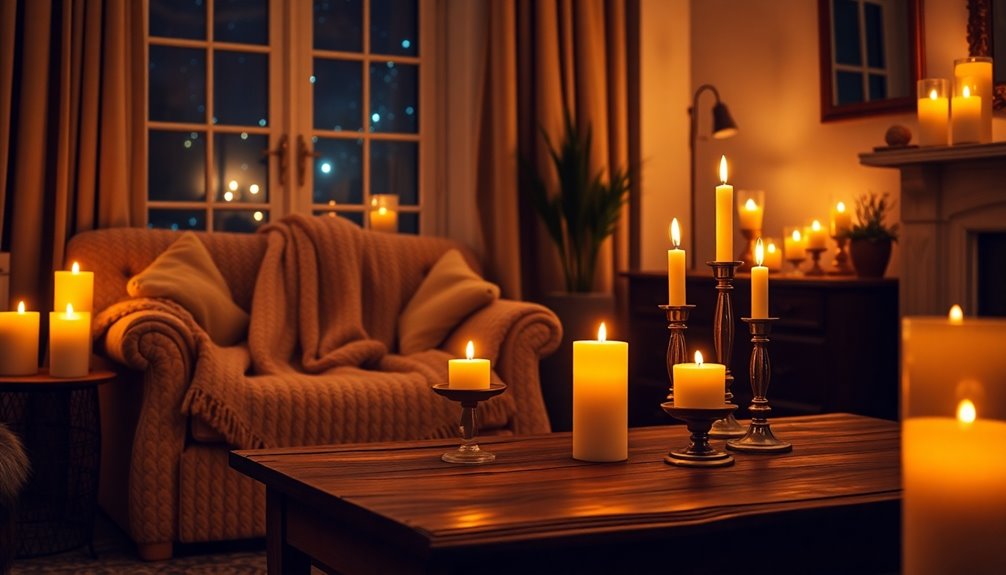
Lighting plays a significant role in sustainable decor. Switch to energy-efficient LED bulbs, which use a fraction of the energy of traditional incandescent bulbs and last much longer. For a cozy, eco-friendly ambiance, consider using solar-powered outdoor lights or lamps that incorporate natural daylight when possible. These choices help cut your energy consumption and lower your utility bills. Additionally, embracing natural lighting during daytime hours can significantly reduce your reliance on electric lights and enhance your space’s connection to the outdoors.
Lastly, think about your plants and greenery. Incorporating live plants not only enhances your space’s aesthetic but also improves indoor air quality. Opt for native species or plants grown sustainably, and avoid those that require excessive watering or pesticides. Using eco-friendly pots made from biodegradable or recycled materials completes your low-impact look.

Pemberly Row 4-Drawer Reclaimed Pine Wood Sideboard, 74" W x 35" H, Weathered Brown Finish, FSC Certified Sustainable Hand-Finished Rustic Buffet Table with Storage, Dining or Living Room Use
Materials: Reclaimed pine wood
As an affiliate, we earn on qualifying purchases.
As an affiliate, we earn on qualifying purchases.
Frequently Asked Questions
How Can I Verify the Sustainability of Decor Materials?
To verify the sustainability of decor materials, start by checking labels for certifications like FSC, Green Seal, or Fair Trade. Research the brand’s sourcing practices and ask about their supply chain. Choose locally made items to reduce transportation emissions. Prioritize natural, biodegradable, or recycled materials. You can also look for transparency in company reports and reviews, ensuring they prioritize eco-friendly methods in their production processes.
Are Vintage or Refurbished Items More Eco-Friendly?
Yes, vintage or refurbished items are often more eco-friendly because they reuse existing materials, reducing waste and demand for new resource extraction. By choosing these pieces, you extend their life and lower your carbon footprint. Plus, they add unique character to your home. Just make sure to check their condition and sourcing to verify they’re genuinely sustainable. Your choices can make a significant positive impact on the environment!
What Are the Best Non-Toxic Paint Options?
You should choose non-toxic paints like clay, milk paint, or plant-based options. Did you know traditional paints release volatile organic compounds (VOCs) that can linger in your home for years? Switching to eco-friendly paints reduces indoor air pollution and protects your health. These options are made from natural ingredients, are low-odor, and safe for kids and pets. By choosing non-toxic paint, you’re making a conscious choice for a healthier, greener living space.
How Can I Reduce Waste When Decorating?
You can reduce waste when decorating by choosing secondhand or vintage items, which extends their life and keeps them out of landfills. Opt for versatile pieces you can reuse or repurpose, and avoid single-use decor. Before buying new, consider donating or selling items you no longer need. Be mindful of packaging, and select eco-friendly materials that last longer, reducing the need for frequent replacements. This approach supports sustainability and creates a unique, eco-conscious space.
Can Sustainable Decor Be Cost-Effective?
Yes, sustainable decor can be cost-effective, much like planting a seed that grows into a flourishing tree. By choosing secondhand pieces, DIY projects, or eco-friendly materials, you save money while nurturing the environment. Think of your decor as an investment in the planet’s future—your mindful choices today help you build a beautiful, affordable space that’s kind to both your wallet and the Earth.

SAFAVIEH Area Rug 6×9 – Natural Fiber Collection – Natural Brown, Handmade Jute, Farmhouse Style, Chunky Textured Thick Pile (NF447A)
[HANDMADE CRAFTSMANSHIP]: Expertly hand-woven by skilled artisans from 100% plant-based jute fibers for a thick, richly textured surface…
As an affiliate, we earn on qualifying purchases.
As an affiliate, we earn on qualifying purchases.
Conclusion
By choosing sustainable decor, you become a gardener of the Earth, planting seeds of change with every eco-friendly piece. Your home transforms into a sanctuary where beauty blooms without draining the planet’s resources. Like a gentle stream carving new paths, your mindful choices ripple outward, inspiring others to follow. Embrace these low-impact looks, and watch your space flourish into a vibrant, resilient haven—proof that style and sustainability can dance in harmony beneath your roof.

evelor 6-Pack A19 LED Light Bulbs,60 Watt Equivalent Daylight 5000K with E26 Base,Efficient 9W,800 Lumens Non-Dimmable LED Bulbs,15000 Hours, Ideal for Bedroom Living Room
【Energy Efficiency】: EVELOR A19 LED light bulb is an energy-saving 9W (60W equivalent) bulb, saving up to 90%…
As an affiliate, we earn on qualifying purchases.
As an affiliate, we earn on qualifying purchases.

YNNICO 6 inch Plant Pots, 5 Pack Flower Pots Outdoor Indoor, Planters with Drainage Holes and Tray Saucers(Multicolor)
🌻GREAT SIZE SUPER TRENDY COLORS- 6’’D * 6’’H. Perfect for most small and medium-sized houseplants such as Aloe…
As an affiliate, we earn on qualifying purchases.
As an affiliate, we earn on qualifying purchases.