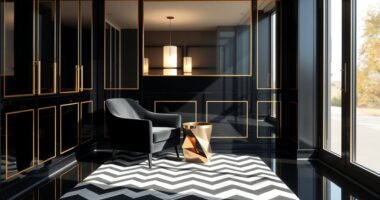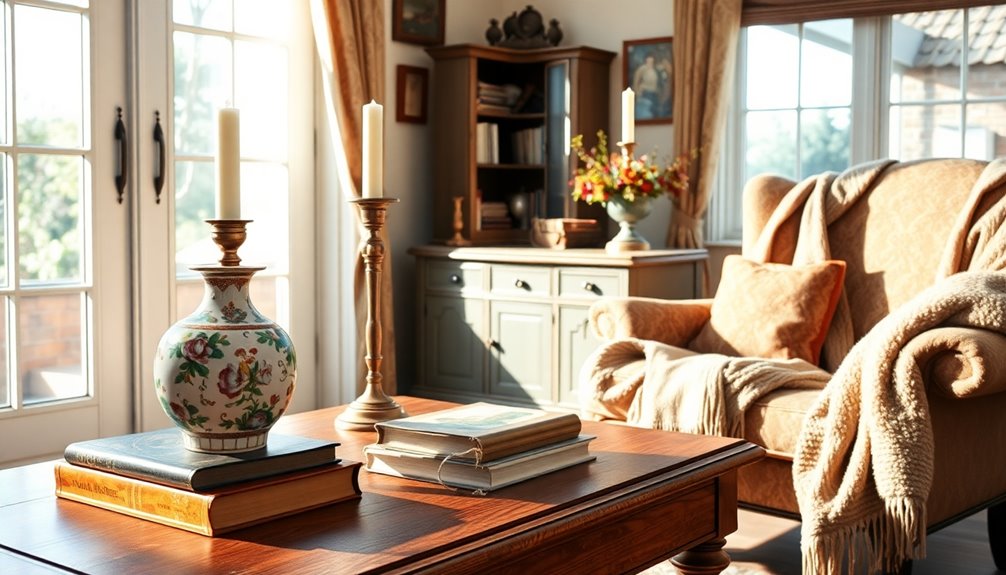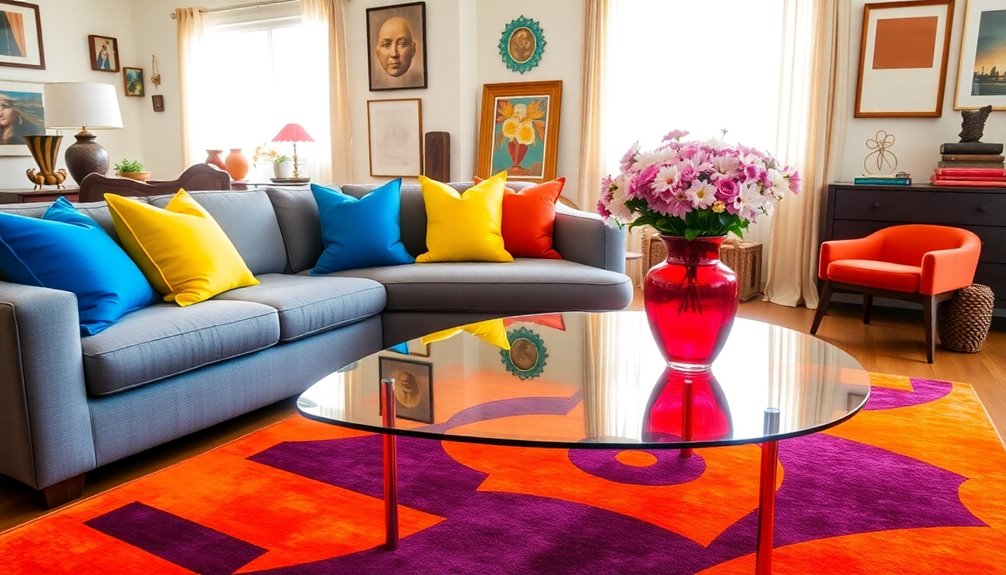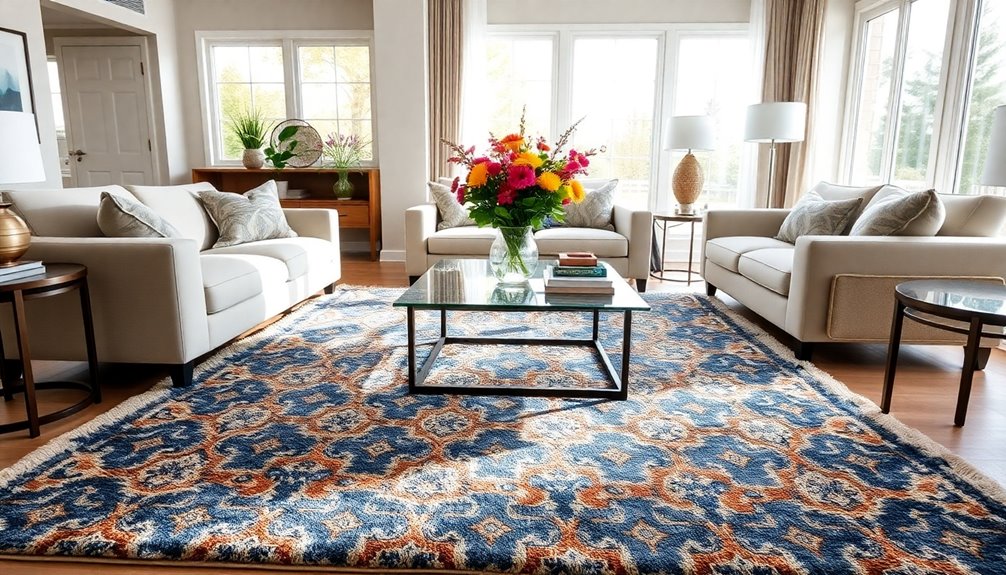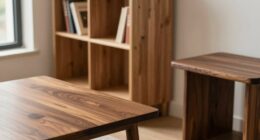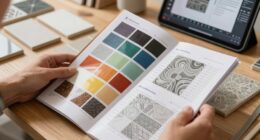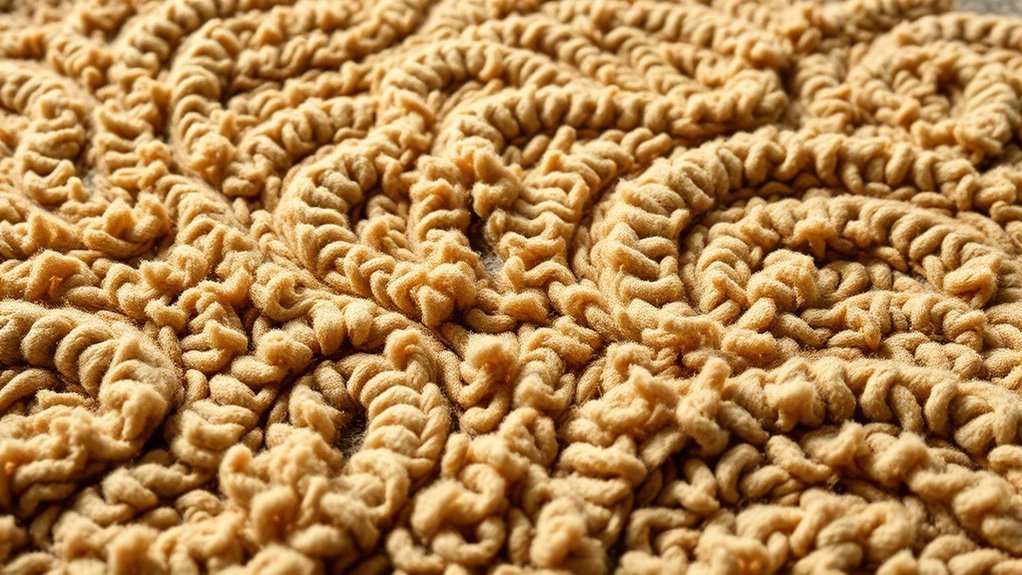

If you’re embracing the ‘texture first’ trend, you’ll love how rugs with rich, tactile surfaces can transform your space. Think plush piles, nubby weaves, and raised motifs that invite touch and add depth. Natural fibers like wool and jute bring authenticity while vibrant accents create contrast. These rugs are perfect under dining tables or in cozy corners, encouraging interaction and barefoot comfort. Keep exploring to discover how to effortlessly incorporate these layered textures into your decor.
Key Takeaways
- Emphasize tactile, textured surfaces like plush piles, boucle fibers, and nubby weaves for sensory-rich rugs.
- Prioritize natural materials such as wool, jute, and sisal to enhance authenticity and depth.
- Incorporate raised motifs, embroidered details, and three-dimensional techniques for visual interest.
- Use earthy, muted tones with bold accents to balance tactile appeal and visual contrast.
- Place textured rugs in cozy, interactive spaces like under dining tables or in lounging corners for maximum engagement.
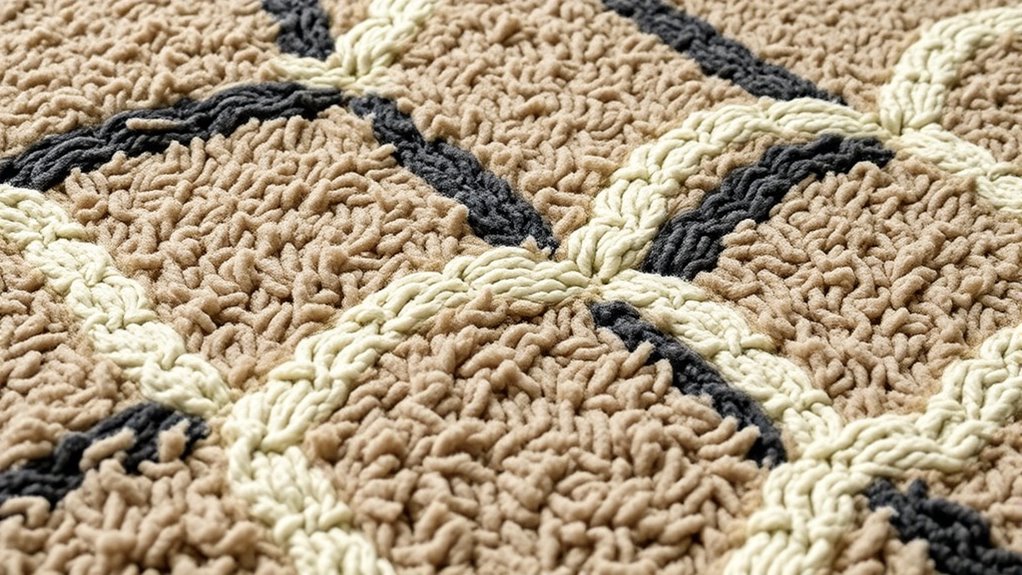
Ever wonder what’s shaping the latest in rug design? It’s all about texture taking center stage. In this season’s trend landscape, you’ll notice a shift away from flat, overly polished surfaces toward rugs that invite touch and add depth to your space. Texture isn’t just a visual element anymore—it’s an experience. Think plush pile, boucle fibers, nubby weaves, and tactile patterns that transform a simple rug into a statement piece. This tactile approach makes your room feel more inviting, more layered, more alive.
You’ll find that designers are embracing a mix of materials, combining natural fibers like wool, jute, and sisal with modern techniques that emphasize three-dimensionality. For instance, a shaggy, hand-tufted rug with varied pile heights can create a dynamic surface that catches the light differently throughout the day. Similarly, textured kilims with embroidered details or raised motifs bring a sense of artistry and craftsmanship. These rugs don’t just lie flat—they introduce a sense of movement and richness that elevates any space. The goal is to create visual interest without overwhelming the room’s aesthetic.
Color plays a supporting role here, often complementing the textural elements. Expect earthy, muted tones like warm browns, soft beiges, and smoky grays to dominate, providing a neutral backdrop that highlights the rug’s tactile qualities. But don’t shy away from bold accents—rich jewel tones or vibrant patterns can be woven into textured surfaces to add personality and contrast. The key is balancing the tactile with the visual, ensuring your rug enhances the overall ambiance rather than competing with it.
In terms of placement, textured rugs are versatile. They work beautifully under dining tables to soften the space, in cozy corners to invite lounging, or layered over larger rugs for a curated, eclectic look. The tactile nature encourages interaction—your feet will crave barefoot walks across plush piles, and guests will be drawn to the inviting surface. This focus on texture also means maintenance becomes more of a tactile experience—some rugs hide dirt cleverly with their nubby textures, while others invite gentle brushing or vacuuming to maintain their plushness.
Ultimately, embracing texture in rug design isn’t just a trend; it’s a way to make your home more tactile, more personalized, and more aligned with contemporary aesthetics that prize comfort and visual interest. Incorporating creative practice into your rug selection process can inspire unique and innovative designs that resonate with your personal style. By selecting rugs that prioritize texture, you’re not only elevating your décor but creating an environment that feels as good as it looks.
Frequently Asked Questions
How Do I Choose the Right Rug Texture for My Space?
To pick the perfect rug texture, consider your space’s vibe and your lifestyle. If you want cozy and plush, go for thick, shaggy textures. For a sleek, modern look, opt for low-pile or flatweave rugs that add subtle texture without overwhelming. Think about foot traffic—durable, tightly woven textures work best in busy areas. Mix textures to add depth, but keep them harmonious for a stylish, inviting space.
What Maintenance Is Required for Textured Rugs?
Textured rugs require regular vacuuming to remove surface dirt and prevent matting, especially in high-traffic areas. Spot clean spills promptly with a gentle detergent, avoiding harsh chemicals that could damage fibers. Occasionally, you might need to have your rug professionally cleaned to maintain its plush feel and vibrant appearance. Rotate your rug every few months to ensure even wear and keep the texture looking fresh and stylish.
Are Textured Rugs Suitable for High-Traffic Areas?
Yes, textured rugs are suitable for high-traffic areas, with 65% of interior designers favoring them for durability and style. Their varied surfaces hide footprints and wear effectively, making them both functional and fashionable. Opt for low-pile or tightly woven textures to maximize longevity. You’ll love how they add depth and a modern touch to busy spaces, blending practicality with trend-conscious aesthetics effortlessly.
How Do I Clean and Care for Delicate Textured Rugs?
You should gently vacuum your delicate textured rug with a brushless attachment to prevent damage. Spot clean spills immediately with a mild detergent and cold water, avoiding harsh chemicals. For deeper cleaning, consider professional rug cleaning annually to preserve its texture and vibrancy. Rotate the rug regularly to prevent uneven wear, and avoid excessive moisture. This careful care keeps your textured rug looking fresh, stylish, and trend-conscious for years to come.
Can Textured Rugs Be Layered With Other Rugs?
Yes, you can layer textured rugs with other rugs for a chic, eclectic look. To pull it off, choose rugs with complementary textures and contrasting colors to create visual interest. Place the larger textured rug as the base and layer smaller, flatter rugs on top, ensuring they stay secure. This approach adds depth and personality to your space, making your decor both trendy and inviting.
Conclusion
Embracing textured rugs isn’t just about style—it’s about making a statement. Did you know that 67% of interior designers now prioritize tactile elements in their designs? By choosing rugs with rich textures, you add depth, warmth, and personality to your space. Stay ahead of the curve by blending bold weaves and layered fibers, creating a curated, luxe look that feels as good as it looks. Texture truly transforms your home into a stylish sanctuary.