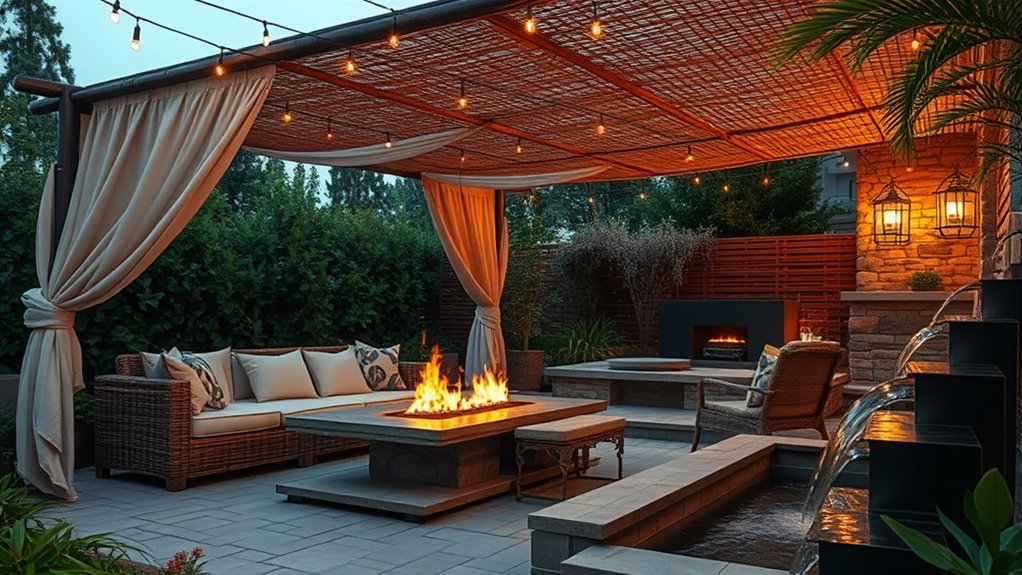

Embrace eco-friendly outdoor living by choosing sustainable shading options like bamboo pergolas or shade sails made from organic fabrics, creating cool, inviting spaces. Incorporate water features with solar-powered pumps and natural filtration to support local ecosystems while minimizing waste. Add fire features crafted from recycled materials or fueled by bioethanol, seamlessly blending sustainability with style. With thoughtfully selected natural materials and native plants, you’ll craft a harmonious retreat that invites both comfort and environmental responsibility—discover how to elevate your outdoor space naturally.
Key Takeaways
- Incorporate sustainable shade solutions like reclaimed wood pergolas and native tree canopies to enhance comfort and biodiversity.
- Use solar-powered water features with natural filtration to create eco-friendly, low-maintenance outdoor aquatic spaces.
- Opt for bioethanol or propane fire pits with recycled materials that offer cleaner combustion and stylish, durable finishes.
- Choose eco-conscious outdoor furnishings made from weather-resistant, sustainable materials such as reclaimed wood, bamboo, or recycled metals.
- Design outdoor spaces that blend comfort with ecological harmony by integrating native plants, drought-tolerant landscaping, and solar energy.
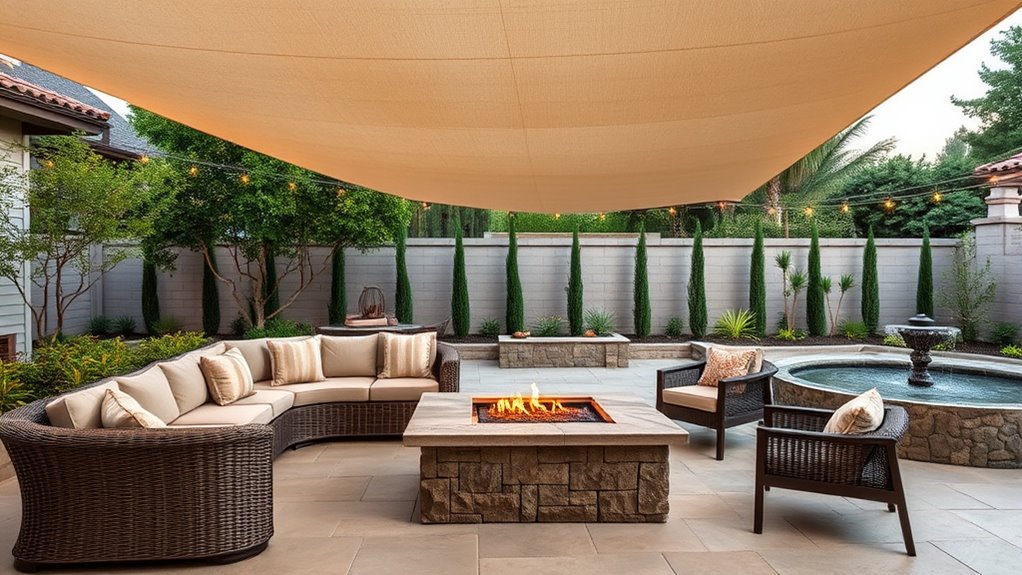
As outdoor living spaces become more integral to our lifestyles, homeowners are increasingly seeking ways to blend comfort with sustainability. You want your backyard to be a sanctuary—not just a pretty space but one that respects the environment and minimizes your ecological footprint. One of the most impactful ways to achieve this is by thoughtfully integrating shade, water, and fire features that prioritize eco-friendly materials and energy efficiency.
Start with shade, which isn’t just about blocking the sun but creating a cool, inviting refuge during hot days. Consider using sustainable materials like reclaimed wood or bamboo for pergolas and shade sails. These materials grow quickly, require less energy to produce, and add a natural aesthetic to your outdoor environment. Instead of traditional lawns, opt for native plantings or drought-tolerant grasses that require less water and fertilizer, reducing your overall resource consumption. Vertical gardens and shade-providing trees like oaks or maples not only offer relief from the sun but also enhance biodiversity, attract pollinators, and improve air quality. Incorporate eco-conscious fabrics for outdoor cushions and umbrellas—think organic cotton or recycled polyester—that stand up to weather without the need for synthetic treatments that can leach chemicals into the environment.
Water features are another key element that can transform your outdoor space into a tranquil retreat while supporting sustainability. Instead of large, energy-intensive fountains, choose recirculating systems that reuse water, minimizing waste. Solar-powered pumps can operate your pond or waterfall, harnessing the sun’s energy and eliminating the need for electrical hookups. Use natural filtration systems—like biological filters or aquatic plants—that keep water clean without chemical treatments, supporting local ecosystems. If you opt for a small pond, select native aquatic plants that require minimal maintenance, and avoid introducing invasive species. These choices not only conserve resources but also create habitats for local wildlife, from birds to beneficial insects.
Fire features, once solely about aesthetics or warmth, are now increasingly designed with environmental consciousness in mind. Instead of traditional wood-burning fire pits that emit pollutants, consider bioethanol or propane options that burn cleaner and produce fewer emissions. For a truly sustainable approach, look into fire pits made from recycled or locally sourced materials, reducing the carbon footprint of manufacturing. Incorporating natural stone or metal finishes can blend seamlessly into your landscape while standing the test of time. As you design your fire feature, think about its placement to maximize efficiency and safety, and incorporate built-in seating made from eco-friendly materials to encourage gathering and connection without harming the environment.
In addition, choosing eco-friendly materials for your outdoor furnishings can significantly reduce your environmental impact while adding durability and style to your space.
Frequently Asked Questions
What Are the Latest Eco-Friendly Outdoor Shade Options?
You can choose eco-friendly outdoor shade options like solar-powered pergolas with adjustable louvers, which provide shade while harnessing renewable energy. Organic bamboo or reclaimed wood cabanas offer sustainable beauty and durability, reducing environmental impact. Shade sails made from recycled polyester or natural fabrics like hemp or organic cotton also make stylish, eco-conscious choices. These options help you stay cool outdoors while supporting sustainability and reducing your carbon footprint.
How Do I Maintain Water Features Year-Round?
To maintain your water features year-round, you should regularly check and clean filters to prevent algae buildup, especially during warm months. In winter, drain pumps and cover or insulate exposed parts to avoid freezing damage. Use eco-friendly, biodegradable treatments to keep water clear and healthy without harming local wildlife. Schedule seasonal inspections, and consider solar-powered pumps for energy efficiency, ensuring your water feature remains vibrant and sustainable throughout the year.
What Safety Measures Are Recommended for Outdoor Fire Pits?
You should always keep a fire extinguisher nearby, and never leave your fire pit unattended. Use a spark screen to contain embers, and verify the area is clear of flammable materials. Opt for eco-friendly firewood or biomass, reducing smoke and pollution. Always extinguish the fire completely before leaving, and consider installing a safety barrier to protect children and pets. These steps keep your outdoor space safe and environmentally responsible.
Which Materials Are Best for Durable Outdoor Furniture?
You’ll find that high-quality teak, recycled metal, and all-weather wicker stand out as the most durable outdoor furniture materials. Teak’s natural oils resist moisture and pests, making it eco-friendly and long-lasting. Recycled metals reduce waste and withstand harsh weather. Wicker, crafted from sustainable fibers, offers resilience and style. These choices align with eco-conscious values, ensuring your outdoor space remains beautiful and functional for years while minimizing environmental impact.
How Can I Incorporate Smart Technology Into Outdoor Living Areas?
You can incorporate smart technology into your outdoor space by installing weather-resistant smart lighting that adjusts based on sunset times, adding solar-powered speakers for eco-friendly sound, and integrating automated irrigation systems that conserve water. Use sustainable materials like recycled metals or bamboo for smart fixtures. These innovations create a seamless, environmentally-conscious experience, making your outdoor area both functional and inviting, all while reducing your ecological footprint.
Conclusion
As you embrace outdoor living, incorporating shade, water features, and fire elements transforms your space into a sustainable sanctuary. Did you know that eco-friendly materials and designs can reduce energy consumption by up to 30%? By choosing responsibly sourced options and integrating natural elements, you create a beautiful, inviting environment that nurtures both your well-being and the planet. Keep innovating thoughtfully—your outdoor oasis can be a stunning, environmentally-conscious retreat.