

Millwork techniques like fluting, reeding, and relief require precise craftsmanship to create visually harmonious architectural details. Fluting involves carving shallow, uniform grooves, while reeding features pronounced, rounded ridges with consistent curvature. Relief carving removes material to produce raised patterns, adding depth and shadow. Mastering tool sharpness, material behavior, and measurement accuracy guarantees quality results. If you continue exploring, you’ll gain deeper insights into executing these techniques with finesse and precision.
Key Takeaways
- Fluting involves carving shallow, uniform grooves into surfaces, enhancing architectural columns and furniture with visual rhythm.
- Reeding creates three-dimensional, rounded ridges that add depth and texture to decorative millwork elements.
- Relief carving removes material to produce raised patterns, adding shadow and visual interest to architectural features.
- Precision, proper tool handling, and understanding material properties are essential for quality execution in all techniques.
- Artistic sensibility combined with technical skill elevates millwork from functional to expressive architectural detail.
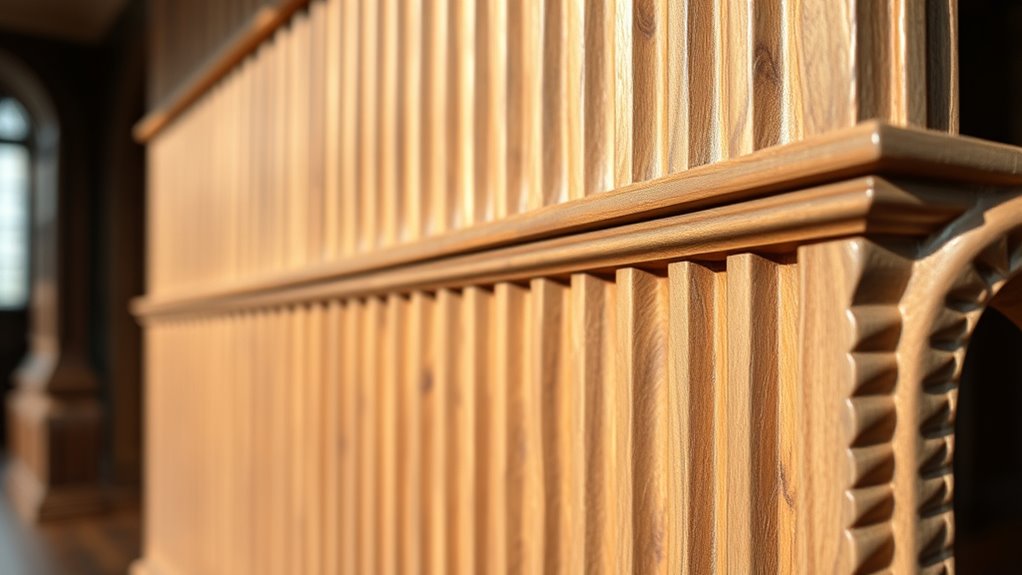
Millwork moments capture the significance of precision and craftsmanship in the creation of architectural woodwork. When engaging with techniques like fluting, reeding, and relief, you engage in a process that demands meticulous measurement, exact tooling, and consistent execution. These decorative elements transform plain surfaces into detailed expressions of architectural intent, requiring a thorough understanding of material properties and the application of specialized tools. Fluting involves carving a series of shallow, concave grooves into a surface, typically on columns, pilasters, or furniture. Achieving uniformity in depth, width, and spacing is critical; any deviation compromises the visual rhythm and structural harmony. You must select appropriate cutting tools—such as fluting gouges or specialized routers—and set precise parameters to guarantee consistency. The process begins with careful planning, including measuring the intended spacing and depth, followed by marking the surface with accurate guidelines. As you execute the cut, maintaining steady pressure and consistent feed rate is essential to prevent uneven grooves or tool chatter, which can distort the final appearance.
Reeding shares similarities with fluting but often involves a more pronounced, rounded profile, emphasizing a three-dimensional quality. You create reeding patterns by using specialized form tools or custom router bits that produce continuous, rounded ridges. The key is to maintain uniform curvature and spacing, which requires precise setup and careful handling of the router. You need to consider the grain direction of the wood, as improper alignment can result in tear-out or inconsistent profiles. Reeding is often applied to furniture, cabinetry, and decorative panels, where it adds texture and visual interest. Achieving crisp, clean profiles demands sharp tooling and controlled hand or machine operation. You also have to account for the wood’s moisture content and expansion characteristics, which can influence the final shape and fit of the reeded elements.
Relief carving introduces a different dimension to millwork, involving the removal of material to create a raised design or pattern. It requires you to develop a detailed plan or template, then execute with precision tools such as chisels, gouges, or CNC machinery. The challenge lies in controlling depth and contour, ensuring the design remains proportionate and true to the intended style. Relief work demands a steady hand, as uneven carving can distort the motif or weaken the structure. You also need to consider the grain direction to avoid tearing or chipping, especially in intricate patterns. Properly executed relief enhances architectural features by adding depth, shadow, and texture, but it hinges on your ability to balance technical skill with artistry, ensuring each cut aligns perfectly with the overall design. Throughout all three techniques, your focus on precision, tool sharpness, and material behavior ultimately determines the quality and durability of the millwork, emphasizing craftsmanship that elevates architectural detail from functional to artistic.
Top picks for "millwork moment flut"
Open Amazon search results for this keyword.
As an affiliate, we earn on qualifying purchases.
Frequently Asked Questions
What Are the Historical Origins of Fluting and Reeding in Millwork?
You should know that fluting and reeding in millwork originated in ancient Greece and Rome, where artisans crafted decorative columns and friezes. These techniques enhanced structural elements by adding visual rhythm and texture, reflecting classical architectural principles. During the Renaissance, these styles reemerged, influenced by classical revival, and became integral in Baroque and Neoclassical designs. Today, they continue to symbolize elegance and craftsmanship in architectural detailing.
How Do I Choose the Right Millwork Design for My Home?
You should consider your home’s architectural style, existing design elements, and personal preferences when choosing millwork. Opt for intricate fluting or reeding if your style is traditional or ornate, while simpler relief patterns suit modern or minimalist aesthetics. Guarantee the scale and proportion complement your space, and select durable materials that match your interior finishes. Consulting a professional can help refine your choice, ensuring the millwork enhances your home’s overall aesthetic and functionality.
Can Fluting and Reeding Be Combined in a Single Piece?
Yes, you can combine fluting and reeding in a single piece, but it requires precise craftsmanship. Fluting involves deep, rounded grooves, while reeding features smaller, parallel ridges. Skilled millworkers carefully carve both elements, ensuring they complement each other without compromising structural integrity or aesthetic harmony. Proper planning and attention to detail are essential to seamlessly integrate these decorative techniques, creating a sophisticated, layered effect that enhances your home’s architectural character.
What Maintenance Is Required for Decorative Millwork Features?
You should regularly clean your decorative millwork features with a soft, damp cloth to remove dust and dirt. Avoid harsh chemicals that could damage the finish. Periodically inspect for cracks, chips, or warping, and address issues promptly. Applying a suitable protective finish or wax can preserve their appearance and prevent deterioration. Guarantee proper humidity levels in your space to minimize wood expansion or contraction, extending the lifespan of your decorative elements.
Are There Modern Alternatives to Traditional Fluting and Reeding?
Think of modern alternatives to traditional fluting and reeding as using digital sculpting instead of hand-carving. You can now achieve similar decorative effects with CNC machining, which offers precision and consistency. Materials like MDF, PVC, or composite panels are also viable, providing durability and ease of installation. These options streamline production, reduce costs, and allow for complex, customizable designs that mimic classic craftsmanship with modern efficiency.
Conclusion
By mastering fluting, reeding, and relief, you transform flat surfaces into architectural poetry, each detail a deliberate stroke in a masterful composition. These millwork techniques serve as the brushstrokes of craftsmanship, adding rhythm, depth, and character to your designs. When executed with precision, they elevate spaces from mere structures to timeless works of art. Embrace these methods as your tools to carve stories into wood, creating enduring beauty through meticulous attention to detail.