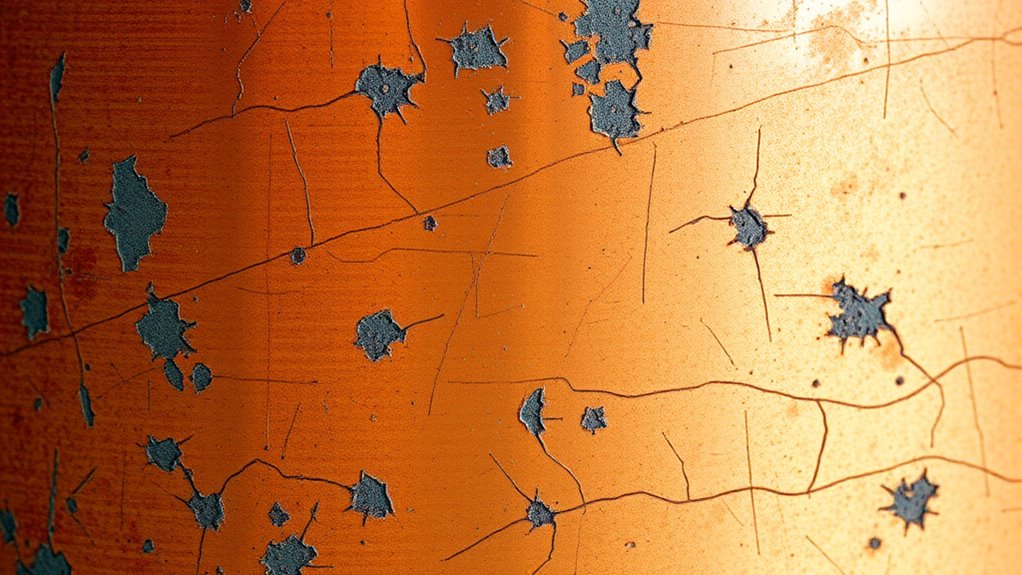
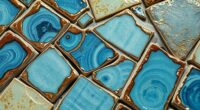
Warm-toned patinas on metal surfaces transform plain materials into mesmerizing, aged works of art. As you observe, rich ambers, earthy browns, and deep reds develop naturally or through chemical treatment, revealing a history and character unique to each piece. These patinas deepen over time, highlighting textures and imperfections that add authenticity. If you keep exploring, you’ll uncover how to achieve stunning, lasting finishes that evolve and charm with age.
Key Takeaways
- Warm-toned patinas enhance metal surfaces with rich ambers, reds, and browns, creating a cozy, aged appearance.
- Artists achieve warm patinas through chemical treatments, oxidation, or natural aging processes.
- Patinas develop over time, adding depth, texture, and character, making each piece uniquely beautiful.
- The natural aging process highlights imperfections and crevices, contributing to a handcrafted, authentic look.
- Warm patina finishes provide a timeless, evolving aesthetic that increases in beauty and character with age.
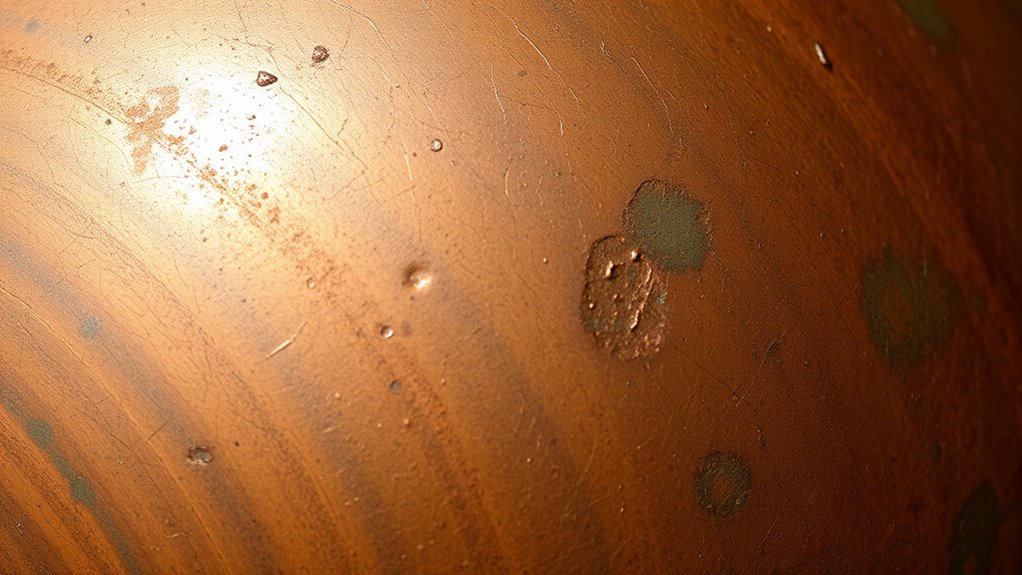
Have you ever wondered how the surface of a metal transforms from plain to mesmerizing? It’s a captivating process that involves more than just coating or polishing—it’s about embracing the art of aging gracefully through warm tones and patina. When you consider metal finishes with a patina, you’re inviting a layer of history and character into your design. This finish isn’t just about color; it’s about the story that unfolds on the surface over time, giving your piece a depth that’s impossible to replicate with standard polish. The warm hues—rich ambers, deep reds, and earthy browns—create a visual warmth that instantly evokes comfort and nostalgia. These tones develop naturally or are intentionally induced, providing a sense of life and evolution that makes each piece uniquely yours.
Achieving this look begins with understanding the chemistry behind patinas. Whether you opt for copper, bronze, or steel, each metal reacts differently when exposed to elements like air, moisture, or chemical solutions. For example, copper develops a stunning verdigris, a greenish-blue patina, that matures into warm, earthy shades over time. Bronze, often favored for its durability and elegance, can be treated to produce a spectrum from golden browns to deep russets. Steel, especially when exposed to oxidizing agents, can take on a soft, warm gray or brownish hue that feels aged yet sophisticated. The process is a delicate dance—applying chemical washes, exposing the surface to controlled weathering, or simply allowing natural oxidation to occur—each method yields its own character.
What makes warm-toned finishes with patina so appealing is their ability to evolve. You don’t just get a static, shiny surface; instead, you witness the transformation as the metal’s colors deepen and develop subtle variations. This natural aging process lends an authentic, handcrafted appeal that’s impossible to emulate with synthetic coatings. As the patina matures, it enhances the texture—highlighting subtle imperfections and crevices, which become part of the piece’s story. It’s this interplay of color, texture, and time that elevates a simple metallic surface into a work of art. When you choose a patina finish, you’re not just selecting a color; you’re embracing a living, breathing aesthetic that ages gracefully, capturing warmth and character in every detail.
Frequently Asked Questions
How Do Warm-Toned Metal Finishes Age Over Time?
Over time, warm-toned metal finishes develop a rich, authentic patina that enhances their character. You’ll notice subtle color shifts, deepening hues, and gentle surface textures as they age. Light exposure, air, and handling accelerate this process, giving each piece a unique story. Instead of deterioration, these changes add warmth and charm, making your metal finish look more vintage and refined, perfectly reflecting its history and adding a timeless appeal.
Which Metals Are Best Suited for Warm Patina Finishes?
A stitch in time saves nine, so choose your metals wisely. Copper, bronze, and brass are your best bets for warm patina finishes, as they develop rich, varied tones over time. Copper’s vibrant hue deepens beautifully with age, while bronze and brass gain a warm, aged glow. These metals’ natural tendencies make them ideal for achieving authentic, enduring patinas, adding character and depth to your creations.
Can Warm Patina Finishes Be Customized for Specific Projects?
Yes, you can definitely customize warm patina finishes for your specific projects. You’ll choose the right metal, like copper or bronze, then apply various chemical treatments or heat processes to attain your desired hue and depth. By layering patinas or controlling application techniques, you can create unique, personalized effects that enhance your design’s warmth and character. Experimentation and expert guidance help guarantee your finish perfectly complements your project’s aesthetic.
How Do I Maintain the Vibrancy of Warm-Toned Finishes?
To keep warm-toned finishes vibrant, you should clean them regularly with a soft, damp cloth, avoiding harsh chemicals that can dull the patina. Did you know that proper maintenance can extend their lifespan by up to 50%? Apply a clear protective wax every few months to preserve their rich hues. Handle with care, and avoid abrasive tools; this keeps your warm, beautiful tones glowing for years to come.
Are Warm-Tone Patinas Suitable for Outdoor Applications?
Yes, warm-tone patinas are suitable for outdoor applications when properly sealed and maintained. You should choose a durable, weather-resistant finish and apply a protective coating to prevent tarnishing or corrosion. Regularly clean the surface gently, inspect for signs of wear, and reapply sealant as needed. This proactive approach guarantees your warm-toned patina preserves its rich hue and artistic appeal amidst outdoor elements.
Conclusion
Embracing warm-toned metals with patina isn’t just about aesthetics; it’s about forging a timeless connection between craftsmanship and character. Some say that each patina tells a story, revealing the history behind its surface. So, when you choose these finishes, you’re not just selecting a look—you’re embracing a living, breathing piece of art that ages beautifully with you. Trust the theory that true beauty in metal lies in its imperfect, authentic charm.