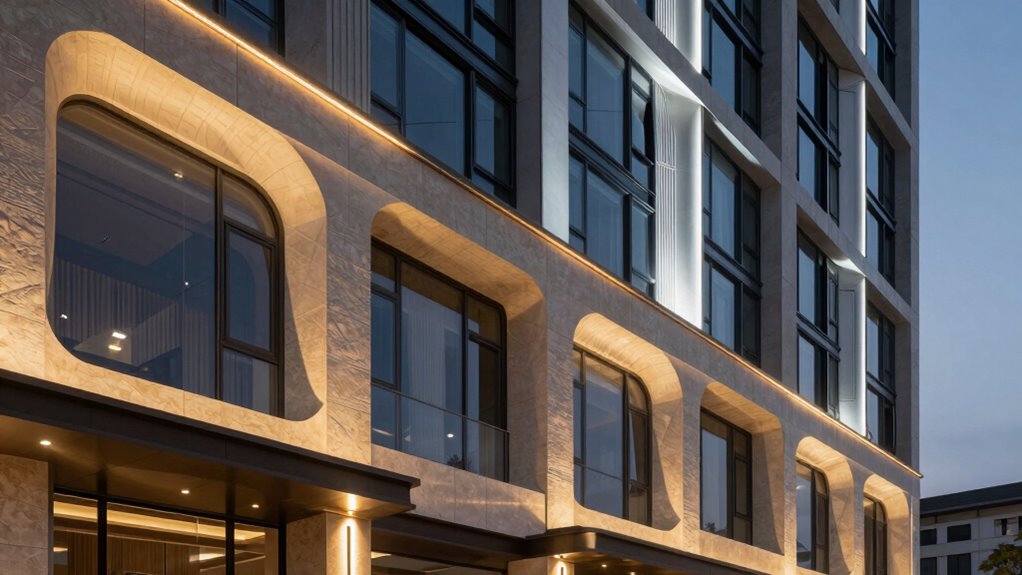

Decorative lighting is increasingly becoming an integral part of architecture because it not only illuminates but also shapes the perception of space, reflecting your style and mood. You see how materials and textures—like textured metals or smooth glass—add depth and character, turning lighting fixtures into artistic focal points. By blending lighting with architectural design, you can create harmony, emphasize structural elements, and enhance atmosphere. Explore further to discover how this trend transforms your environments and elevates design.

Get furniture and decor delivered free with Prime
- Fast, free delivery on millions of items
- Prime Video, Amazon Music and more included
- Member-only deals all year
Key Takeaways
- Decorative lighting is integrated into architecture to serve as a key design element, enhancing structural and aesthetic harmony.
- Modern trends emphasize lighting fixtures as sculptural focal points that complement architectural lines and textures.
- Layered lighting schemes highlight material textures, adding depth and visual interest to architectural spaces.
- The use of diverse materials and textures in lighting fixtures contributes to a cohesive and tactile environment.
- Artistic, architectural lighting shapes spatial perception, transforming functional illumination into expressive design features.
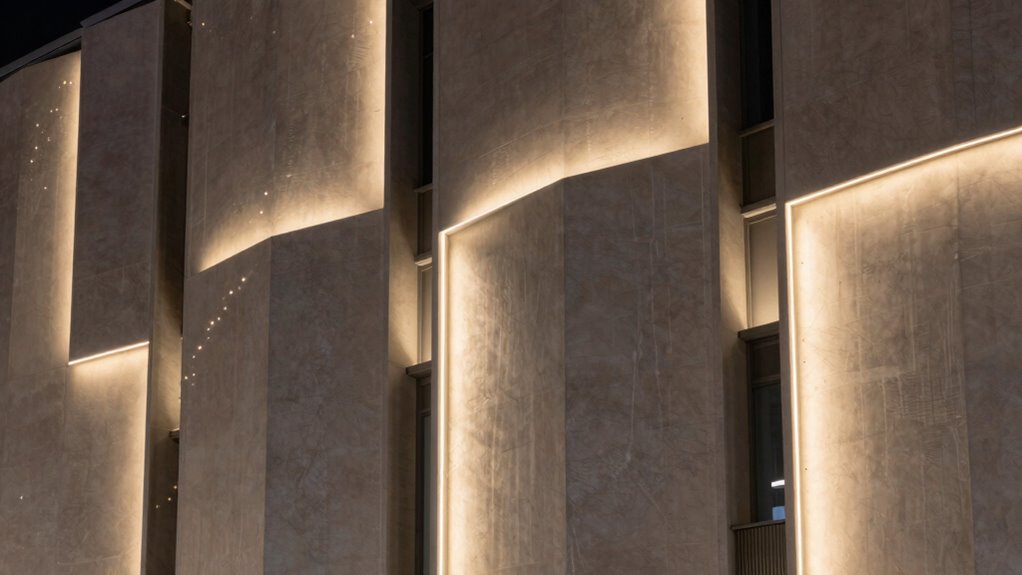
Decorative lighting transcends mere illumination; it transforms spaces into works of art. When you choose the right fixtures, you’re not just lighting a room—you’re crafting an atmosphere that reflects style, mood, and personality. The ambient glow that these lights cast can soften harsh edges or highlight specific architectural features, making your space feel warm and inviting. It’s not just about brightness; it’s about creating a visual experience. As you select decorative lighting, consider how different material textures influence the overall aesthetic. Smooth glass pendants, textured metals, or fabric-covered sconces each contribute a unique tactile element, adding depth and richness to your environment. These textures catch and reflect light in varied ways, enhancing the character of the space and making every detail stand out.
In recent years, the trend toward integrating decorative lighting into architecture has gained momentum because it allows you to blend form and function seamlessly. Instead of viewing lighting as a mere necessity, you start to see it as an integral design element**, which can dramatically impact the overall aesthetic. When designed thoughtfully, decorative fixtures become focal points that complement the architectural lines of a room or building. For example, a sculptural chandelier can serve as a statement piece, drawing the eye upward and emphasizing ceiling height, while wall sconces with textured finishes can add layers of visual interest along a hallway. The key is understanding how the material textures and ambient glow work together to enhance the overall architectural language. Incorporating material textures into lighting design enhances the tactile and visual richness of a space. Additionally, understanding how lighting as architecture** can influence spatial perception is essential for creating harmonious environments.
You’ll notice that modern architectural lighting design emphasizes creating harmony between the structure and the lighting elements. Instead of hiding fixtures, designers now showcase them as integral parts of the design. The ambient glow produced by layered lighting schemes enhances the spatial qualities, highlighting material textures and architectural details. This approach invites you to see lighting as an extension of the architecture itself—an artistic element that shapes how you experience the space. Whether it’s the warm shimmer of a bronze fixture or the cool sheen of matte metal, material textures contribute to a layered, tactile aesthetic that elevates the entire environment.
architectural decorative pendant lights
As an affiliate, we earn on qualifying purchases.
As an affiliate, we earn on qualifying purchases.
Frequently Asked Questions
How Does Decorative Lighting Influence Building Energy Efficiency?
Decorative lighting influences your building’s energy efficiency by reducing energy consumption through smart lighting controls. You can customize lighting levels and schedules, avoiding unnecessary power use. Using energy-efficient decorative fixtures also minimizes waste. When you incorporate innovative lighting designs, you not only enhance aesthetics but also optimize energy use, leading to lower costs and a more sustainable building environment. Active controls make a significant difference in overall efficiency.
What Materials Are Commonly Used in Architectural Decorative Lighting?
Like a painter choosing the perfect brush, you select materials that blend durability and aesthetic versatility for decorative lighting. Common choices include metals like aluminum and brass, known for their resilience. Glass and acrylic are popular for their clarity and design flexibility, while LEDs and fiber optics offer energy efficiency and innovative effects. These materials guarantee your lighting fixtures stand the test of time while elevating your architectural vision.
How Do Safety Standards Affect Decorative Lighting Design Choices?
Safety standards and lighting regulations directly influence your decorative lighting design choices. You must guarantee safety compliance by selecting fixtures that meet fire codes, electrical standards, and durability requirements. These regulations guide you to avoid hazards like overheating or electrical failures, which can compromise safety. As a result, your designs prioritize not only aesthetic appeal but also adherence to safety standards, ensuring your lighting enhances spaces without risking safety or violating regulations.
Can Decorative Lighting Be Easily Integrated Into Existing Structures?
Yes, decorative lighting can be easily integrated into existing structures, especially when considering historic preservation and cultural symbolism. You can choose adaptable fixtures that complement the building’s architecture without damaging its integrity. Strategic placement highlights key features and enhances the aesthetic. Modern solutions like wireless or plug-in options make installation straightforward, allowing you to preserve historic charm while adding a touch of contemporary elegance that respects cultural symbolism.
What Trends Are Shaping the Future of Architectural Lighting Designs?
You’ll see trends like ambient enhancement and aesthetic innovation shaping future architectural lighting designs. Designers focus on creating immersive experiences, using smart technology and customizable options to adapt lighting to different moods and functions. Sustainable and energy-efficient solutions also play a big role, blending form and function seamlessly. As a result, lighting becomes an integral part of architecture, highlighting structures’ beauty while enhancing user comfort and interaction.
Conclusion
As you step into the future of design, you’ll see decorative lighting evolve from simple adornment to true architectural feature. It’s like bringing a modernist twist to the Renaissance—lighting now shapes spaces, tells stories, and creates ambiance with purpose. By blending art and function, you become part of an ongoing revolution, where every glow and shadow adds depth and character. Embrace this shift, and watch your spaces transform into timeless masterpieces—futuristic, yet as classic as a well-crafted chandelier.
Halloween Picks
halloween
As an affiliate, we earn on qualifying purchases.