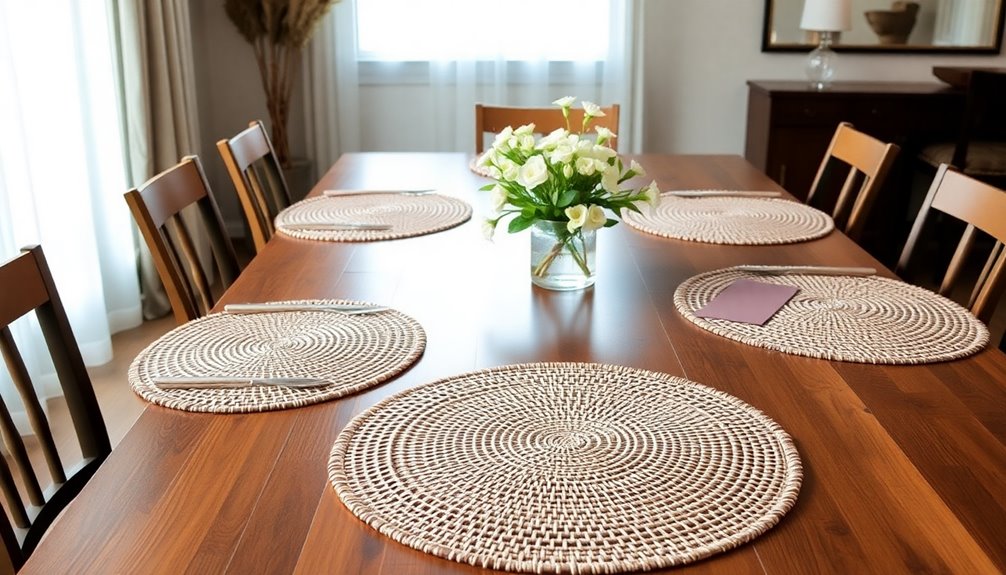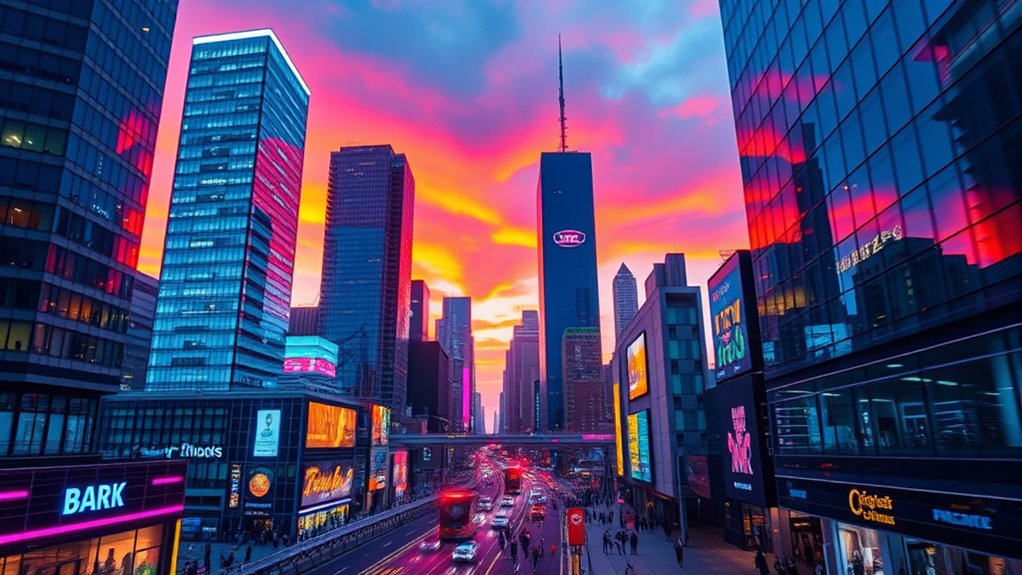

In 2026, you’ll notice a blend of vibrant, saturated tones like bold blues and fiery oranges with earthy, muted shades such as dusty pinks and warm taupes, creating a dynamic yet calming palette. Futuristic influences bring holographic effects and iridescent finishes, reflecting multi-dimensionality and adaptability. These colors evoke resilience, hope, and innovation, embracing cultural diversity and sustainability. Keep exploring to discover how these rich hues shape the visual narratives and emotional landscapes of 2026.
Key Takeaways
- Expect a fusion of digital iridescence with natural earth tones, emphasizing innovation and sustainability.
- Vibrant, saturated accents like bold blues and fiery oranges will energize palettes.
- Muted shades such as dusty pinks and warm taupes foster calm and comfort amidst futuristic designs.
- Use of holographic and hologram-inspired finishes will highlight multi-dimensionality and surface exploration.
- Color stories will reflect resilience, hope, and diversity, blending technology-driven aesthetics with cultural richness.

As we look ahead to 2026, color trends are set to reflect a dynamic blend of innovation and cultural shifts, shaping how you perceive and interact with your environment. You’ll notice a movement toward colors that evoke both technology’s sleekness and a deep connection to nature, creating a visual dialogue between progress and sustainability. Expect palettes that blur the line between digital and organic, offering a sensory experience that feels both futuristic and grounding. This convergence is driven by a desire for authenticity in a rapidly changing world, guiding you toward hues that symbolize resilience, clarity, and hope.
In 2026, vibrant, saturated tones will be prominent, but not in a flashy way. Instead, they’ll serve as accents that energize spaces and objects, providing a sense of optimism. Think bold blues reminiscent of clear skies, fiery oranges inspired by dawn, or lush greens echoing untouched forests. These colors speak to a collective longing for vitality, reinforcing a sense of empowerment and renewal. Simultaneously, there’s a shift toward softer, muted shades—dusty pinks, warm taupes, and gentle greys—that create a calming counterbalance. These hues foster introspection and comfort, making your environment more inviting amid the chaos of modern life.
The influence of digital aesthetics will also shape color preferences, with iridescent finishes and holographic effects finding their way into design. These shimmering shades reflect a desire for multi-dimensionality, encouraging you to see beyond surface appearances. In practical terms, expect these colors to appear in fashion, tech gadgets, and home décor, adding a layer of futurism that remains accessible. This trend emphasizes versatility, allowing you to adapt spaces and accessories that shift with your mood or the occasion.
Furthermore, cultural and social considerations will influence color choices, emphasizing inclusivity and diversity. Warm, earthy tones will dominate, symbolizing a reconnection to ancestral roots and the environment, while bold, contrasting combinations will challenge traditional norms. The goal is to create visual narratives that celebrate individuality and collective identity simultaneously. As a result, you’ll find yourself drawn to palettes that are expressive yet balanced, reflecting a world enthusiastic to embrace complexity without sacrificing harmony. Additionally, the integration of AI security technologies in design and security measures will influence color choices, emphasizing trustworthiness and innovation in aesthetic decisions. In essence, 2026’s color stories will serve as a visual language—one that articulates innovation, resilience, and a renewed appreciation for the richness of human experience.
Frequently Asked Questions
How Are Color Trends Influenced by Global Events?
Global events shape color trends by stirring emotional responses and cultural shifts. When you notice bold, optimistic hues, it’s often a reaction to crises or uncertainty, aiming for hope and resilience. Conversely, subdued tones reflect introspection or solidarity. You’re influenced by these shifts, as designers and brands harness colors to evoke feelings, connect with audiences, and mirror societal mood swings, making color trends a vivid mirror of the world’s evolving landscape.
Will Sustainable Practices Impact Color Choices in 2026?
Sustainable practices will profoundly influence your color choices in 2026. You’ll see earthy tones, muted greens, and organic shades dominating designs, reflecting eco-conscious values. Bright, synthetic hues give way to natural, timeless colors that evoke authenticity and responsibility. This shift encourages you to embrace textures and hues inspired by nature, creating visual stories that resonate with environmental awareness. Sustainability isn’t just a trend; it’s shaping the palette of the future.
Are There Regional Differences in Color Preferences for 2026?
You’ll notice regional differences in color preferences for 2026, with vibrant hues thriving in urban areas and earthy tones dominating rural regions. These distinctions reflect diverse cultural currents, climate conditions, and consumer choices. Coastal communities favor fresh, fluid shades inspired by water, while inland areas lean toward warm, welcoming colors rooted in tradition. Recognizing these regional nuances helps you craft culturally conscious, contextually compelling color palettes that resonate locally.
How Do Technological Advances Affect Color Development?
Technological advances drive color development by expanding your creative palette and enabling more precise color reproduction. With innovations like augmented reality and digital manufacturing, you can explore vibrant, complex shades previously impossible. These tools help you visualize colors in real-world settings instantly, inspiring bold choices and dynamic palettes. As technology pushes boundaries, expect more immersive, luminous, and adaptable colors that reflect your evolving aesthetic sensibilities and the digital age.
What Role Do Cultural Shifts Play in Color Forecasting?
Cultural shifts shape color forecasting by reflecting evolving societal values and identities. You notice how movements like sustainability or diversity influence palette choices, pushing designers toward earthy tones or vibrant hues that symbolize change. As cultural narratives shift, so do color trends, making forecasts a visual mirror of current attitudes. This interplay encourages you to see color not just as aesthetics but as a powerful language conveying collective emotions and aspirations.
Conclusion
As you look ahead to 2026, the rise of vibrant, eco-inspired palettes signals a shift toward sustainability and optimism. Notably, 68% of designers plan to incorporate more bold colors this year, reflecting a desire to energize spaces and evoke emotion. Visual trends lean toward immersive, nature-inspired tones that blend innovation with tradition. Staying attuned to these shifts helps you anticipate how color influences design, making your choices more impactful and in sync with the evolving cultural landscape.