
Symmetry brings a sense of balance, stability, and timeless elegance to your space, creating a polished and cohesive atmosphere. In contrast, asymmetry injects personality, spontaneity, and visual interest, making your interiors lively and dynamic. Mixing both allows you to craft layered, intriguing environments that evoke both calm and excitement. By thoughtfully choosing between these principles, you shape emotional tone and visual harmony, revealing more ways to define your space’s unique personality as you explore further.
Key Takeaways
- Symmetry creates a balanced, stable environment emphasizing order and timeless elegance in interior design.
- Asymmetry introduces visual interest and dynamism, highlighting personality and a lively atmosphere.
- Combining both principles allows for layered, sophisticated spaces that balance harmony with visual intrigue.
- Symmetrical layouts evoke calmness and refinement, while asymmetrical arrangements foster spontaneity and modernity.
- Intentional use of symmetry or asymmetry influences emotional tone, personality, and overall aesthetic impact.
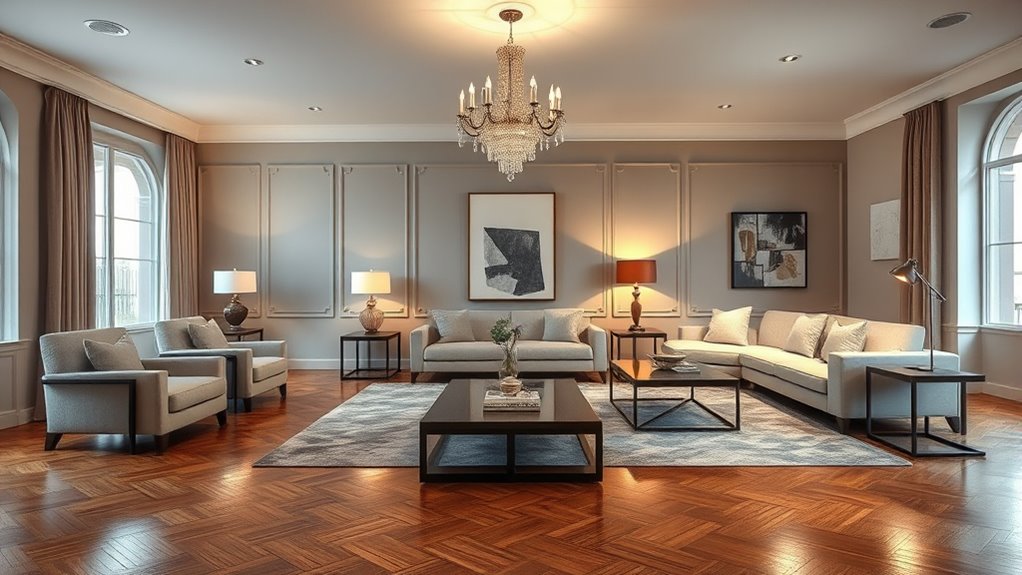
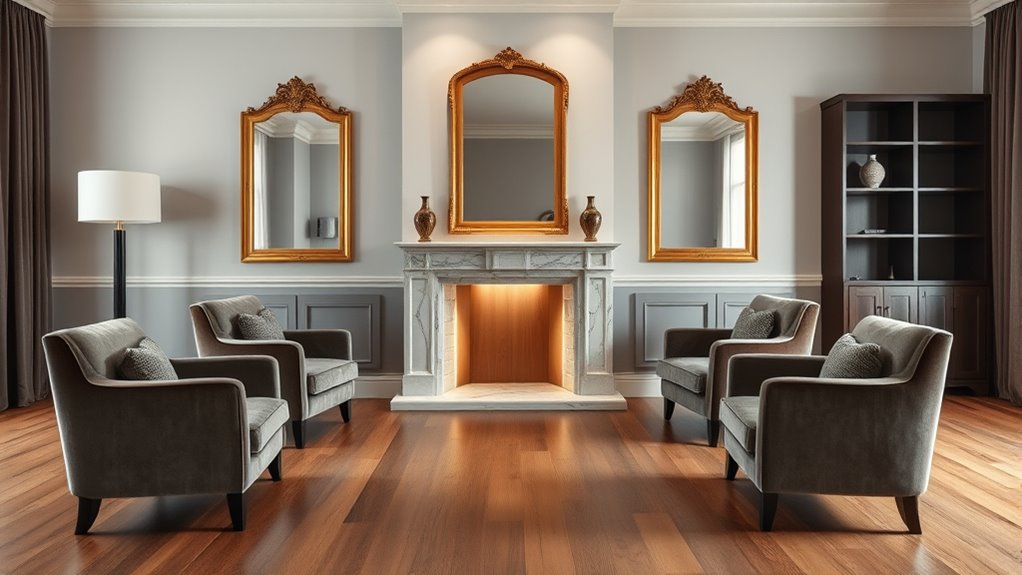
When it comes to interior design, the choice between symmetry and asymmetry shapes the very core of a space’s visual harmony and personality. You might find yourself drawn to the balanced elegance of symmetry, where every element mirrors its counterpart, creating a sense of order and calm. Picture a grand living room with matching sofas flanking a central fireplace, or a bedroom with perfectly aligned nightstands and identical lamps—these arrangements evoke stability and timeless sophistication. Symmetry appeals to your desire for predictability; it offers a harmonious rhythm that feels both natural and deliberate. The eye effortlessly recognizes and appreciates this balance, making your space feel polished and cohesive. It’s ideal when you want a classic, refined atmosphere that exudes control and serenity.
Symmetry in interior design creates harmony, stability, and timeless elegance, reflecting order and calm in your space.
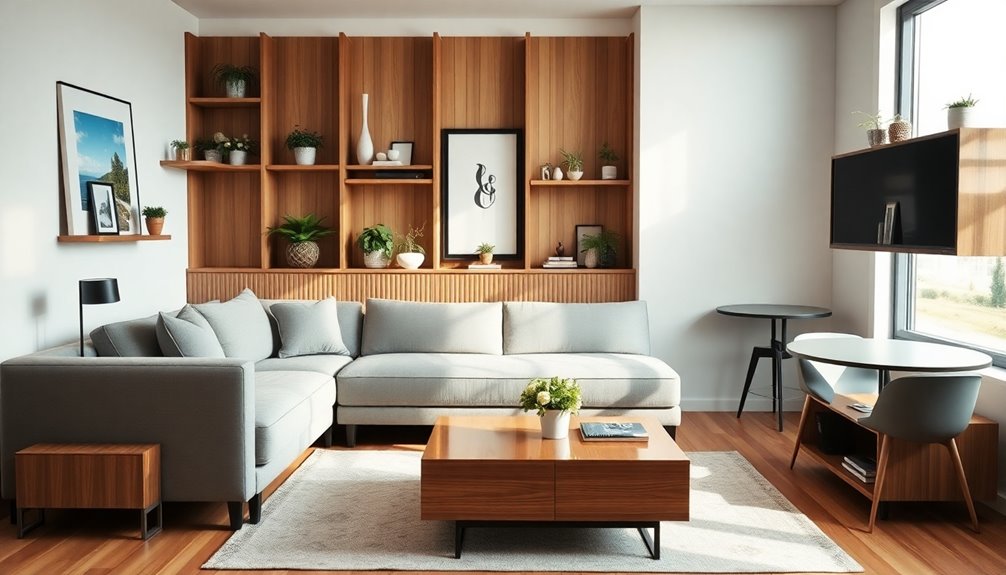
On the other hand, embracing asymmetry invites a different kind of visual intrigue—one that sparks curiosity and injects personality into your environment. When you incorporate asymmetric elements, you challenge traditional notions of balance, creating a dynamic, lively atmosphere. Imagine a gallery wall with varied frame sizes and artwork placed at different heights, or a sofa paired with an eclectic mix of chairs that don’t perfectly align but complement each other through contrast and scale. Asymmetry encourages you to experiment, to break free from convention, and to craft a space that feels organic and authentic. It invites movement and spontaneity, keeping the eye engaged as it navigates unexpected juxtapositions. This approach can highlight your unique style, showcasing your personality through clever contrasts and unconventional arrangements.
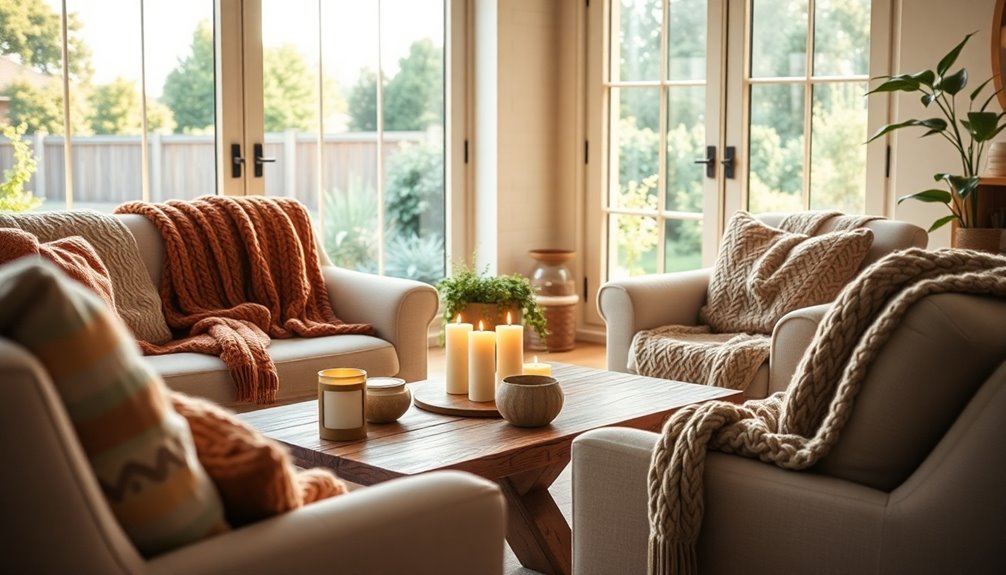
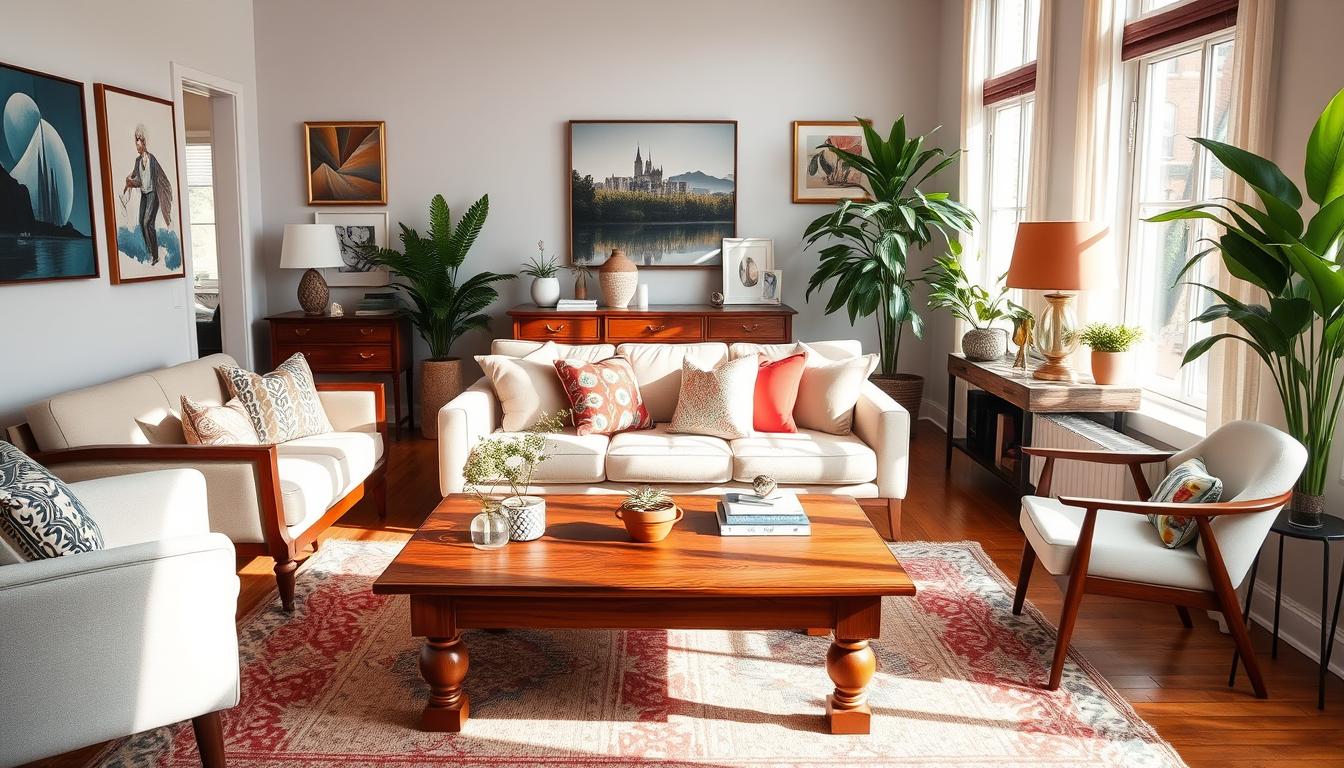
Innovative interior design often blurs the lines between these two principles, blending symmetry and asymmetry to craft spaces that are both balanced and lively. You might use symmetrical furniture arrangements as a backdrop, then punctuate them with asymmetrical accessories—art, lighting, or textiles—that add visual interest without disrupting harmony. This interplay creates a layered aesthetic that feels fresh and thoughtfully curated. When you consider lighting, for example, symmetrical fixtures can provide a steady glow, while asymmetric accents like pendant lights or sculptural lamps introduce a modern twist. Additionally, understanding visual balance can help you make more deliberate design decisions that harmonize these contrasting principles. In essence, your goal should be to understand the emotional impact of each approach and to tailor your choices to reflect your personality and mood, balancing order and surprise in ways that resonate deeply.
Ultimately, whether you favor symmetry or asymmetry, the key lies in your intentionality. Your design choices should be deliberate, crafted with an eye for detail and a sense of innovation. By understanding the subtle power each principle holds, you can shape spaces that are not only beautiful but also emotionally compelling—spaces that speak to your aesthetic sensibility and elevate your everyday experience.
Top picks for "symmetry asymmetry interior"
Open Amazon search results for this keyword.
As an affiliate, we earn on qualifying purchases.
Frequently Asked Questions
How Does Symmetry Influence Room Acoustics and Sound Distribution?
Symmetry enhances room acoustics by creating balanced sound reflections, making audio clearer and more pleasing. You’ll notice that evenly spaced surfaces and mirrored layouts direct sound waves evenly, reducing echo and dead spots. By thoughtfully aligning features, you foster a harmonious environment where sound flows smoothly, elevating both aesthetic appeal and auditory experience. This precise balance transforms your space into a sensory sanctuary, where music and speech resonate beautifully.
Can Asymmetry Improve Energy Efficiency in Interior Design?
Asymmetry acts like a clever breeze, guiding energy efficiently through your space. By breaking uniform patterns, you allow airflow and light to dance freely, reducing reliance on artificial heating or cooling. This dynamic design approach creates pockets of warmth and coolness, optimizing energy use. You transform your interior into a living, breathing organism—innovative, lively, and environmentally conscious—where every irregular detail fuels smarter, more sustainable energy flow.
What Are Common Emotional Responses to Symmetrical Versus Asymmetrical Spaces?
You’ll find that symmetrical spaces evoke feelings of calm, stability, and order, offering a soothing aesthetic that comforts you. In contrast, asymmetrical designs stimulate curiosity and excitement, inviting you to explore and engage actively. Your emotional response depends on your mood and personality—seeking serenity or craving dynamic energy. Both styles craft unique atmospheres, but your connection to them shapes how you perceive and feel within each space.
How Do Cultural Differences Impact Preferences for Symmetry or Asymmetry?
You might notice that cultural backgrounds shape your preferences for symmetry or asymmetry in interiors. In some cultures, like Japanese or Scandinavian, you instinctively seek balance and harmony, favoring symmetrical designs that evoke calm. Conversely, in Mediterranean or Middle Eastern traditions, vibrant asymmetry reflects lively energy and individuality. Your aesthetic choices subtly mirror these cultural influences, blending tradition with personal expression to craft spaces that resonate on a deeper, emotional level.
Are There Specific Architectural Styles That Favor Asymmetry Over Symmetry?
You’ll find that styles like Deconstructivism, Organic Architecture, and Modernist designs embrace asymmetry, creating dynamic, unexpected forms that challenge traditional harmony. These styles prioritize visual intrigue over balance, often featuring irregular lines, varied textures, and unconventional spatial arrangements. By focusing on asymmetry, you evoke a sense of movement and innovation, inviting viewers to explore spaces that feel alive and uniquely personalized, stepping beyond classical symmetry into bold, expressive worlds.
Conclusion
Ultimately, whether you choose symmetry’s harmonious balance or asymmetry’s daring spontaneity, your interior becomes a canvas of your soul. Picture a space where delicate lines mirror a calm lake, or where unexpected angles spark curiosity like a flicker of light through a stained glass window. Embrace the dance of order and chaos, crafting an environment that whispers your unique story—each detail a brushstroke on the canvas of your life, inviting endless discovery.