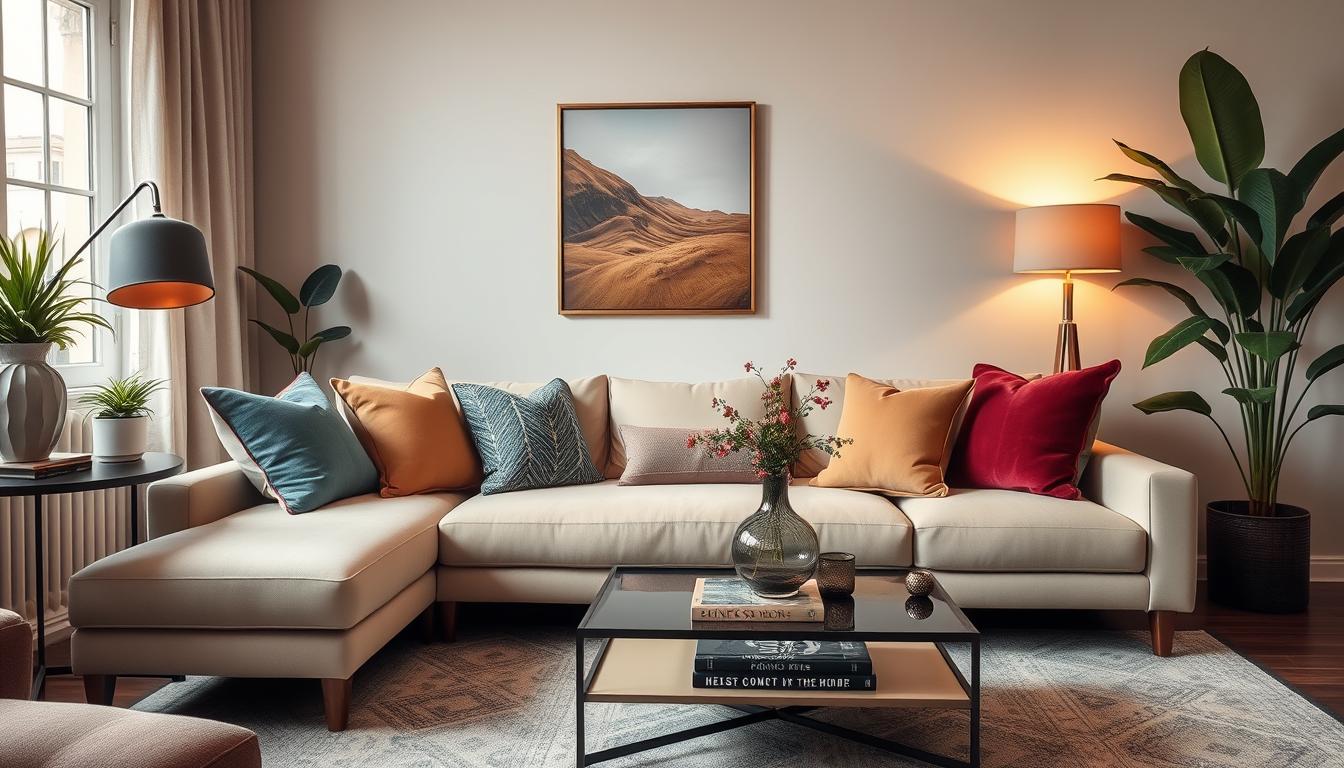

When you manipulate scale and proportion, you shape how a space feels and functions. Large elements can create a sense of grandeur or intimidation, while smaller ones foster intimacy. Proportion guarantees visual harmony, guiding the eye and boosting comfort. These choices respond to the environment’s context and purpose, making space not just aesthetic but meaningful. If you explore further, you’ll discover deeper ways to craft environments that evoke emotion and enhance usability.
Key Takeaways
- Scale influences the perceived size, emotional tone, and dominance of elements within a space.
- Proportion creates visual harmony by relating different elements through balanced ratios.
- Manipulating scale and proportion guides user interaction and enhances spatial functionality.
- Contextual adaptation of scale and proportion reflects space purpose, style, and sensory experience.
- Mastery of these principles allows designers to craft environments that evoke specific moods and balance aesthetics with utility.
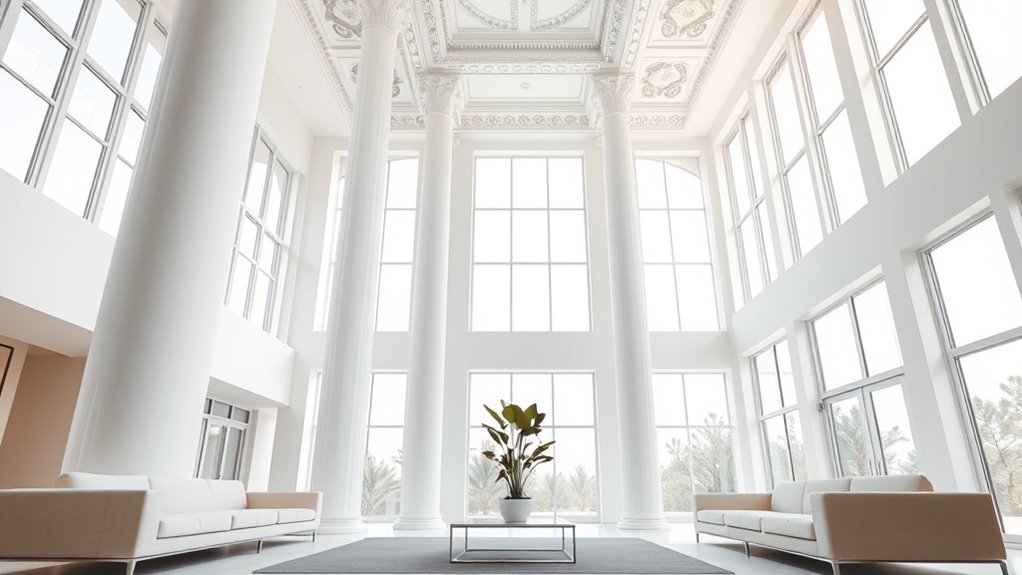
Understanding scale and proportion is fundamental to creating visually compelling and functional designs. When you manipulate these elements deliberately, you control how a space feels and functions, influencing both perception and experience. Scale refers to the size of individual elements relative to each other or to the overall space, while proportion considers the harmonious relationship between these elements. Mastering their interplay enables you to craft environments that evoke specific moods, facilitate usability, and communicate intentionality.
In practice, you recognize that scale impacts the immediacy and emotional resonance of a space. Large furniture, for example, can dominate a room, creating a sense of grandeur or even intimidation, whereas smaller pieces foster intimacy and coziness. You must think critically about the purpose of the space—if you want to inspire awe, you might select monumental proportions; if you aim for comfort, scaled-down, approachable elements work better. The key is understanding that scale is not just about size but about how size influences perception and interaction.
Proportion, on the other hand, guides your choices in balancing elements within the space. It’s about creating visual harmony—ensuring that parts relate to each other in ways that feel natural and satisfying. For example, aligning a table’s height to the average human eye level or ensuring that a window’s width complements its height establishes a sense of order. You use the golden ratio or other mathematical principles to achieve this harmony, subtly guiding the viewer’s eye and reinforcing the space’s cohesiveness.
Furthermore, scale and proportion need to respond dynamically to the context. In a modern, minimalist setting, you might choose sleek, oversized fixtures that emphasize simplicity and boldness. Conversely, in a traditional space, smaller, more intricate details reinforce craftsmanship and familiarity. Your task is to adapt these principles to suit the narrative you want the space to tell. You consider not just static measurements but how these measurements interact with natural light, texture, and other sensory cues, shaping a multi-dimensional experience.
Ultimately, the power of scale and proportion lies in your ability to manipulate them intentionally and thoughtfully. They are not mere aesthetic choices but fundamental tools for shaping perception, guiding movement, and establishing a sense of balance. When you understand their nuances and apply them skillfully, you craft spaces that are not only visually striking but also highly functional, resonating deeply with those who inhabit or encounter them. Recognizing the role of self watering plant pots in interior design and plant care can also influence how you balance natural elements within a space, enhancing both aesthetics and utility.
Frequently Asked Questions
How Does Scale Influence Emotional Responses in a Space?
Scale directly impacts your emotional response by creating feelings of comfort, awe, or intimidation. When a space is large and imposing, you might feel overwhelmed or insignificant, whereas a smaller, intimate scale fosters warmth and safety. You subconsciously sense these cues, shaping your mood and behavior. Adjusting scale allows designers to evoke specific emotions, guiding your experience through visual and spatial dialogue.
Can Proportion Be Used to Create Visual Illusions?
Yes, you can use proportion to create visual illusions that manipulate perception. By carefully adjusting the ratios between elements, you can make a space seem larger, smaller, taller, or more expansive than it actually is. For example, employing the golden ratio or deliberate asymmetry draws the eye and tricks the mind into perceiving depth or scale differently. This technique engages viewers, making spaces feel dynamic and intentionally crafted.
How Do Cultural Differences Affect Perceptions of Scale and Proportion?
You might not realize it, but studies show that cultural backgrounds influence how you perceive scale and proportion—what’s massive in one culture may seem normal in another. For example, Japanese interiors often emphasize harmony with smaller proportions, while Western designs favor bold, larger scales. Your cultural context shapes your aesthetic judgments, making your perception of space nuanced and deeply personal. So, understanding these differences helps you design spaces that resonate globally.
What Role Does Scale Play in Accessibility and Usability?
Scale directly impacts accessibility and usability by ensuring elements are appropriately sized for diverse users. When you choose correct proportions, you make spaces navigable and comfortable, especially for those with physical limitations. Oversized or undersized features hinder interaction, reducing efficiency and safety. By thoughtfully adjusting scale, you create environments that invite engagement, accommodate all users, and foster intuitive, seamless experiences—making every space genuinely inclusive and functional.
How Can Scale and Proportion Be Adapted for Small Versus Large Spaces?
You can adapt scale and proportion by adjusting furniture size, ceiling heights, and spatial relationships to fit the space’s purpose. In small rooms, use vertical elements and lighter colors to create a sense of openness, while larger spaces benefit from bold proportions and varied scales to add interest. Experimenting with these ratios guarantees the environment feels balanced and functional, whether cozy or expansive, enhancing both comfort and aesthetic appeal.
Conclusion
You can’t underestimate the power of scale and proportion in shaping a space’s essence. Their interplay influences how you feel within a room, subtly guiding your perception and experience. Some argue that perfect harmony arises from mathematical ratios like the golden mean, but recent studies suggest our brains also respond to context and cultural cues. Ultimately, mastery of these elements allows you to craft environments that resonate deeply—balancing science and art to create truly compelling spaces.