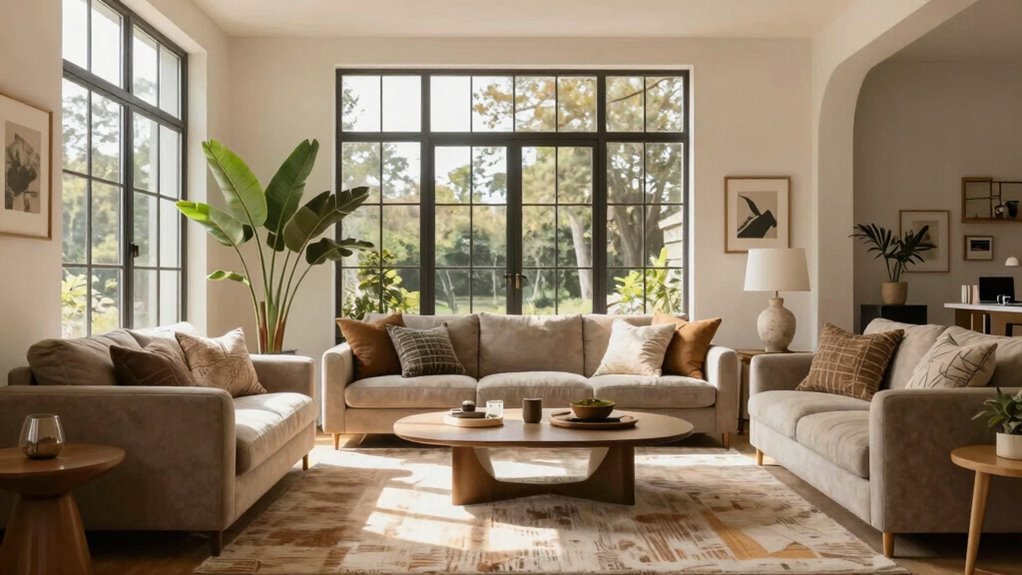

To make large rooms feel more human, focus on strategic furniture placement to create cozy zones and promote connection. Use contrasting colors and textures to add visual interest, and define individual areas with area rugs and textiles. grouping furniture into clusters encourages conversation, while avoiding all pieces against the walls fosters intimacy. These design moves help break down the space into inviting, human-scale environments. Keep exploring for more ideas on transforming big rooms into warm, welcoming areas.

Get furniture and decor delivered free with Prime
- Fast, free delivery on millions of items
- Prime Video, Amazon Music and more included
- Member-only deals all year
Key Takeaways
- Use contrasting colors and textures to create visual boundaries and focal points.
- Arrange furniture into cozy clusters to promote conversation and intimacy.
- Incorporate area rugs to define and enclose different zones within the large space.
- Balance proportions and scale to prevent the room from feeling overwhelming or cavernous.
- Combine color contrast, furniture placement, and textiles for a cohesive, welcoming environment.
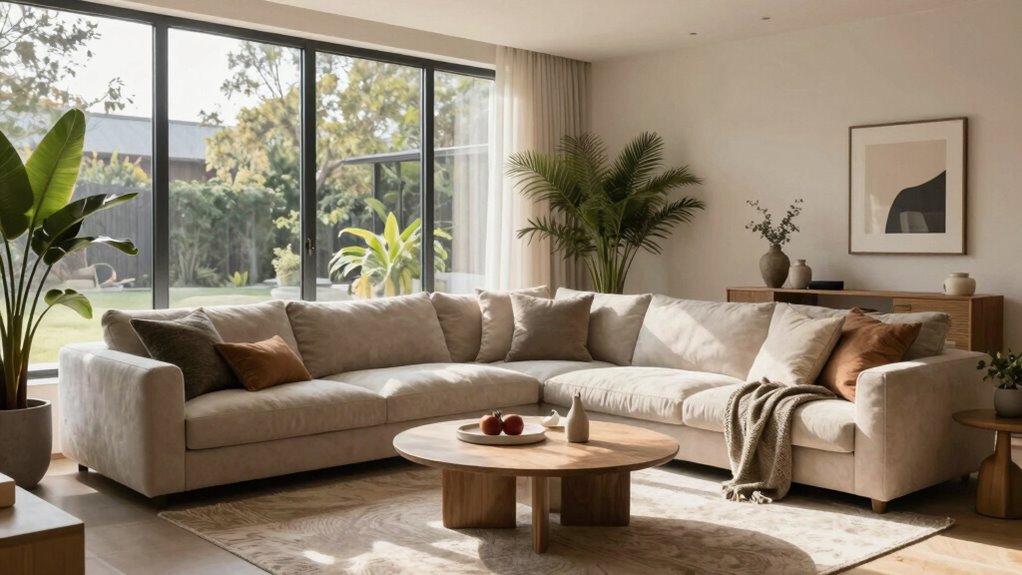
Have you ever wondered how to make a large room feel cozy and inviting rather than empty and overwhelming? The key lies in strategic design moves that break up the space and create a sense of intimacy. Two essential techniques are playing with color contrast and smart furniture arrangement. These choices help you define different zones within the room, making the space feel more human and less cavernous. Incorporating elements of biodiversity into your interior design can also enhance the sense of harmony and connection with nature inside your space. Start with color contrast. Instead of sticking to a single, neutral hue across the entire room, introduce contrasting colors to create visual interest and depth. Use darker shades on one wall or a section of the room to anchor the space, then lighter or brighter tones elsewhere to add warmth and brightness. This contrast tricks the eye into perceiving smaller, more manageable areas, rather than a vast, open expanse. It also invites a sense of coziness by creating focal points and visual boundaries. Incorporating different textures and patterns can amplify this effect, making each zone feel distinct yet cohesive, encouraging people to move through the space comfortably. Additionally, understanding interior proportions can help in balancing the elements and avoiding overwhelming the senses. Paying attention to scale and balance can further refine your design and ensure that the various elements work harmoniously. Next, focus on furniture arrangement. How you position your furniture can dramatically influence the room’s vibe. Instead of scattering pieces randomly, group them into intimate clusters that promote conversation and connection. Pull sofas, armchairs, or benches into close proximity, creating cozy nooks that feel inviting and human-scaled. Avoid pushing all furniture against the walls, which can make the room seem even larger and less personal. Instead, leave enough space for easy movement, but ensure the arrangement feels intentional and warm. Using area rugs can also help define each zone within the larger room, anchoring furniture and creating a sense of enclosure. Layering these elements — contrasting colors and thoughtful furniture placement — makes a significant difference. When done correctly, they break down the vastness of a large room into smaller, welcoming spaces that invite people to linger. You’re fundamentally creating visual cues that guide the eye and the flow of movement, making the space feel tailored to human interaction rather than just an empty shell. With these moves, your large room transforms from an intimidating, impersonal area into a warm, inviting environment where everyone feels comfortable and at home.
As an affiliate, we earn on qualifying purchases.
Frequently Asked Questions
How Do Colors Affect the Perception of Space in Large Rooms?
Colors considerably influence how you perceive space in large rooms through color psychology and hue contrast. Light, neutral shades make the room feel more open and inviting, while bold hues create a cozy, intimate atmosphere. Using high contrast between colors draws attention to specific areas, breaking up the space visually. You can manipulate perception by choosing colors strategically, making a large room feel more balanced, warm, or spacious depending on your intent.
What Lighting Techniques Make Large Rooms Feel Cozier?
To make large rooms feel cozier, you should use warm accents with natural textures like wood or woven fabrics. Incorporate layered lighting, such as table lamps, floor lamps, and soft overhead lights, to create a warm, inviting glow. Dimming switches help adjust the ambiance, while warm-toned bulbs enhance the feeling of intimacy. This combination of lighting techniques, textures, and accents makes your space feel more human and welcoming.
How Can Furniture Placement Improve Room Intimacy?
Have you considered how furniture grouping and spatial zoning can create intimacy? By arranging furniture into cozy clusters, you define smaller conversation areas that invite connection. Use spatial zoning to section off parts of a large room, making it feel more inviting and human. This approach encourages interaction and warmth, transforming an overwhelming space into one that feels welcoming and personal. Do you want your space to foster closer relationships?
Are There Specific Accessories That Make Big Rooms More Inviting?
Adding decorative accents like artwork, lamps, and vases instantly makes a big room feel more inviting. Cozy textiles such as plush rugs, throw blankets, and soft cushions also create warmth and comfort. You should mix these accessories throughout the space to break up the size and add personal touches. These small details make the room feel less empty and more welcoming, encouraging conversation and relaxation.
How Does Acoustic Design Influence the Room’s Ambiance?
Acoustic design considerably influences your room’s ambiance by managing sound absorption and echo control. When you incorporate materials like soft furnishings, rugs, or acoustic panels, you reduce echo and create a warmer, more inviting atmosphere. This balance makes conversations clearer and the space feel more comfortable. By controlling sound reflections, you enhance the overall mood, making large rooms feel cozy and human, rather than cold or cavernous.
Conclusion
By incorporating thoughtful design moves, you can transform a vast, echoing space into a cozy haven that feels like a warm hug. Think of your room as a canvas—adding pieces that break up the space makes it feel more human, inviting, and alive. With your intentional choices, your large room becomes a garden of comfort, where each element is a blooming flower, creating a balanced, welcoming atmosphere that’s as soothing as a gentle breeze.
Fall Picks
fall essentials
As an affiliate, we earn on qualifying purchases.