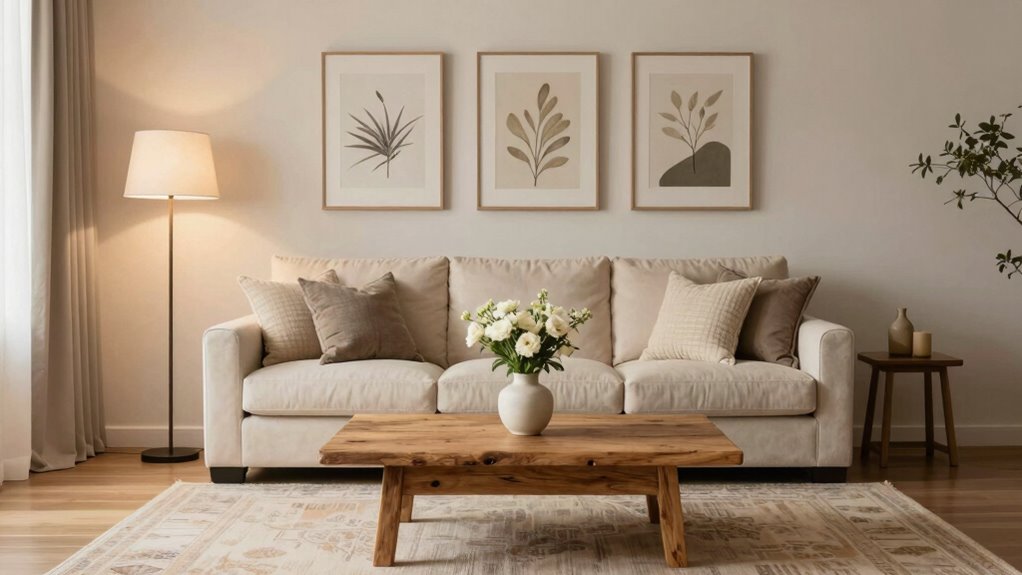

The key to making a room feel “done” is choosing a strong focal point that anchors your entire space. This could be a fireplace, large window, artwork, or bold furniture piece. Once you highlight your focal point and maintain balance with well-scaled decor and cohesive textures, your room will look polished and inviting. mastering this simple rule transforms your space effortlessly—continue exploring for even more tips to perfect your design.
Key Takeaways
- Highlight a strong focal point to anchor the room and create visual cohesion.
- Maintain balanced proportions and scale for furniture and accessories.
- Use consistent color palettes and layered textures for depth and harmony.
- Ensure clutter is minimized and surfaces are tidy to enhance overall cohesion.
- Apply visual hierarchy through placement and lighting to guide the eye and create a polished look.
What’s the One Simple Rule That Makes Your Room Look Finished?
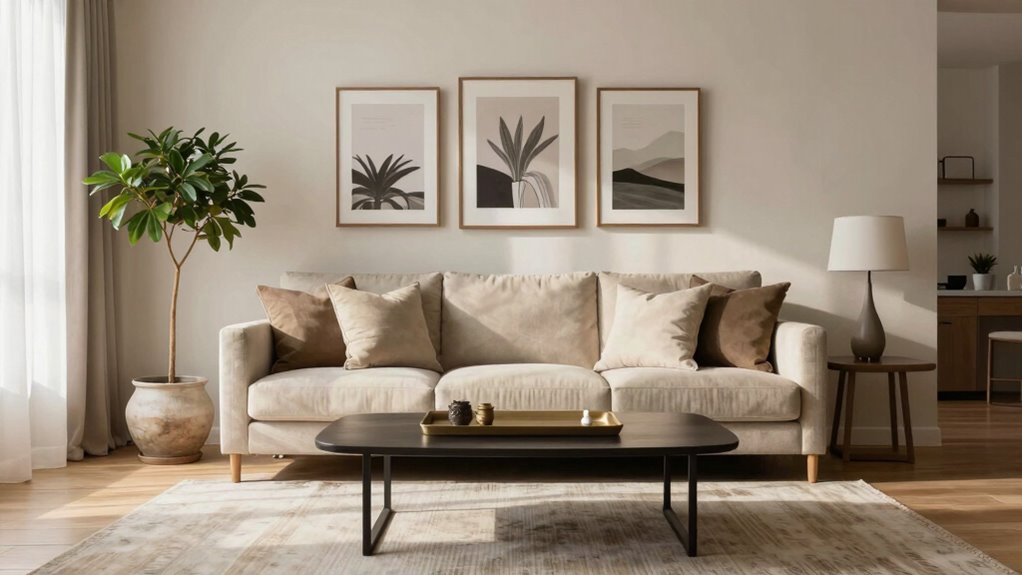
Have you ever wondered what tiny change can instantly make your room look polished and complete? It’s all about achieving color harmony and mastering texture layering. When your colors work together seamlessly, your space feels cohesive and intentional. Use a consistent color palette across furniture, accessories, and textiles to tie everything together. Texture layering adds depth and interest—combine smooth fabrics with rougher materials, shiny with matte finishes. This contrast creates visual richness, making your room feel thoughtfully curated. Incorporate natural elements like wood or stone to further enhance the organic feel. Starting with a neutral base allows you to build a balanced and harmonious environment, making your design feel well-composed. Creating a color harmony is the key to a unified look that feels effortless. Begin with a base of neutral tones, then add pops of color and varied textures to keep it lively yet balanced. Using visual contrast effectively can elevate your space from ordinary to extraordinary. Paying attention to design principles ensures your room feels both intentional and inviting. By focusing on these elements, you’ll create a finished look that feels both inviting and stylish, with no extra effort needed.
How to Find the Focal Point That Completes Your Space
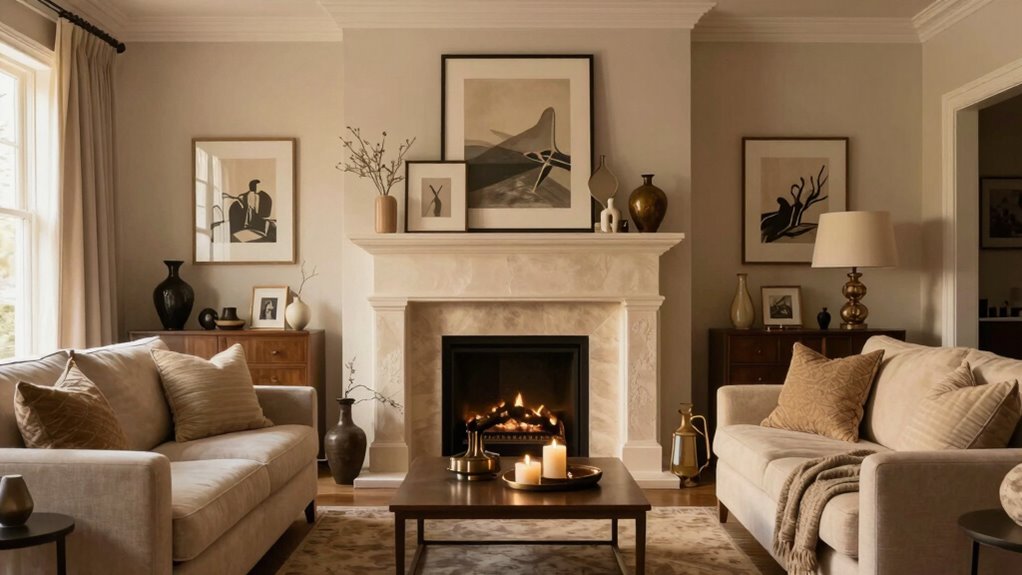
Once you’ve established a cohesive color palette and layered textures, the next step is to identify the focal point that anchors your room. A strong focal point creates a natural center of attention, drawing the eye and tying the space together. To find this, look for an existing feature like a fireplace, large window, or artwork. Alternatively, create one with a statement piece, such as a bold sofa or striking chandelier. Use centered arrangements to highlight your focal point, ensuring furniture and accessories direct attention inward. Maintain color cohesion by choosing accents that complement your main color scheme. This helps your room feel intentional and complete, with a clear visual anchor that unifies all elements seamlessly.
Why Balance and Proportion Are Key to a Polished Look

Achieving a polished look in your room hinges on mastering balance and proportion, which guarantee all elements work harmoniously. When you focus on color coordination, avoid overwhelming the space with too many hues; instead, stick to a cohesive palette that unifies the room. Texture mixing also plays a crucial role—combine smooth, rough, soft, and hard surfaces to add depth without disrupting harmony. Proper proportion ensures furniture and accessories are scaled appropriately, preventing clutter or awkward gaps. Keep your arrangements visually balanced so that no single area dominates. Incorporating visual harmony principles helps create a space that feels naturally cohesive and inviting. By paying attention to these details, your room will feel thoughtfully curated and polished, making every element contribute to a cohesive whole. Balance and proportion truly are the foundation of a finished, refined space.
How to Use the Focal Point and Balance to Guide Your Decor Choices
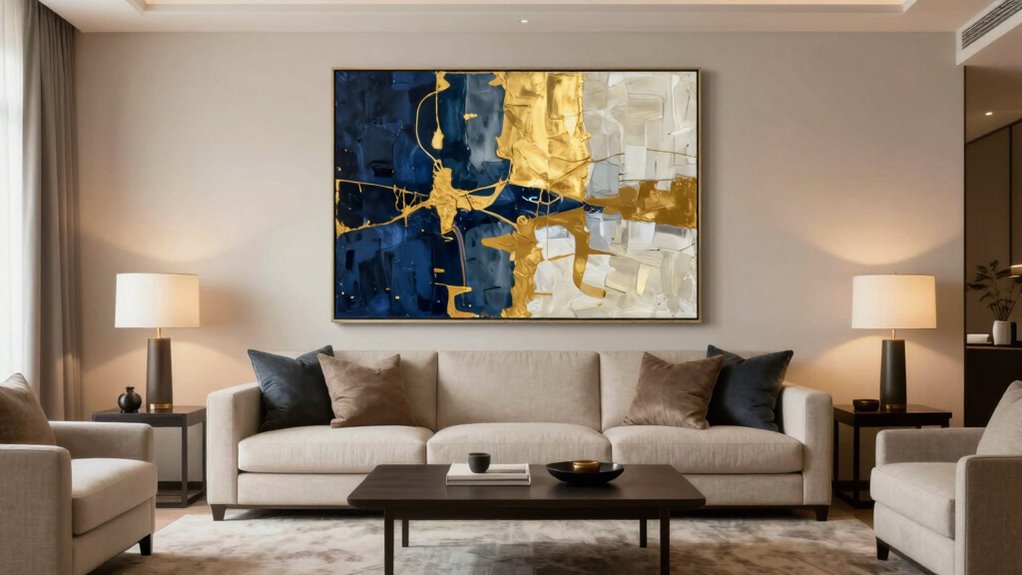
Start by choosing a focal point that draws the eye and sets the tone for your room. Then, balance your decor around it to create harmony, whether through symmetry or visual weight. By highlighting a central element and using effective symmetry, you’ll guide the eye naturally and make your space feel complete. Incorporating elements like color accuracy enhances the overall visual harmony and ensures your decor choices complement each other seamlessly. To improve clarity and flow, be mindful of passive voice, which can be detected and corrected using dedicated tools. Additionally, understanding decor principles helps you make intentional choices that elevate your design. Recognizing the importance of fundamentals of ergonomics can also help in making confident decorating decisions that stand the test of time.
Highlight a Central Element
A focal point serves as the visual anchor that draws the eye and sets the tone for your entire room. To highlight this central element effectively, consider your color schemes—choose hues that complement or contrast to make the focal point stand out. Proper furniture placement is key; arrange seating and accessories around the focal point to emphasize its importance without overwhelming the space. Keep other decor elements subdued or neutral to ensure the central element remains prominent. Lighting also plays a role—use accent lighting to spotlight the focal point and create visual interest. By intentionally emphasizing this element through color, placement, and lighting, you guide your eye naturally around the room, making your decor feel cohesive and thoughtfully curated. Incorporating visual hierarchy strategies can further enhance the focus and balance within your space. Additionally, integrating connected fitness technology can reinforce the room’s purpose and modern aesthetic, creating a seamless blend between form and function.
Achieve Visual Balance
When you focus on creating visual balance around your focal point, your room naturally feels more harmonious and inviting. To achieve this, consider color harmony—using complementary or analogous colors that enhance the room’s main feature without overwhelming it. Balance also involves texture contrast; mix smooth surfaces with rough or tactile elements to add visual interest without clutter. Distribute visual weight evenly by placing larger or darker items opposite lighter or smaller ones near the focal point. This approach guides the eye smoothly across the space, making it feel cohesive. Remember, a well-balanced room doesn’t feel static; instead, it invites you to explore every corner while maintaining a sense of unity around your central element.
Use Symmetry Effectively
Have you ever noticed how symmetry can instantly elevate a room’s harmony? Using symmetry principles helps create visual harmony that feels intentional and polished. To do this effectively, identify your focal point—like a fireplace or artwork—and arrange furniture and decor around it with mirrored or balanced elements. For example, place matching lamps or side tables on either side of a sofa. Keep in mind that symmetry doesn’t mean everything has to be identical; it’s about achieving balance. This approach guides your decor choices, making the space feel cohesive and complete. When you use symmetry effectively, your room radiates calmness and order. It’s a simple rule that transforms chaos into a thoughtfully curated environment, making your space feel “done.” Incorporating spatial planning ensures that your layout supports this balance and enhances overall harmony.
Common Decorating Mistakes That Make a Room Feel Incomplete: And How to Avoid Them
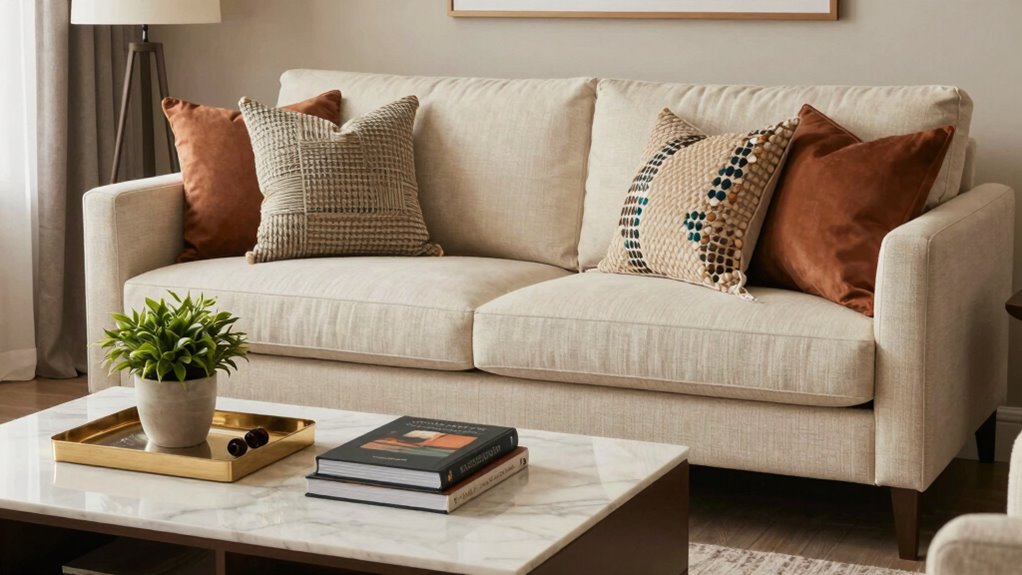
Ignoring your focal point can leave a room feeling unbalanced and unfinished. Overcrowding and clutter make it hard to appreciate your decor and create a sense of chaos. To avoid these mistakes, focus on highlighting key elements and keep surfaces tidy.
Ignoring Focal Points
A common mistake in decorating is overlooking the importance of a focal point, which can leave a room feeling scattered or unfinished. Without a clear focal point, your space lacks a visual anchor that guides the eye and creates harmony. Ignoring this key element makes the room feel disjointed and incomplete. Instead, identify a natural focal point, like a fireplace, large window, or artwork, and build your decor around it. This helps to unify the space and gives it a sense of purpose. When you emphasize a focal point, everything else falls into place, making the room look intentional and well-designed. Remember, a strong focal point is the foundation that makes your entire room feel “done” and inviting. Design principles emphasize the importance of a focal point in creating a cohesive and balanced space.
Overcrowding and Clutter
When a room becomes overcrowded with furniture, decor, or accessories, it can quickly lose its sense of balance and purpose. Clutter control is key to creating a cohesive space. Start by evaluating what you truly need and remove excess items. Use smart storage solutions like baskets, shelves, or hidden compartments to keep things tidy. Avoid stuffing surfaces with too many accessories; instead, select a few meaningful pieces. Maintaining open space allows your focal points to stand out and makes the room feel more inviting. Remember, less is often more. By managing clutter and investing in effective storage solutions, you’ll create a room that feels complete, balanced, and well-designed—without the chaos. Incorporating proper organization techniques can further enhance your space by keeping everything in its place and maintaining a clean look. Additionally, implementing storage solutions that utilize hidden compartments or multi-functional furniture can maximize space efficiency and reduce visual clutter. Emphasizing visual balance ensures that each element contributes to a harmonious overall aesthetic, much like the importance of ventilation considerations when designing a sauna space to maintain comfort and air quality.
Top Tips for Applying This Rule in Any Style or Room Size
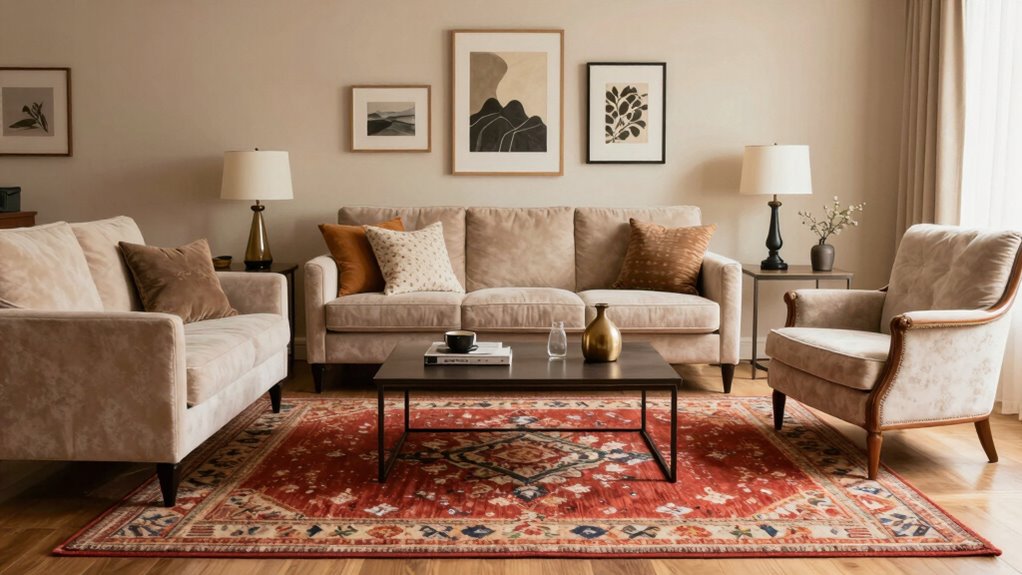
Ever wondered how to seamlessly apply the one rule to any style or room size? Here are key tips to help you do just that:
- Focus on color harmony by choosing a cohesive palette, making the space feel unified regardless of size.
- Use texture layering to add depth and interest, especially in smaller rooms where visual variety helps prevent cluttered appearances.
- Scale your decor to match the room’s size, ensuring larger pieces don’t overwhelm smaller spaces.
- Keep the overall look simple and balanced, which allows the rule to shine through without overcomplicating the style.
Applying these tips ensures your room feels “done,” while accommodating any style and size with ease.
How This Simple Rule Will Transform Your Decorating Results
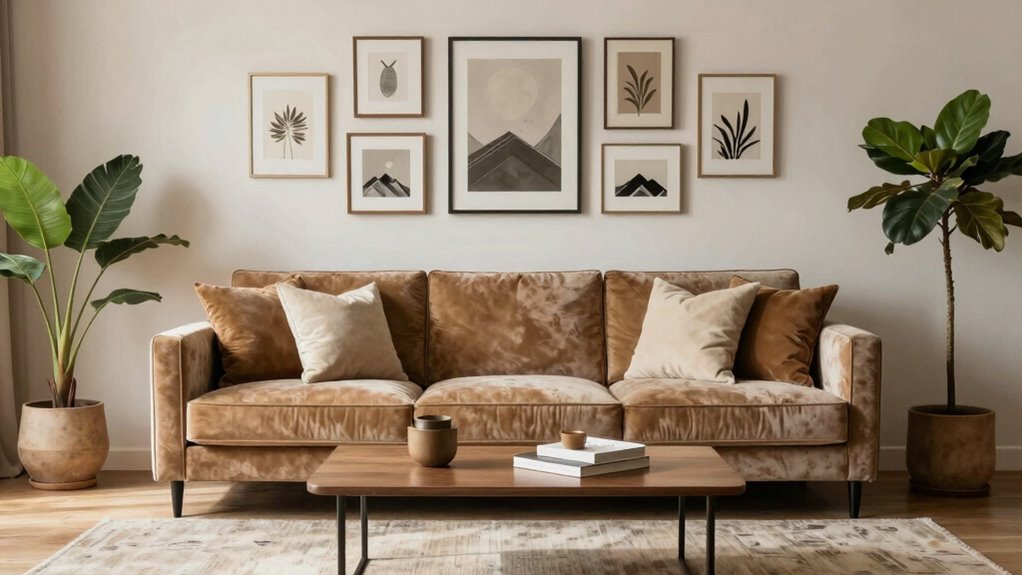
Implementing this simple rule can dramatically elevate your decorating results, making your space feel intentionally designed rather than just arranged. When you balance visual weight across a room, it creates a sense of harmony that feels natural and inviting. Focus on color harmony to unify different elements, ensuring that each piece complements the overall palette. This helps prevent cluttered or chaotic looks and guides the eye smoothly around the space. By paying attention to how objects balance each other in size, shape, and placement, you’ll achieve a cohesive feel. Understanding visual balance is key to creating a space that feels both beautiful and intentional. Achieving this balance involves considering proportion and scale, which are essential principles in interior design. Paying attention to spatial awareness ensures that each element contributes to a harmonious whole, fostering a balanced aesthetic that appeals to the eye. This awareness can also help you identify the right focal points to draw attention and anchor your design. The result is a space that feels both beautiful and intentional.
Frequently Asked Questions
Can This Rule Be Applied to Small or Large Rooms Equally?
Yes, you can apply this rule to both small and large rooms, as its scale versatility adapts well to different space limitations. In small rooms, it helps prevent clutter, creating a cozy yet organized feel. In larger spaces, it adds balance and cohesion without overwhelming the area. By focusing on this rule, you guarantee your room feels complete and well-designed, regardless of size or space limitations.
Does This Rule Work With Modern or Traditional Styles?
Absolutely, this rule works wonderfully with both modern and traditional styles, delivering timeless appeal and stylistic flexibility. Whether you’re creating a sleek, sophisticated space or a cozy, classic ambiance, applying this rule helps unify your design. You’ll find that focusing on this principle allows you to balance bold and subtle elements, ensuring your room feels effortlessly complete. Regardless of style, this rule helps craft a compelling, cohesive space that truly feels “done.”
How Long Does It Typically Take to Implement This Rule Effectively?
Implementing this rule typically takes a few hours to a day, depending on your room’s size and current state. Timing considerations include planning your layout and gathering materials, which can extend the process. You may face implementation challenges like balancing visual weight or coordinating colors. Stay patient and flexible, as fine-tuning the details often leads to a more polished, “done” look that enhances your space beautifully.
Are There Exceptions to This Rule for Specific Room Functions?
Yes, there are exceptions depending on the room’s function. For instance, a living room might need more decorative accessories and layered lighting arrangements to create a cozy, inviting atmosphere. Conversely, a workspace benefits from minimal accessories and focused lighting to enhance productivity. Adjust your decor and lighting based on the room’s purpose, balancing aesthetics and functionality to make sure it feels “done” without overdoing it.
Can This Rule Be Used in Outdoor or Semi-Outdoor Spaces?
You can definitely apply this rule outdoors, but you’ll need weatherproof materials that withstand the elements. Think of your space as a garden: integrating natural elements like stone or wood creates harmony and warmth. For example, a patio with cozy seating and weather-resistant cushions feels inviting and complete, even when exposed to rain or sun. Use durable, weatherproof furniture and accessories to maintain that “done” feeling outside.
Conclusion
Think of your room as a symphony—you’re the conductor, and the focal point is the melody that ties everything together. When you follow this simple rule, your space feels complete, balanced, and harmonious. It’s like adding the final brushstroke to a painting, turning a blank canvas into a masterpiece. Trust this approach, and watch your room transform into a space that sings with purpose and style.