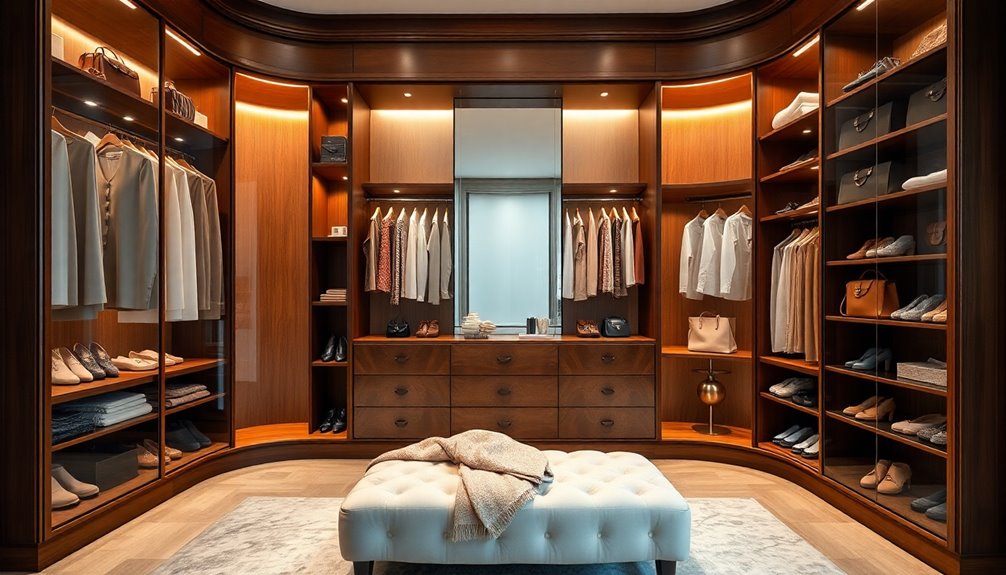
Using color temperature intentionally allows you to craft specific moods and emotional tones in your visuals. By adjusting warm tones (like amber and orange) or cool tones (such as blue and green), you can evoke feelings of comfort, tension, or mystery aligned with your narrative. Controlling light sources, filters, and white balance guarantees your scene’s spectral quality reflects your desired atmosphere. Mastering these techniques helps turn simple lighting into a powerful storytelling tool—there’s more depth to discover with each adjustment.
Key Takeaways
- Use warm tones (e.g., amber, orange) to evoke intimacy, comfort, and energy in scenes.
- Employ cool tones (e.g., blue, green) to create calmness, mystery, or detachment for specific moods.
- Adjust white balance and filters deliberately to reinforce the desired emotional or narrative effect.
- Experiment with different color temperatures to simulate environments like sunsets or overcast skies for storytelling.
- Leverage color science and post-production tools to fine-tune spectral qualities and enhance visual impact intentionally.

Understanding and manipulating color temperature is essential for creating visual atmospheres that evoke specific moods or enhance clarity. When you grasp the nuances of warm versus cool tones, you gain a powerful tool for storytelling through imagery. Warm colors—like amber, orange, and red—are associated with intimacy, energy, and comfort. They can foster a sense of warmth and closeness, making viewers feel invited or nostalgic. Conversely, cool colors—such as blue, green, and violet—convey calmness, detachment, or even mystery. By intentionally choosing and adjusting these tones, you direct your audience’s emotional response and influence the perceived depth and spatial relationships within your scene.
In practice, understanding color temperature involves more than simply selecting warm or cool hues; it requires precise control over light sources and their spectral qualities. For example, daylight typically ranges from about 5500K to 6500K, producing a natural, neutral tone that can serve as a baseline. As you shift toward lower temperatures, around 3200K, tungsten lights introduce a warm, amber cast that can make scenes feel cozy or nostalgic. Higher temperatures—above 7500K—produce a cooler, bluish light, often used to evoke a sense of starkness, clinical precision, or nighttime. Adjusting these temperatures manually or through filters allows you to craft a specific ambiance, whether you’re simulating a sunset, an overcast sky, or a futuristic environment. Incorporating color science principles helps optimize the emotional and visual impact of your lighting choices.
You should also consider the interaction between color temperature and your camera’s white balance settings. Setting your camera correctly guarantees that the colors you intend to evoke are rendered accurately. An incorrect white balance can neutralize the emotional impact, making warm tones appear washed out or cool tones overly sterile. Using gels, filters, and post-production tools, you can fine-tune the warmth or coolness of your footage or images, reinforcing your narrative intent. For instance, adding a warm filter to a scene shot in daylight can enhance feelings of comfort, while a cool filter might underscore isolation or tension.
Ultimately, intentional use of color temperature hinges on your understanding of its psychological effects and technical control. Experimenting with different settings and observing their emotional and visual impact enables you to develop a visual language that communicates your story more effectively. Whether you aim to evoke serenity, tension, or nostalgia, manipulating color temperature with precision becomes a core skill—one that transforms ordinary visuals into compelling, emotionally resonant experiences.
Frequently Asked Questions
How Does Color Temperature Affect Viewer Perception?
Color temperature shapes how viewers perceive your scene by evoking emotions and setting the mood. Warm tones (around 3000K) create intimacy and comfort, while cool tones (above 6000K) evoke detachment or modernity. You influence perception by adjusting Kelvin levels, guiding viewers’ emotional response. Precise control over color temperature guarantees your visual storytelling communicates the intended atmosphere, making your work more impactful and immersive.
Can Color Temperature Influence Emotional Responses in Images?
Yes, color temperature can influence your emotional responses in images. Warmer tones evoke feelings of comfort, warmth, and intimacy, while cooler tones create a sense of calm, detachment, or even melancholy. By adjusting color temperature intentionally, you guide viewers’ moods and perceptions, enhancing storytelling or emphasizing specific emotional cues. It’s a powerful tool that aligns visual tone with intended emotional impact, making your images more compelling and emotionally resonant.
What Equipment Is Needed to Control Color Temperature Accurately?
Ever wondered how to master precise color control? You’ll need a reliable digital color meter or a spectrophotometer to measure light accurately, and adjustable LED or tungsten lights that allow you to tweak color temperature in real time. A high-quality camera with manual white balance settings helps guarantee consistency, while color gels or filters can fine-tune hues. These tools empower you to shape images with intentional warmth or coolness, aligning visuals with your emotional intent.
How Does Ambient Lighting Impact Color Temperature Choices?
Ambient lighting directly influences your color temperature choices by altering perceived hues and warmth. You need to evaluate the existing light sources—whether they emit warm, cool, or neutral tones—and adjust your equipment accordingly. By understanding the ambient light’s color temperature, you can select filters, LED settings, or balance your camera settings to achieve accurate, consistent color reproduction, ensuring your visuals stay true regardless of changing environmental conditions.
Are There Industry Standards for Color Temperature in Photography?
You’ll find that industry standards for photography typically favor 5500K for daylight and 3200K for tungsten lighting, aligning with natural and artificial light sources. Remarkably, about 80% of professional photographers prefer these temperatures for consistent color rendering. These benchmarks help you maintain accurate color balance across various environments. By understanding and applying these standards, you ensure your images look natural, precise, and visually compelling, regardless of lighting conditions.
Conclusion
By intentionally choosing your color temperature, you harness subtle cues that influence mood and perception—almost like a well-timed coincidence guiding your audience’s experience. When you align lighting with your scene’s tone, you create a seamless narrative that feels both natural and deliberate. Remember, the right warmth or coolness isn’t just aesthetic; it’s a technical tool that, when used precisely, transforms ordinary visuals into compelling stories—making every moment a perfect coincidence of color and emotion.