When choosing between a wine fridge and a wine room, consider your collection size and aging goals. A wine fridge offers precise temperature and humidity control in a compact, energy-efficient design suitable for short- to medium-term storage. In contrast, a wine room provides extensive capacity and customized climate management for long-term aging, but requires significant investment and space. Exploring these options further reveals critical differences that can optimize your wine preservation strategy.
Key Takeaways
- Wine fridges are compact and ideal for limited spaces, while wine rooms offer large-scale storage for extensive collections.
- Wine rooms provide superior long-term aging conditions, whereas fridges are better suited for short- to medium-term preservation.
- Precise climate control and insulation are standard in wine rooms, with advanced features also available in modern wine fridges.
- Investment and space requirements are significantly higher for wine rooms compared to smaller, more affordable wine fridges.
- Choice depends on collection size, aging goals, available space, and budget considerations.
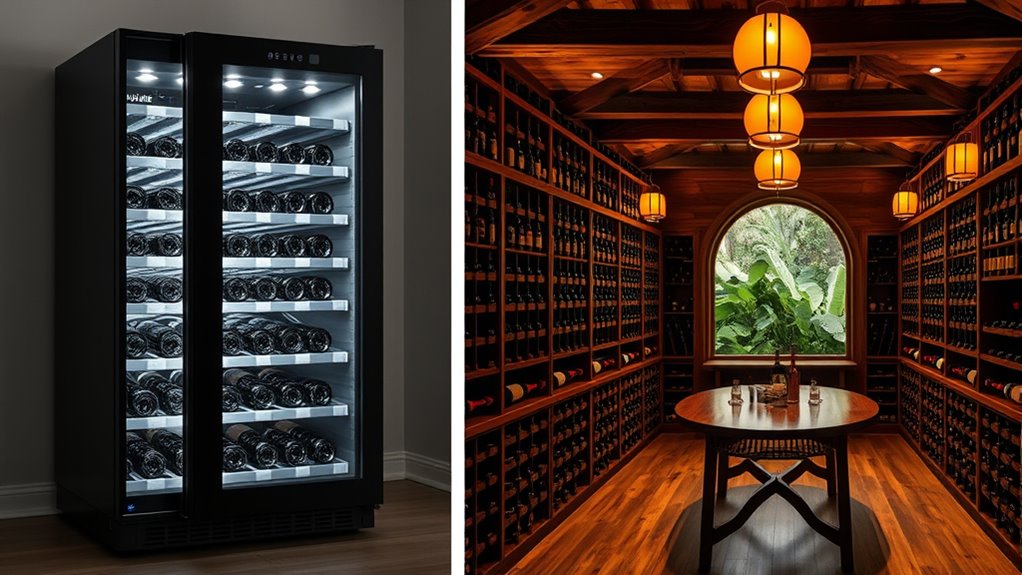
When it comes to preserving and aging wine, choosing the appropriate storage solution is essential. The decision between a wine fridge and a wine room hinges on several technical considerations, including temperature stability, humidity control, space requirements, and long-term preservation capabilities. Understanding these factors allows you to maximize your wine storage according to your collection’s size, aging intentions, and environmental conditions.
A wine fridge, also known as a wine cooler, offers a controlled environment within a compact, energy-efficient unit. It maintains a narrow temperature range—typically between 45°F and 65°F—essential for aging wine without risking spoilage. Modern wine fridges feature precise temperature controls, digital displays, and adjustable shelves, enabling you to tailor conditions for different types of wine. Humidity levels in these units are generally maintained between 50% and 70%, which suppresses cork drying and oxidation. The insulation and cooling systems are designed for minimal temperature fluctuation, making them suitable for short- to medium-term storage or collection expansion. However, their limited space constrains long-term aging of large quantities, and their precision diminishes if the unit is frequently opened or poorly maintained. Additionally, some models incorporate advanced temperature regulation features to enhance stability.
In contrast, a wine room—an environment explicitly designed and constructed for long-term wine storage—provides a more expansive and customizable solution. It allows you to create a stable microclimate with sophisticated climate control systems that precisely regulate temperature, humidity, and air quality over extended periods. Unlike wine fridges, wine rooms can accommodate hundreds or thousands of bottles, arranged in custom racking systems that facilitate proper wine orientation and aging. Their stability hinges on insulation, ventilation, and climate control technology, which must be carefully engineered to prevent temperature swings and humidity fluctuations. Properly designed, a wine room ensures the ideal aging environment, preserving delicate aromas and structural integrity over decades. However, it requires a substantial initial investment, space, and ongoing maintenance.
Ultimately, your choice depends on your collection’s scope and your aging ambitions. A wine fridge suits enthusiasts with limited space, moderate collections, or a focus on preservation for a few years. Conversely, a wine room caters to dedicated collectors aiming for long-term aging, with the capacity to support extensive, carefully managed cellaring environments. Both solutions demand attention to technical details—such as consistent temperature regulation, humidity control, and proper shelving—to guarantee your wines age gracefully and remain in prime condition.
Top picks for "wine fridg room"
Open Amazon search results for this keyword.
As an affiliate, we earn on qualifying purchases.
Frequently Asked Questions
Which Option Is More Energy-Efficient for Long-Term Storage?
A wine fridge generally offers greater energy efficiency for long-term storage compared to a wine room. It is designed with insulation and precise temperature controls that minimize energy consumption. You’ll find that wine fridges use less power due to their smaller size and targeted cooling systems, making them ideal for maintaining ideal conditions without excessive energy use. Conversely, wine rooms require continuous climate control, resulting in higher energy consumption over time.
How Does Humidity Control Differ Between Wine Fridges and Wine Rooms?
Humidity handling differs distinctly between wine fridges and wine rooms. Wine fridges maintain a controlled, consistent humidity typically between 50-70%, utilizing sealed environments and humidification systems. Conversely, wine rooms rely on natural ventilation and environmental adjustments to sustain ideal humidity levels, which can fluctuate more substantially. You’ll find wine rooms better suited for larger, more variable humidity needs, while wine fridges ensure precise, stable moisture control for delicate wine preservation.
Can a Wine Fridge Be Converted Into a Wine Room Later?
Yes, you can convert a wine fridge into a wine room later, but it requires significant modifications. You’ll need to upgrade insulation, install proper climate control systems, and enhance humidity regulation to match wine room standards. Guarantee the space provides consistent temperature and humidity levels, and consider professional assessment to refine airflow and insulation. This process can be complex, demanding precise adjustments for ideal wine preservation.
What Are the Typical Costs Associated With Each Storage Type?
You’ll spend approximately $200 to $2,000 on a wine fridge, depending on size and features, while a custom wine room costs between $10,000 and $50,000 or more, reflecting design complexity and materials used. Installation, temperature control, and insulation add to expenses for both. Expect ongoing costs for maintenance, energy, and potential upgrades. Your choice depends on your collection size, desired storage conditions, and budget.
How Do Temperature Fluctuations Impact Wine Aging in Each?
Temperature fluctuations accelerate wine aging and can cause premature spoilage in both storage types. In wine fridges, fluctuations are minimized through precise temperature controls, maintaining consistent conditions essential for ideal aging. Conversely, wine rooms are more susceptible to ambient temperature variations, risking inconsistent aging processes. You should monitor both environments regularly and implement climate control solutions to guarantee stable temperatures, protecting your wine’s quality and maturation potential over time.
Conclusion
Ultimately, choosing between a wine fridge and a wine room depends on your storage needs and space constraints. For instance, a serious collector might opt for a dedicated wine room to accommodate extensive holdings and precise climate control, ensuring ideal preservation. Conversely, a casual enthusiast may prefer a compact wine fridge for convenience. Assess your collection size, available space, and desired control to make an informed decision that preserves your wines’ integrity and enhances your enjoyment.