Microwave drawers and built-in speed ovens both offer integrated, stylish kitchen solutions, but they serve different functions. Microwave drawers primarily provide rapid reheating, defrosting, and light cooking tasks with a compact, accessible design. In contrast, speed ovens combine microwave and convection or traditional oven features, enabling baking, roasting, and broiling with larger capacities. Understanding their installation, capabilities, and aesthetic impacts will help you select the best option for your kitchen needs. Exploring further reveals detailed differences to examine.
Key Takeaways
- Microwave drawers are compact, installed at countertop height for quick access, while built-in speed ovens are larger and often installed at eye level.
- Speed ovens combine microwave and convection or traditional oven functions, offering more versatile cooking capabilities than microwave drawers.
- Microwave drawers have smaller capacities suited for reheating and light tasks, whereas speed ovens can handle bigger dishes and multiple items simultaneously.
- Both appliances require custom cabinetry, but speed ovens often need more complex installation and ventilation systems.
- Microwave drawers provide a sleek, integrated look at lower cabinetry, while built-in speed ovens offer a high-end, seamless appearance at eye level.

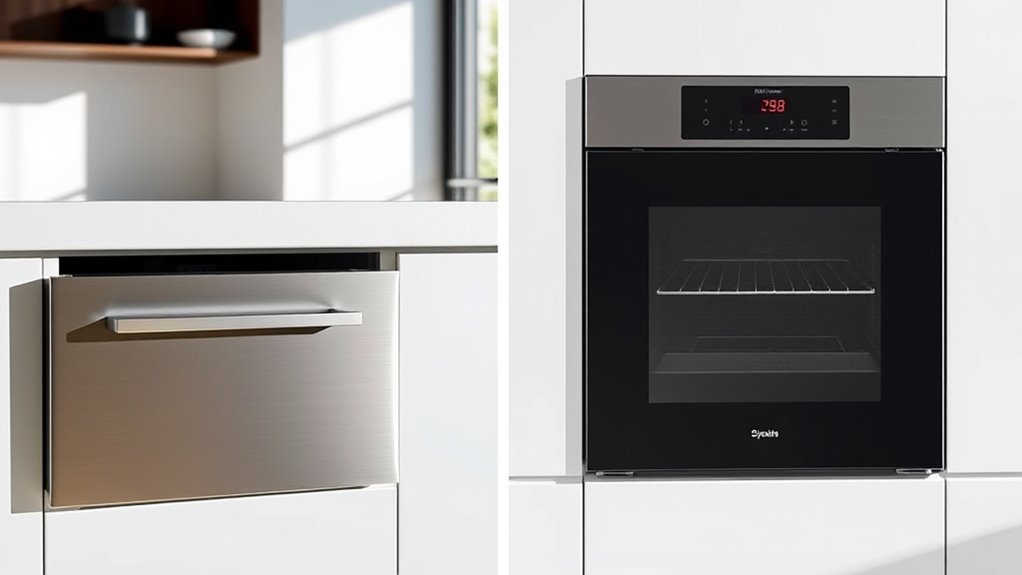
When choosing between microwave drawers and built-in speed ovens, understanding their design, functionality, and installation requirements is essential for making an informed decision. Microwave drawers are specifically designed to be installed flush with cabinetry, offering a sleek, integrated appearance. They are typically built into lower cabinetry at countertop height, which minimizes bending and enhances accessibility. Their compact, drawer-like form factor allows for easy opening and closing, often with touch controls or push-to-open mechanisms. Microwave drawers operate primarily as microwave ovens, providing rapid heating, defrosting, and cooking functions. Their interior cavity is usually smaller than traditional ovens, limiting the size and quantity of dishes you can prepare at once. Despite this, they often include features like sensor cooking, convection options, and smart technology integrations, making them versatile for various kitchen tasks. Additionally, the technology integration in microwave drawers can include smart connectivity, enabling remote operation and monitoring via mobile apps.
Built-in speed ovens, on the other hand, are designed to combine microwave functionality with convection or traditional oven capabilities into a single unit. They are typically installed at eye level or within wall cabinetry, offering a seamless, custom look that can match other high-end appliances. Speed ovens are larger and more versatile, capable of baking, roasting, broiling, and microwaving, which allows you to replace multiple appliances with one. They often feature multiple cooking modes, including convection, microwave, and sometimes combi modes that combine microwave and convection for speed and efficiency. The interior cavity of a speed oven is generally larger than that of a microwave drawer, enabling you to prepare larger dishes or multiple items simultaneously.
Installation requirements for these appliances differ markedly. Microwave drawers need a dedicated cabinet cutout designed to support their weight and dimensions, with considerations for proper ventilation and electrical connections. They are often installed at a height that facilitates easy access, which might require custom cabinetry. Built-in speed ovens demand a more extensive installation process, involving precise cabinet modifications and often electrical upgrades for higher power needs. They may also require dedicated ventilation or cooling systems depending on their features. Both types demand careful planning to ensure proper clearance and ventilation, but speed ovens tend to have more complex installation procedures due to their larger size and multi-function capabilities.
Ultimately, your choice hinges on your kitchen layout, cooking needs, and aesthetic preferences. Microwave drawers excel in providing a modern, streamlined look and quick access for reheating and light cooking tasks, while built-in speed ovens offer greater versatility, larger capacity, and can replace multiple appliances, providing a thorough cooking hub.
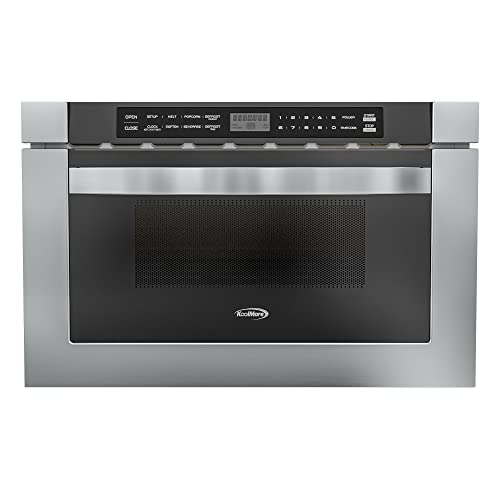
KoolMore 24 Inch Stainless-Steel Microwave Drawer with 1.2 cu. ft. Capacity, 1000W Power with 10 Custom Cooking Levels, Memory, and Timer Functions, Wall-Mounted with Flat Bottom (KM-MD-1SS)
Pull-Out Microwave Drawer – A smart, stylish way to utilize a microwave oven in the kitchen without leaving…
As an affiliate, we earn on qualifying purchases.
As an affiliate, we earn on qualifying purchases.
Frequently Asked Questions
Which Appliance Is More Energy-Efficient for Daily Use?
You’ll find microwave drawers generally more energy-efficient for daily use. They heat food quickly with less energy loss due to their compact size and direct access design. Built-in speed ovens often consume more power because of larger capacity and longer preheat times. By choosing a microwave drawer, you optimize energy consumption, reduce standby power, and save on utility bills, making it a sustainable choice for frequent, everyday cooking tasks.
Can Both Appliances Be Installed in Existing Kitchen Cabinets?
Imagine upgrading your kitchen with a sleek, integrated appliance. Both microwave drawers and built-in speed ovens can be installed into existing cabinets, but it depends on your cabinetry’s configuration. You need to verify proper dimensions and electrical connections. For example, a custom kitchen redesign might require modifications to fit either appliance. Consulting a professional ensures compatibility and safe installation, optimizing your space’s functionality and aesthetics.
Are There Any Safety Concerns With Microwave Drawers?
Yes, there are safety concerns with microwave drawers. You should guarantee proper installation to prevent accidental activation or damage. Keep the unit away from water sources to avoid electrical hazards, and use the child lock feature if available to prevent children from opening it unsupervised. Regularly inspect the appliance for signs of wear or damage, and follow manufacturer instructions to maintain safe operation. Proper ventilation and avoiding metal objects also enhance safety.
How Do Maintenance and Cleaning Differ Between the Two?
Think of maintenance and cleaning like tending a garden. Microwave drawers have smooth, easy-to-wipe surfaces, so you can simply wipe down spills and crumbs. Built-in speed ovens often have more complex components, requiring detailed cleaning of vents and interior parts, sometimes needing specialized tools. Regularly check and clean the filters and interior to guarantee ideal performance. Both require routine upkeep, but microwave drawers are generally easier to maintain.
What Is the Typical Lifespan of Each Appliance?
You can expect a microwave drawer to last around 7-10 years, while built-in speed ovens typically have a lifespan of 10-15 years. Proper maintenance, such as regular cleaning and prompt repairs, can extend their longevity. Microwave drawers, with their compact design, may require more frequent component checks, whereas speed ovens benefit from consistent calibration and servicing to maintain peak performance over time.
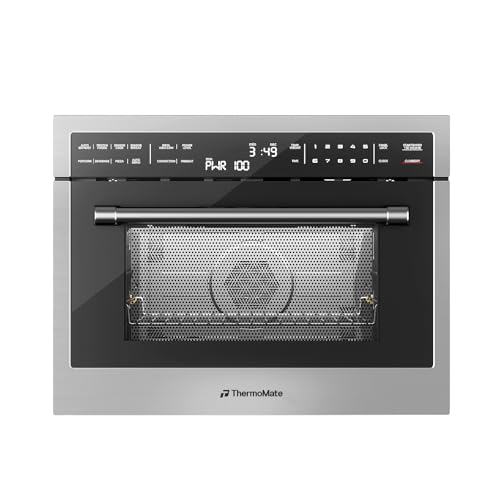
24 Inch Built-in Microwave and Convection Oven Combination, ThermoMate 1.6 Cu. Ft. Wall Oven Microwave Combos, 1000 Watt Power, Sensor Cook, Touch Control LCD Display, Stainless Steel Finish
Convection and Microwave Modes: A dual microwave and convection oven, which includes convection, broil, sensor cooking, reheat, defrost,…
As an affiliate, we earn on qualifying purchases.
As an affiliate, we earn on qualifying purchases.
Conclusion
Choosing between microwave drawers and built-in speed ovens depends on your cooking needs and kitchen layout. Microwave drawers offer sleek convenience like a hidden gem, perfect for quick tasks without disrupting aesthetics. Built-in speed ovens provide versatile, high-performance cooking similar to a professional appliance, ideal for multitasking. Evaluate your space, frequency of use, and desired functionality to determine the best fit—think of it as selecting the gear that best matches your culinary rhythm.

TOSHIBA Air Fryer Combo 8-in-1 Countertop Microwave Oven, with Convection, Broil, Odor Removal Mode, 12.4" Position Memory Turntable, Child-Lock, 1.0 Cu.ft, Black Stainless Steel, ML2-EC10SA(BS)
Two-Step Child Lock: This mandatory safety feature for microwaves helps prevent unintended use by younger family members, plesase…
As an affiliate, we earn on qualifying purchases.
As an affiliate, we earn on qualifying purchases.

AMZCHEF 24" Single Wall Oven, 2.65 Cu.ft. Built-in Electric Wall Oven with 5 Cooking Functions, 360° ROTATING ROTISSERIE, 2200W, Mechanical Knobs Control, Timer, Stainless Steel Wall Oven for Kitchen
[360° ROTATING ROTISSERIE]With the upgraded rotating grill fork and top and bottom heating elements, you can cook evenly…
As an affiliate, we earn on qualifying purchases.
As an affiliate, we earn on qualifying purchases.