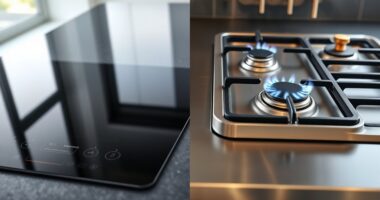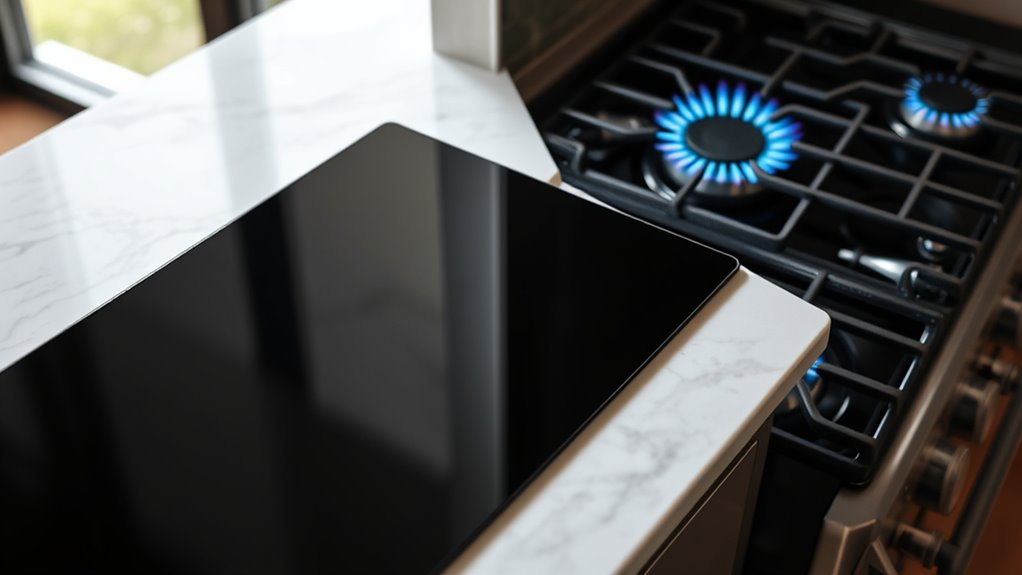

When choosing between induction and gas for your kitchen, consider how each influences cooking precision and design. Induction offers rapid, temperature-specific heating with a sleek, cool-to-touch surface, ideal for modern aesthetics and safety. Gas provides visual feedback and quick heat adjustments, favored in traditional settings. Your selection impacts overall energy efficiency and safety features. To optimize your kitchen’s look and functionality, understanding these differences is essential—exploring further reveals how each option shapes your culinary space.
Key Takeaways
- Induction cooktops offer rapid, precise temperature control and enhanced safety with cool-to-touch surfaces.
- Gas stoves provide instant heat adjustments and visual flame feedback preferred for traditional cooking styles.
- Energy efficiency favors induction due to direct heat transfer, reducing waste and operational costs.
- Kitchen design choices depend on safety priorities, with induction suited for modern, child-safe spaces.
- Upgrading components in either system can optimize performance and align with specific culinary and aesthetic needs.
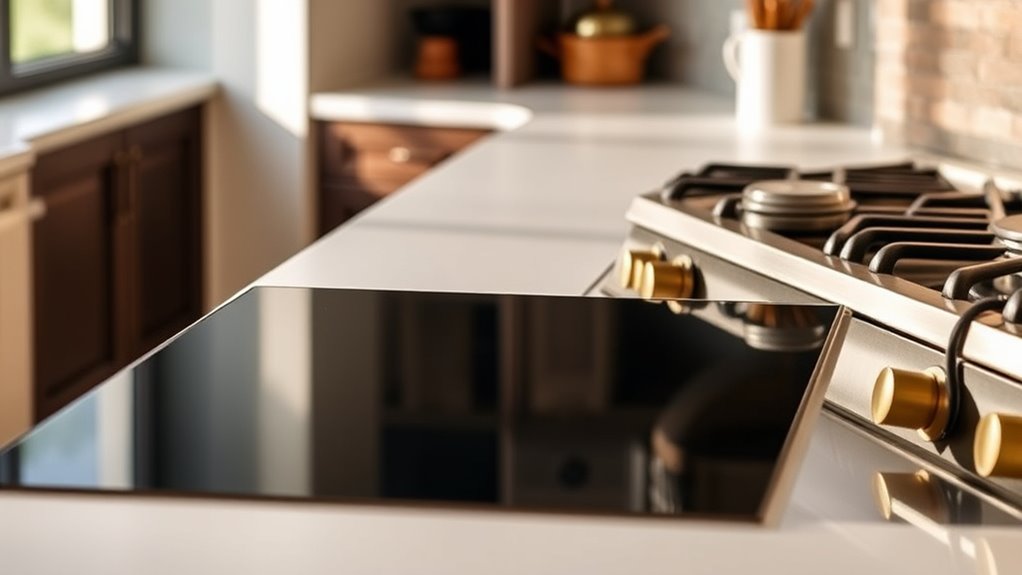
Induction cooktops heat cookware directly through electromagnetic fields, offering rapid and precise temperature control, while gas stoves rely on open flames to heat pots and pans, providing visual feedback and instant heat adjustments. When designing a kitchen, considerations such as safety, energy efficiency, and cooking style play crucial roles in choosing between these options. For example, induction cooktops are generally safer because the surface remains cool to the touch and reduce the risk of accidental fires. Additionally, induction systems are often more energy-efficient because they transfer heat directly to the cookware, minimizing energy loss. In contrast, gas stoves are favored by many chefs for their cooking control and ability to quickly adjust heat levels, which is especially important during complex recipes. Upgrading to high-performance components, like specialized cookware compatible with induction, can enhance the overall cooking experience.
Frequently Asked Questions
Which Cooking Method Is More Environmentally Friendly?
Induction cooking is more environmentally friendly because it heats cookware directly through electromagnetic fields, reducing energy waste and emissions. You’ll notice faster heat transfer, which minimizes power consumption. Plus, induction stoves don’t produce combustion gases, improving indoor air quality. Their precise temperature control also prevents excess energy use, making them an efficient, eco-conscious choice that aligns with sustainable kitchen design and reduces your carbon footprint.
How Does Cookware Compatibility Differ Between Induction and Gas?
You’ll notice that induction cooktops require ferromagnetic cookware—about 90% of stainless steel and cast iron work perfectly. Gas stoves, however, are more versatile, heating most pots and pans regardless of material. For maximum efficiency and safety, use magnetic cookware on induction, which guarantees quick heat transfer and precise control, while gas offers broader compatibility but less energy efficiency. Your choice hinges on cookware material and your cooking style.
What Are the Safety Considerations for Children?
You should always keep pot handles turned inward and use child-proof locks on stove controls. Induction surfaces cool quickly, reducing burn risks, but glass tops can still cause injury if broken. Gas stoves pose a burn hazard from open flames and hot surfaces. Ensure safety gates or barriers are in place, and supervise children closely. Installing stove guards and choosing appliances with safety features further minimizes risks, creating a secure cooking environment.
Which Option Offers Better Heat Distribution?
Irony strikes as you’d think gas, with its visible flames, offers better heat distribution, but induction actually excels. Its electromagnetic technology guarantees even, precise heat across the cookware’s surface, reducing hot spots. The sleek, flat surface heats uniformly, providing aesthetic harmony and technical efficiency. If consistent, controlled heat appeals to you, induction’s superior distribution makes it the smarter, more elegant choice for a sophisticated kitchen.
How Do Energy Costs Compare Over Time?
Energy costs for induction cooktops tend to be lower over time because they convert electricity directly into heat with over 80% efficiency, reducing waste. Gas stoves, however, often incur higher ongoing costs due to fluctuating natural gas prices and lower efficiency, around 40-55%. Investing in induction may seem pricey initially, but its energy savings and precise control can make it more cost-effective and aesthetically sleek in the long run.
Conclusion
Ultimately, choosing between induction and gas boils down to your priorities: speed and precision, or ambiance and control. With induction, you get sleek, efficient surfaces that heat instantly and clean easily, blending modern aesthetics with cutting-edge technology. Gas offers a classic appeal, tactile control, and a warm, inviting glow that enhances your culinary experience. Whether you prioritize innovation or tradition, your decision shapes your kitchen’s beauty and functionality, creating a space that reflects your style and meets your needs.