Induction cooking produces fewer fumes than gas stoves but still releases some odors, steam, and airborne particles, so proper ventilation remains important. Using range hoods or exhaust fans helps remove odors and moisture, keeping indoor air fresh and safe. Since induction generates less heat and fumes, existing ventilation systems often work well, but regular maintenance is key. To fully understand how to optimize your kitchen airflow, keep exploring the details ahead.
Key Takeaways
- Induction cooking produces fewer fumes than traditional stoves but still releases some particles and odors requiring ventilation.
- Proper range hoods or exhaust fans help remove odors, steam, and airborne particles during induction cooking.
- Ventilation systems should vent directly outside and be properly maintained for optimal air quality.
- Existing ventilation often suffices since induction emits less combustion byproducts, but adequate airflow remains essential.
- Using lids, cleaning surfaces, and turning on exhaust fans further reduce odors and particulates during induction cooking.
What Fumes and Particles Are Released During Induction Cooking?
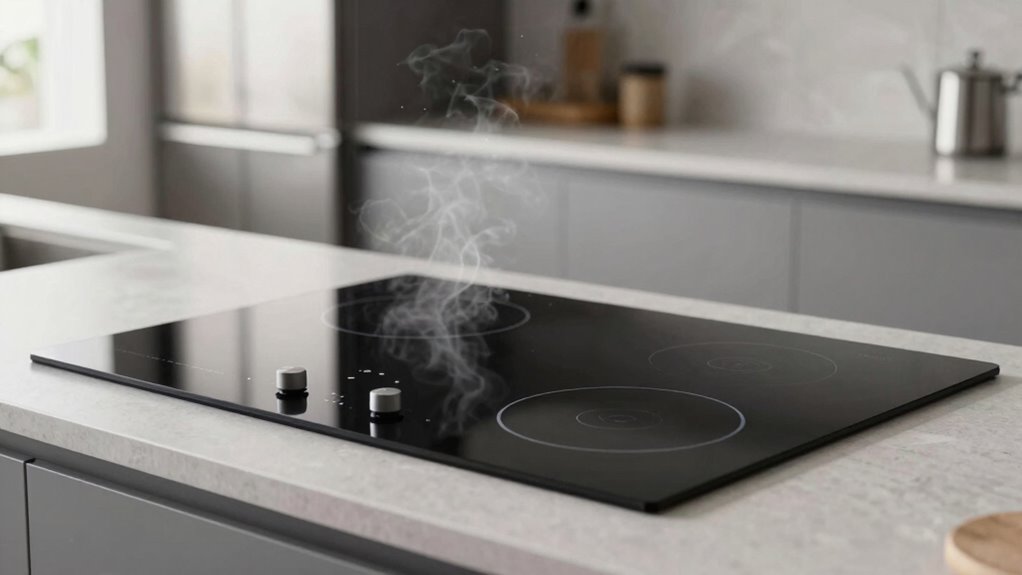
While induction cooking produces fewer fumes than traditional methods, it can still release some particles and gases into the air. The fume composition mainly includes tiny particulate emissions that result from the cooking process. These particles often consist of organic compounds, grease, and sometimes food residues that vaporize or burn slightly. Although induction heating heats cookware directly, high temperatures can cause small particles to become airborne, especially if food spills or burns. The particulate emissions are generally less than those from gas stoves, but they can still contribute to indoor air pollution. It’s important to understand that while induction reduces many combustion-related pollutants, some fine particles and gases may still be released, warranting proper ventilation to keep indoor air quality safe. Air quality management plays a crucial role in minimizing exposure to these airborne particles during cooking. Additionally, using proper ventilation systems can significantly reduce the buildup of these particles indoors. Proper kitchen ventilation can also help remove odors and enhance overall indoor air quality during induction cooking. Implementing air filtration devices can further improve indoor air quality by capturing fine particles that escape ventilation. Furthermore, understanding indoor air quality helps in choosing the right strategies for maintaining a healthy environment.
Why Is Proper Kitchen Ventilation Still Important With Induction?
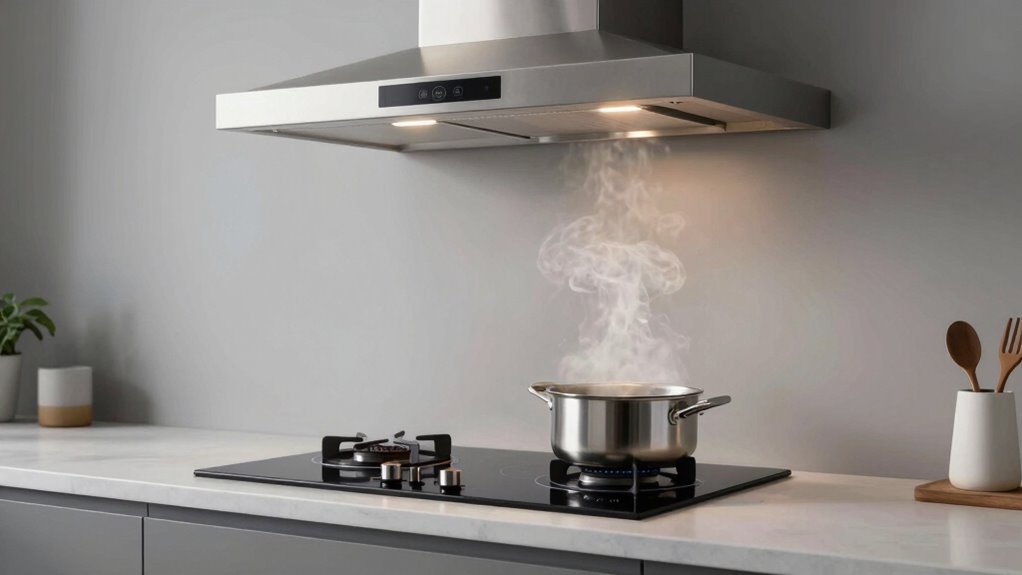
Even though induction cooking produces fewer fumes than traditional methods, proper kitchen ventilation remains essential. Good ventilation helps maintain indoor air quality by removing any lingering odors or airborne particles. This is especially vital if you cook frequently or prepare strong-smelling foods. Additionally, effective ventilation supports your kitchen’s aesthetics by preventing the buildup of grease and moisture that can cause stains or mold. Without proper airflow, odors can linger, and humidity levels may rise, impacting comfort and cleanliness. Ventilation also ensures your induction cooktop operates efficiently, reducing heat buildup that could affect nearby surfaces. Proper airflow management is crucial for preserving your kitchen’s appearance and ensuring a healthier, more pleasant cooking environment. Proper ventilation also helps in preventing heat accumulation, which is important for maintaining the longevity of your appliances and kitchen fixtures. Moreover, effective ventilation can help control kitchen humidity, which contributes to a more comfortable cooking space and helps prevent issues like mold growth. Proper airflow can also improve energy efficiency by reducing the workload on your heating and cooling systems.
How Does Induction Cooking Differ From Traditional Stoves?
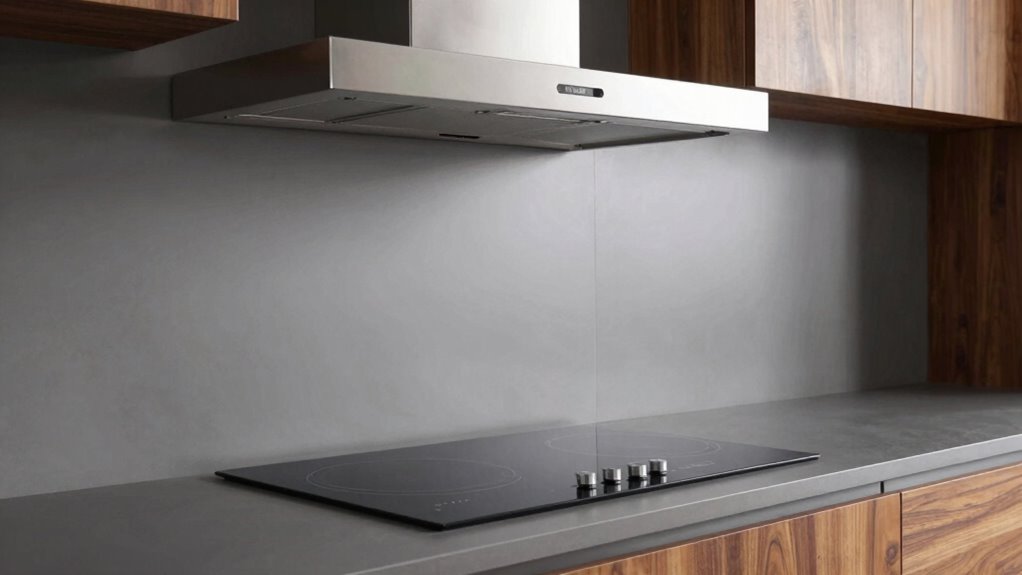
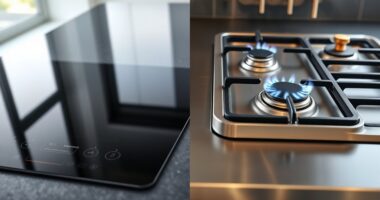
Induction cooking differs markedly from traditional stoves because it uses electromagnetic fields to directly heat pots and pans instead of relying on open flames or heated coils. This method considerably boosts cooking efficiency, as heat transfers instantly to your cookware with minimal wasted energy. Unlike gas or electric stoves, induction cooktops respond quickly to your adjustments, allowing precise control over temperature. Because energy is focused directly on the cookware, induction stoves generally consume less energy overall, reducing your utility bills and environmental impact. The absence of open flames also means less heat escape into your kitchen, keeping the space cooler. Additionally, induction cooktops require compatible cookware, which encourages you to choose specialized pots and pans that work efficiently with electromagnetic heat transfer. Proper installation and safety considerations are essential for ensuring safe operation and maximizing the benefits of induction cooking. Recognizing energy efficiency benefits can help you decide if induction is the right choice for your kitchen. Overall, induction cooking offers a faster, more efficient, and energy-conscious alternative to traditional stoves, transforming how you prepare meals.
Do You Need Special Ventilation for Induction Cooktops?
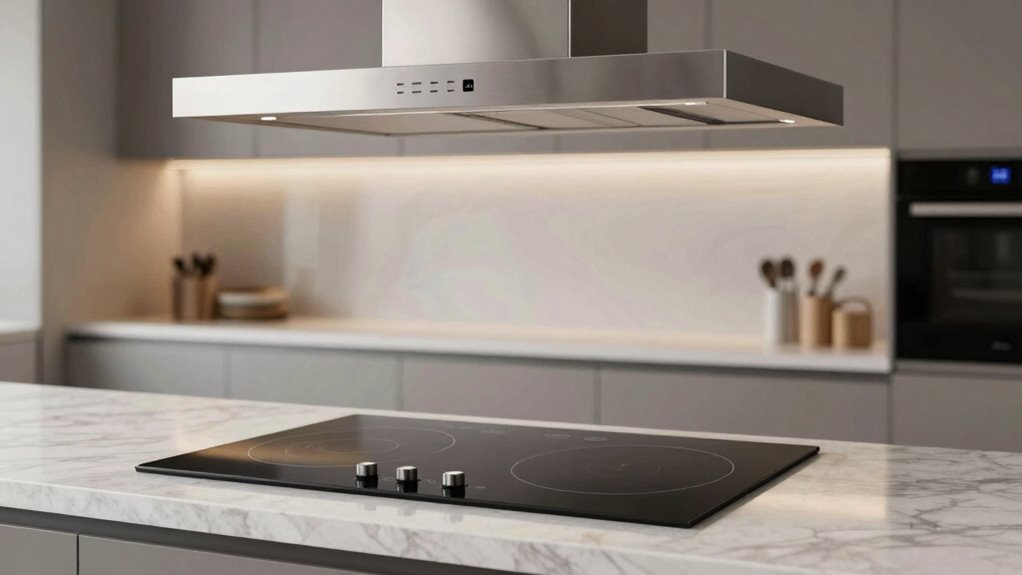
You might wonder if induction cooktops need special ventilation. Ventilation needs can vary based on your setup, and smoke or odors may still occur. Luckily, in many cases, your existing ventilation system will handle these needs without extra modifications. Additionally, smart home integration can help monitor and optimize your kitchen’s air quality and ventilation performance. Proper air circulation is essential to maintaining a comfortable cooking environment and ensuring that any residual odors are effectively managed. Incorporating air quality sensors can provide real-time feedback on your kitchen’s environment, helping you adjust your ventilation as needed. Awareness of ventilation standards can also guide you in maintaining a safe and healthy kitchen space.
Ventilation Requirements Vary
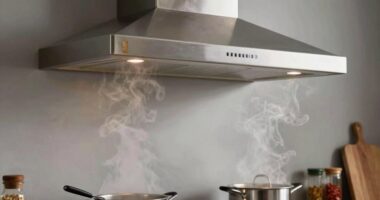
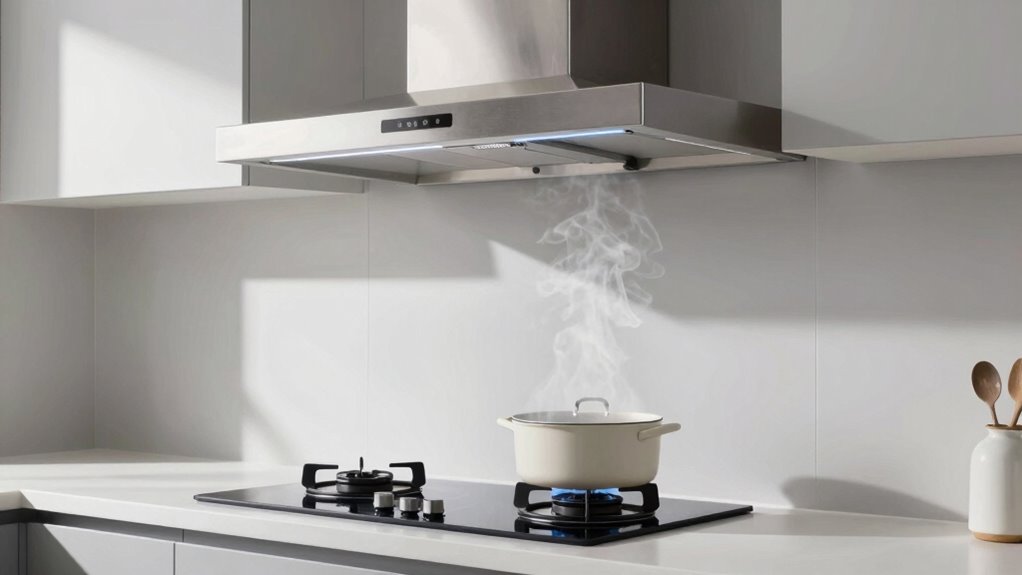
Ventilation requirements for induction cooktops can vary depending on your kitchen setup and the specific model you choose. You might find that some units need minimal ventilation, while others require more robust systems to maintain good air quality. Proper airflow patterns are essential to avoid lingering heat and odors. To visualize, consider:
- A sleek range hood that pulls air directly above the cooktop.
- An open kitchen design promoting natural airflow.
- A powerful exhaust fan integrated into your cabinetry.
- An island cooktop with under-counter ventilation.
Your goal is to ensure consistent airflow that keeps air quality high and prevents heat buildup. Assess your kitchen layout carefully to determine whether your induction cooktop needs specialized ventilation or if standard systems will suffice. Additionally, understanding energy-efficient ventilation, which can reduce overall power consumption, is crucial for sustainable kitchen design. Incorporating ventilation standards ensures your setup meets safety and efficiency guidelines, promoting healthier indoor air.
Smoke and Odor Control
Wondering if induction cooktops produce smoke or strong odors? Generally, they don’t emit smoke like gas stoves, but cooking oils and ingredients can still create odors that affect your indoor air. While induction cooking is cleaner regarding combustion byproducts, odors from frying or spices can linger, impacting your air quality. Proper ventilation helps remove these smells and maintains fresh indoor air. You might not need a specialized range hood, but an effective exhaust fan or range hood can make a difference. Good airflow ensures odors don’t settle and keeps indoor air healthier. Remember, even without smoke, odors can diminish air quality, so controlling them with proper ventilation systems is a smart move for your kitchen environment. Effective ventilation systems can further optimize air quality and safety. Additionally, choosing the right air purification methods can help reduce airborne particles and improve overall indoor air freshness. Ensuring proper air circulation is also key to preventing the buildup of odors and maintaining a safe kitchen space.
Existing Ventilation Adequate
While induction cooktops generate less heat and no combustion byproducts, existing kitchen ventilation systems often suffice to handle odors and steam. Your current ventilation setup can maintain good air quality if it effectively removes moisture and smells. To assess ventilation adequacy, imagine:
- Air vents pulling steam away quickly during cooking.
- Range hoods venting directly outside, not just recirculating air.
- Filters trapping grease and odors without clogging.
- Fans operating smoothly without noise or resistance.
If these features are in place, your kitchen likely doesn’t need special ventilation for induction cooking. Proper airflow guarantees air quality stays high and odors don’t linger. In most homes, standard range hoods and exhaust fans are enough to maintain effective ventilation, making induction cooking convenient without sacrificing air cleanliness.
How to Choose the Best Ventilation System for Your Induction Kitchen

Choosing the right ventilation system for your induction kitchen is essential to guarantee a safe and comfortable cooking environment. Start by considering your kitchen design; an open layout may require a more powerful exhaust system, while smaller spaces benefit from compact options. Make certain appliance compatibility by selecting a ventilation system that effectively captures heat, steam, and odors generated by induction cooking. Look for models with adjustable airflow and suitable sizing to match your cooktop’s output. Proper ventilation not only improves air quality but also preserves your kitchen’s aesthetics and functionality. Evaluate different types of range hoods and their features, focusing on how well they integrate with your kitchen design and appliances. A well-chosen system enhances safety, efficiency, and overall cooking comfort. Additionally, understanding the field-of-view and imaging-scale of your ventilation setup can help optimize its effectiveness and ensure comprehensive coverage of your cooking area.
How to Install and Maintain Range Hoods and Vent Fans
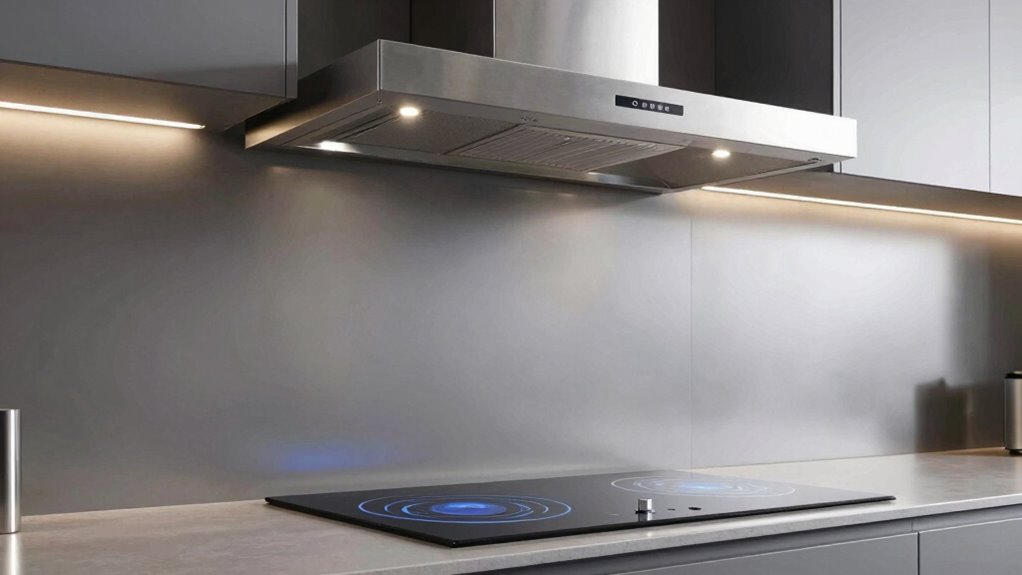
Are you ready to guarantee your range hood and vent fan operate effectively? Proper range hood installation and vent fan maintenance are essential for a clean, odor-free kitchen. First, confirm your range hood is correctly mounted at the recommended height above your cooktop. Next, check that the ductwork is unobstructed and securely connected for efficient airflow. Regularly clean or replace filters to keep the system functioning at its best. Lastly, test your vent fan periodically, listening for unusual noises or reduced suction. Visualize these steps:
Ensure your range hood and vent fan operate effectively with proper installation and regular maintenance.
- Mounting the hood securely over your induction stove
- Clearing debris from the duct pathways
- Swapping out or cleaning filters
- Running the fan to confirm proper operation
Following these guidelines ensures your ventilation system works seamlessly, keeping your kitchen fresh and safe.
Tips to Reduce Odors and Particulates While Cooking

Cooking naturally releases odors and particulates into your kitchen air, but you can substantially reduce their impact with simple strategies. Use lids on pots and pans to contain odors and prevent particles from spreading. Keep your kitchen air circulating by turning on exhaust fans or opening a window during cooking. Regularly clean your cooktop and surrounding surfaces to minimize lingering odors. Choosing recipes with milder ingredients or shorter cooking times also helps with odor management. Consider using an induction cooktop, which produces less heat and odor than traditional stoves. By staying attentive to ventilation and cleaning habits, you can keep your kitchen air fresher and reduce airborne particulates, creating a more comfortable cooking environment. These small steps make a noticeable difference in odor control.
How to Test If Your Ventilation System Is Working Effectively

To guarantee your ventilation system is effectively clearing odors and airborne particles, it’s important to perform simple tests regularly. First, turn on your range hood or exhaust fan and see if it activates immediately. Next, hold a piece of tissue or smoke near the vent; if it moves or gets pulled toward the vent, your fan efficiency is good. Third, check the air quality by observing any lingering odors or smoke after cooking; if odors persist, air circulation may be insufficient. Finally, listen for unusual noises or vibrations that could indicate mechanical issues. These tests help ensure your ventilation system is working at its best, maintaining fresh air and good air quality in your space. Regular checks keep your fan efficiency high and odors at bay.
Frequently Asked Questions
Are There Health Risks Associated With Fumes From Induction Cooking?
You’re unlikely to face significant health risks from fumes with induction cooking because it produces minimal cooking fumes compared to other methods. However, poor ventilation can still affect indoor air quality, leading to potential irritation or respiratory issues over time. To stay safe, make certain of good airflow by using range hoods or open windows, especially if you cook frequently or prepare smoky dishes. Proper ventilation keeps indoor air quality healthy and reduces any fumes buildup.
Can Induction Cooktops Cause Electromagnetic Interference?
You might not realize it, but electromagnetic interference from induction cooktops can occasionally disrupt nearby electronic devices. This interference occurs because the cooktop generates magnetic fields that can affect sensitive electronics like radios or pacemakers. While most models are designed to minimize this, it’s wise to keep devices like smartphones or medical equipment at a safe distance. Understanding magnetic fields helps you manage potential electromagnetic interference effectively.
How Loud Are Ventilation Systems in an Induction Kitchen?
Ventilation systems in an induction kitchen typically produce moderate noise levels, often ranging from 50 to 70 decibels. The noise may be noticeable but isn’t usually disruptive. Fan efficiency plays a role in noise production; more efficient fans tend to operate quieter while still effectively removing heat and fumes. If quiet operation matters most to you, look for models with sound-dampening features and high-efficiency fans.
Are There Eco-Friendly Ventilation Options for Induction Cooking?
Sure, eco-friendly exhausts and sustainable filtration make your kitchen greener, even with induction cooking. You can choose energy-efficient ventilation systems that reduce power use, or install filters made from recycled materials to cut waste. Surprisingly, these options often perform just as well as traditional systems, proving that going green doesn’t mean sacrificing efficiency. So, you get clean air and a smaller carbon footprint—who knew eco-conscious could be this easy?
What Maintenance Is Required for Optimal Ventilation Performance?
You should regularly replace filters and clean the ducts to keep your ventilation system working effectively. Check filters monthly and replace them as needed to maintain airflow and air quality. Schedule duct cleaning every 1-2 years to prevent grease buildup and guarantee efficient operation. Proper maintenance minimizes odors, reduces fire hazards, and prolongs your ventilation system’s lifespan, making your kitchen safer and more environmentally friendly.
Conclusion
As you cook on your induction stove, imagine a gentle breeze carrying away lingering fumes, leaving your kitchen fresh and inviting. Proper ventilation acts like a trusty companion, ensuring every aroma is pleasant and every particle is swiftly whisked away. With the right system in place, your cooking space becomes a sanctuary—bright, clean, and safe. So, embrace your ventilation, and enjoy the delicious moments without worry, knowing fresh air is always just a switch away.