
Electric Blankets For Cozy Bedrooms: A Winter heating & air Guide
AIThis post was created with the assistance of artificial intelligence (AI).

TL;DR

Before you orderOffer from Amazon

Get furniture and decor delivered free with Prime

  • Fast, free delivery on millions of items
  • Prime Video, Amazon Music and more included
  • Member-only deals all year
Start your free Prime trial Free trial for eligible customers · Cancel anytime
As an affiliate, we earn on qualifying purchases.

Electric blankets warm a bed using low-voltage heating wires embedded in a blanket, pad, or underblanket. Choose a design made for its position, check for clear controls and automatic shutoff, and follow the manual for use, cleaning, and overnight settings. A heated bed can feel comfortable without warming the whole room, though electricity use and any savings depend on the model and your household.

A cold bed can feel like climbing into a stone cellar, even when the rest of your room is warm. An electric blanket can take the chill off the sheets and make bedtime more inviting, without asking you to heat every corner of the house. The right choice depends on where you want the warmth: over your body, beneath you, or around your shoulders on the sofa. This guide explains those differences, which controls are useful, how to think about electricity use, and what to check before you plug one in. You’ll also find practical care and safety tips, including situations where a clinician’s advice matters.
At a glance
Electric Blankets for Cozy Bedrooms: A Safe Guide
Key insight
A heated throw, overblanket, and heated mattress pad have different intended placements; using one in the wrong position can conflict with its instructions and design.
Key takeaways
1

Choose a heated throw, overblanket, or mattress pad based on where the product is designed to sit.

2

Look for reachable controls, suitable heat settings, and clear timer or shutoff instructions.

3

Estimate electricity cost from wattage, hours of use, and your local rate; actual consumption can vary.

4

Inspect the blanket, cord, plug, and controller before use, and stop using anything damaged.

5

Follow the care label and seek medical advice when heat sensation, circulation, mobility, or a health condition affects safe use.

Step by step
1
Make warm sheets part of a safe bedtime routine
To use an electric blanket safely, inspect it, place it as the manufacturer directs, connect the controls correctly, and choose a setting t…

Choose the right kind of electric blanket for your bed

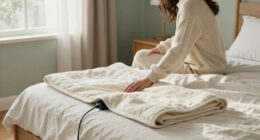
Electric blankets for cozy bedrooms come in three main forms: a heated throw for lounging, an overblanket that covers you in bed, and a heated mattress pad or underblanket that sits beneath you. Each design puts warmth in a different place, so follow the product’s placement instructions instead of treating them as interchangeable. | Type | Where it goes | A good fit when | |—|—|—| | Heated throw | Around your shoulders or across your lap | You want warmth while reading on a chair or sofa | | Heated blanket | Over the sleeper | You want adjustable warmth from above in bed | | Heated mattress pad or underblanket | On the mattress beneath the sleeper | You prefer prewarmed sheets and a smooth top layer | A throw can be a welcome companion on a drafty evening, but it isn’t automatically suitable for sleeping under or lying on. A mattress pad can warm the surface before bedtime, while an overblanket feels more like an ordinary blanket with heat added. Check the dimensions too: a small blanket that barely reaches your shoulders may leave your feet cold, while one that bunches at the edges can be awkward to manage. For example, if you share a queen bed and one person gets cold while the other kicks off covers, a dual-zone mattress pad or blanket may suit you better than a single throw. The useful comparison is not simply “which is warmest?” It is “where does this model belong, and does that position suit how you sleep?”

Products Worth Considering

As an affiliate, we earn on qualifying purchases.

Look for controls that make bedtime easy

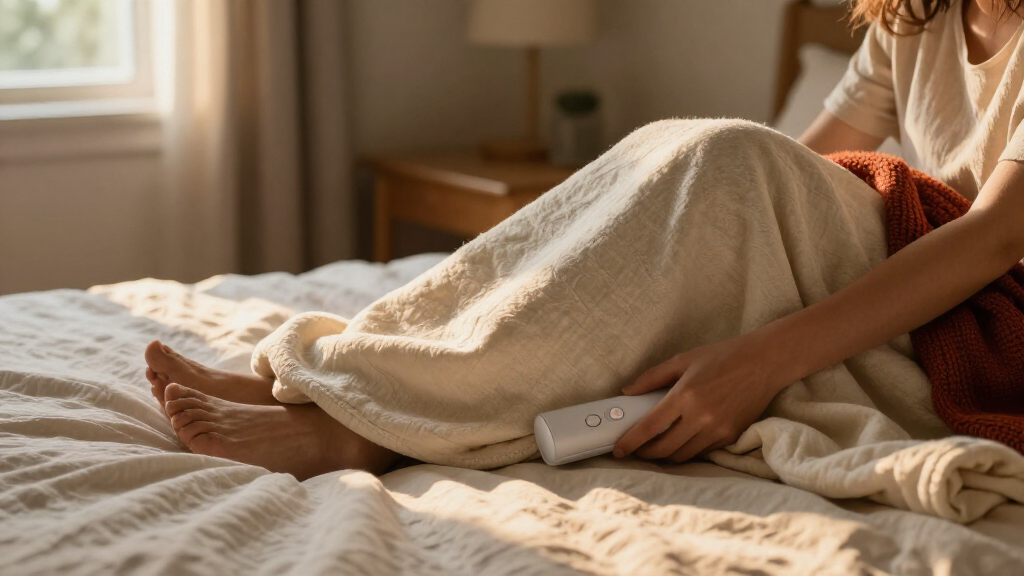
A useful electric blanket has controls you can understand in the dark, a heat range that suits your comfort, and a timer or automatic shutoff if the model offers one. Dual controls can give each side of the bed its own setting, which helps when one sleeper likes crisp, cool sheets and the other wants extra warmth. Before buying, picture an ordinary night rather than a product photo. Can you reach the controller from bed? Are the buttons easy to distinguish? Does the display show the setting clearly? A tiny, dim control can become annoying when you are already tucked under the covers, especially if you need glasses to read it. Newer models may add programmable timers, finer temperature adjustments, app controls, or machine-washable construction. Those features vary by model. A phone app may be convenient if you want to prewarm the bed, but it does not replace the manual or safe handling. For instance, a timer that turns a pad off after you fall asleep could be a better fit for someone who only wants warm sheets at bedtime. Prioritize features in this order: appropriate size and placement, simple controls, settings that fit your preferences, clear timer or shutoff instructions, and straightforward care guidance. A long feature list matters less if you can’t tell how to turn the heat down when the room warms up.

Use warmth where you need it and estimate the power cost

An electric blanket warms a bed using low-voltage heating wires embedded in a blanket, mattress pad, or fitted underblanket. Because it heats the bed directly, it may let you feel comfortable without heating the entire bedroom, though it does not guarantee a lower bill. Your actual electricity use depends on the product, selected setting, run time, and what your home’s heating system would otherwise do. You can make a rough cost estimate using the blanket’s wattage, the hours you run it, and your electricity price. First convert watts to kilowatts by dividing by 1,000, then multiply by hours and your rate per kilowatt-hour. For instance, a hypothetical 100-watt blanket running for five hours uses 0.5 kilowatt-hours at its rated power; multiply that by your local rate to estimate the cost. A thermostat may cycle on and off, so actual use can differ from this simple estimate. Consider a person who usually heats the whole bedroom to feel comfortable getting into bed. Prewarming the sheets for a short period might meet that need with less whole-room heating, depending on the home and habits. Someone who already keeps the room cool and runs a blanket all night may see a different result. Treat the blanket as one part of your heating routine. Compare its label and your actual use with your room-heating habits instead of relying on a promised bill reduction. A draft stopper, warmer sleepwear, or a heavier duvet may change how long you need the heat on.

Make warm sheets part of a safe bedtime routine

To use an electric blanket safely, inspect it, place it as the manufacturer directs, connect the controls correctly, and choose a setting that suits the model’s instructions. A short prewarm can make the first touch of the sheets feel welcoming, much like warming a towel before a chilly morning shower.
  1. Check its condition. Look over the blanket, cord, plug, and controller before use. Do not use it if you see exposed wires, scorch marks, fraying, or damaged plugs.
  2. Set it up as directed. Keep cords untangled and avoid pinching them beneath a mattress or furniture. Make sure the blanket lies as the instructions require rather than folded into a thick bundle.
  3. Choose a setting and timer. Use the product’s specified settings and shutoff features. Follow its manual to find out whether it is designed for overnight use or only for prewarming.
  4. Turn it off and unplug it as directed. Before storing or cleaning it, follow the maker’s instructions for disconnecting the controller and cables.

Imagine finding a frayed spot near the foot of the bed while changing the sheets. Stop using that blanket; don’t tape over the damage and hope for the best. Buy from a reputable seller, check current safety certifications and recalls where you live, and keep the manual. Product rules differ by country, so labels and local guidance matter.

Wash and store it without stressing the wires

Wash an electric blanket only when its care label or manual permits it, and follow the exact steps for removing its controller and cables. A washable label does not mean every part can go into the machine, and tumble-drying guidance differs by product. Start with the care instructions before the first wash, not after a coffee spill has dried into a brown patch. Some models allow a specific machine cycle; others require a different method. Disconnect electrical parts exactly as directed, and never use the blanket while it is wet unless the manufacturer explicitly says that is safe. If instructions are missing or unclear, contact the maker rather than improvising with a soak or hot dryer. Storage matters too. Let the blanket dry fully if its instructions call for washing, then store it dry and loosely folded. Sharp creases, tight twists, or a heavy box pressed on top can stress the internal wiring over time. Picture folding it gently in broad panels and placing it on an uncluttered closet shelf; that takes less effort than wrestling it into a cramped drawer. Check it again when you bring it out for colder weather. Look for damaged fabric, a cord that feels worn, scorch marks, or controls that no longer work as expected. There is no single lifespan that applies to every model. Condition, care, and the manufacturer’s guidance are better clues than guessing from its age alone.

Take extra care when heat is harder to notice

People who may not reliably sense heat or move away from it face a greater risk of burns from heated bedding. That can include some young children, older adults, and people with reduced sensation or mobility. Individual needs vary, so product age guidance and medical advice should guide decisions. For example, someone with reduced sensation in their feet might not notice that one patch feels too hot until skin irritation has already begun. A caregiver should not assume that a low setting removes that concern. Check the manual for who may use the product and ask a clinician for advice when sensation, circulation, mobility, pregnancy, or a medical condition affects heat safety. Children need particular attention to the product’s stated age limits and instructions. A blanket suitable for an adult is not automatically suitable for a child, and a child who cannot change the setting or move the blanket may need another way to stay warm. If you are buying for someone else, choose controls they can operate and explain what the timer does. Keep the goal simple: comfort without relying on someone to tolerate heat they may not feel clearly. If the user cannot inspect the blanket, manage its controls, or respond to discomfort, ask a clinician or caregiver to help decide whether heated bedding is appropriate.

Match the overnight setting to how you sleep

The best overnight setting depends on the blanket’s instructions and the sleeper’s comfort; some people use a timer or low setting, while others prewarm the bed and turn the heat off before sleep. Never assume that every model is designed to stay on all night. Take Maya, who reads for ten minutes before bed and dislikes cold sheets. She sets her mattress pad to prewarm while brushing her teeth, then follows the product instructions to turn it off before climbing in. Her partner, who feels cold later in the night, prefers a model with separate controls and follows its manual for extended use. Their routines differ because their product guidance and comfort needs differ. If you use memory foam or a mattress topper, check both manufacturers’ instructions. Trapped heat can affect some materials, and a blanket maker’s approval does not necessarily answer every question about the mattress combination. Likewise, only sleep on top of a heated product if it was designed for that placement; an overblanket or heated throw may not be suitable beneath your body. Start with a modest setting and adjust based on comfort and the manual. If you wake sweaty or kick off the covers, try less heat or a shorter timer. If you wake cold, check the bedding and room drafts as well as the setting. Warmth should feel like a gentle welcome, not a radiator pressed against your skin.

Frequently Asked Questions

Are electric blankets safe to use overnight?

It depends on the model and its instructions. Some are designed for extended use; others are intended for prewarming. Use the stated timer or shutoff guidance, inspect the blanket and cord, and never use a damaged product.

Do electric blankets use a lot of electricity?

Use varies with wattage, setting, and run time. To estimate cost, divide wattage by 1,000, multiply by hours used, then multiply by your electricity price per kilowatt-hour. The result is a rough estimate because actual power draw can vary.

Can I use an electric blanket with memory foam?

Check both the blanket maker’s and mattress or topper maker’s instructions. Some materials can be affected by trapped heat, and guidance for one product may not cover the combination.

Can I wash or tumble-dry an electric blanket?

Only if the care label or manual allows it, and follow the exact instructions. Disconnect the controller and cables as directed, and do not use the blanket while wet unless the maker explicitly says it is safe.

Can I sleep on top of a heated blanket?

Only when the product is designed for use beneath the sleeper. Heated throws and overblankets may not be made for that placement, so check the product instructions before using one on a mattress.

How long do electric blankets last?

There is no universal lifespan. Follow the manufacturer’s guidance and check the blanket’s condition; replace it if you find exposed wires, scorch marks, fraying, a damaged plug, or unreliable operation.

Conclusion

Choose the heated product that matches where you want warmth, then let its manual set the boundaries for placement, overnight use, and care. A few minutes of prewarming can turn cold, flat sheets into a welcoming bed; the right setting should feel gentle enough that you can settle in and forget about the controller.
You May Also Like

Pressure Pool Cleaners Market Trends 2025

Notable pressure pool cleaner trends for 2025 are transforming pool maintenance with smarter, eco-friendly, and connected devices that will change how you keep your pool pristine.

Why Desk Lighting Is More Important Than Overhead Lighting Here

A well-chosen desk light enhances focus and comfort, but there’s more to discover about why it’s more important than overhead lighting.

The Rise of Automatic Pool Cleaners

The rise of automatic pool cleaners has transformed how you maintain your…

How AI’s Deep File Reading Could Make or Break Your Business Deals

Deep AI reading capabilities determine whether your business wins or loses high-stakes deals. See how thorough internal analysis can elevate your decision quality today.