
To plan better undercounter refrigeration, start by choosing energy-efficient units with high Energy Star ratings to save on costs and support sustainability. Measure your space carefully to match the unit’s size and capacity to your current and future needs. Consider features like accessible coils and durable materials for easy maintenance. Proper placement ensures quick access without blocking workflow. Focusing on these points will help you optimize your kitchen’s efficiency and longevity—if you keep exploring, you’ll uncover even more helpful tips.
Key Takeaways
- Assess available space and ensure proper fit without obstructing workflow or access.
- Prioritize energy-efficient models with high Energy Star ratings for cost savings.
- Choose durable materials and features that facilitate easy maintenance and cleaning.
- Plan strategic placement for accessibility, optimal workflow, and minimal energy loss.
- Match unit size and capacity to current and future storage needs to avoid inefficiency.
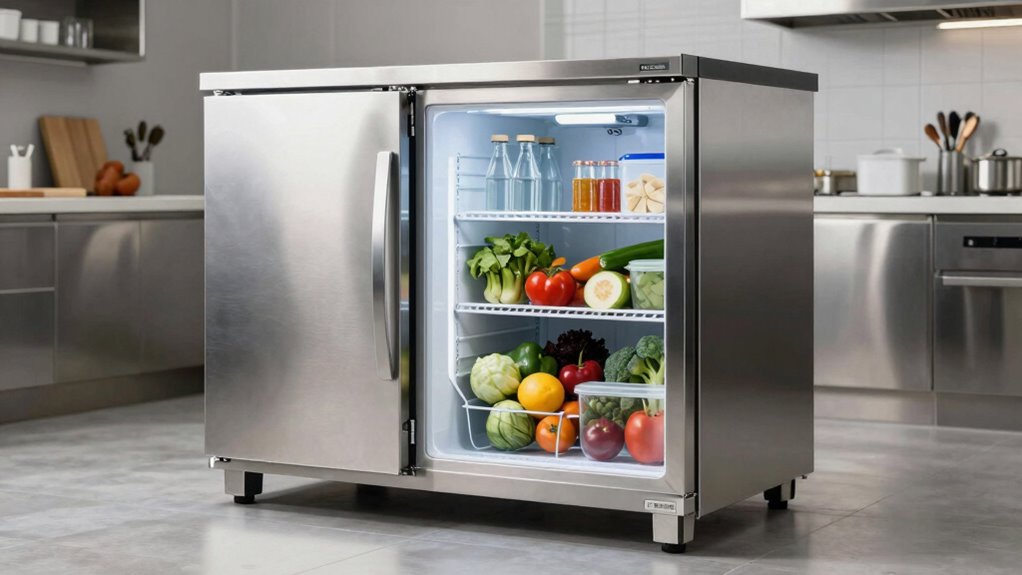
Undercounter refrigeration is an indispensable component for efficient kitchen operations, but planning for the right unit can be tricky. You need to contemplate how much space you have, what your storage needs are, and how the unit will fit into your workflow. One of the key factors to focus on is energy efficiency, as choosing a model with good energy performance can considerably reduce your operational costs over time. Look for units with high Energy Star ratings, which indicate they meet strict energy efficiency standards. These models might cost a little more upfront, but they save you money in the long run through lower utility bills and reduced environmental impact.
Prioritize energy-efficient undercounter refrigeration with high Energy Star ratings to cut costs and reduce environmental impact over time.
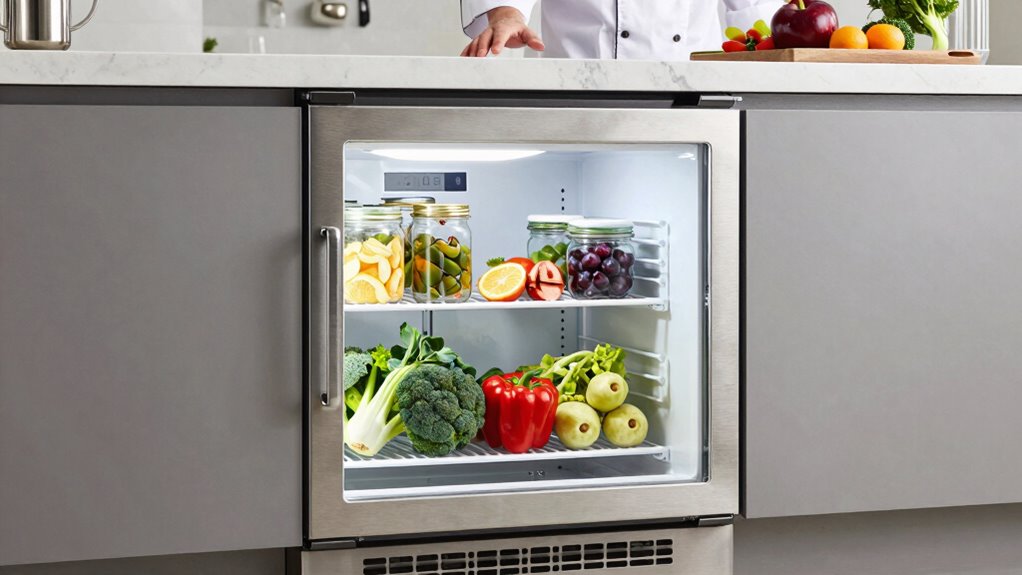
Another critical aspect to think about is maintenance scheduling. Proper maintenance ensures your refrigeration units stay reliable and operate at peak efficiency. When planning, select units with features that make routine cleaning and inspections easier, such as accessible coils, removable shelves, and clear indicator lights. Establish a regular maintenance schedule that includes cleaning condenser coils, checking door seals, and monitoring temperature controls. This proactive approach minimizes downtime, prevents costly repairs, and extends the lifespan of your investment. Additionally, understanding the energy efficiency standards can help you choose the most cost-effective model in the long term. Incorporating maintenance-friendly features can further streamline upkeep and reduce operational disruptions, making your kitchen more reliable overall. Considering energy-efficient models during your selection process can also contribute to a more sustainable kitchen environment. Regularly reviewing performance data can help you identify potential issues before they escalate, ensuring continuous optimal operation.
Size and capacity are also important considerations. You want a unit that fits comfortably into your workspace without crowding your kitchen. Measure the available space carefully before making a decision. Think about your typical storage volume and future needs—going too small can lead to constant opening and closing, which wastes energy, while too large a unit might be unnecessary and inefficient. It’s also beneficial to consider space optimization strategies to maximize the utility of your available area.
Material quality and build are equally crucial. Durable materials like stainless steel not only withstand the rigors of a busy kitchen but also tend to be easier to clean and maintain. Additionally, consider the design features that promote efficiency, such as well-insulated doors and adjustable shelves, which can help you organize contents better and prevent energy loss.
Finally, integrate these considerations into your overall kitchen design. Proper placement of your undercounter units ensures they’re accessible but not obstructing workflow. When you plan ahead with a focus on energy efficiency and maintenance scheduling, you’re setting your kitchen up for smooth operation, cost savings, and longevity. Investing time in these details now pays off by preventing problems later, keeping your kitchen running efficiently, and reducing operational costs over the lifespan of your refrigeration units.
Energy Star undercounter refrigerator
As an affiliate, we earn on qualifying purchases.
As an affiliate, we earn on qualifying purchases.
Frequently Asked Questions
What Is the Ideal Size for Undercounter Refrigeration Units?
The ideal size for undercounter refrigeration units depends on your space and storage needs, typically ranging from 24 to 36 inches wide. You should consider interior organization to maximize storage efficiently and guarantee easy access. Temperature control is essential, so choose a unit with adjustable settings to maintain consistent cooling. By selecting the right size, you’ll optimize your workspace, keep items fresh, and streamline your workflow.
How Energy-Efficient Are Different Undercounter Refrigeration Models?
Undercounter refrigeration models vary in energy efficiency, but many are designed to be energy-saving champions. You’ll find units with advanced cooling technology that reduce energy consumption, often cutting costs by up to 30%. Look for features like LED lighting and high-quality insulation, which make these units more eco-friendly. By choosing models with modern cooling technology, you guarantee your refrigeration needs are met while minimizing your environmental impact.
Can Undercounter Refrigerators Be Customized for Specific Needs?
Yes, undercounter refrigerators can be customized to meet your specific needs. You can choose custom storage configurations to optimize space and organization, ensuring everything fits perfectly. Additionally, many models offer aesthetic options, like different finishes and door styles, so you can match your decor. Customization allows you to create a unit that not only functions efficiently but also enhances the appearance of your space, making it tailored to your preferences.
What Maintenance Is Required to Ensure Longevity?
Your undercounter refrigerator can last a lifetime if you stay on top of maintenance. Regular cleaning schedules prevent buildup that can cause breakdowns, while consistent temperature monitoring ensures your food stays fresh. Check door seals and coils for dirt or damage weekly, and defrost if needed. This simple routine keeps your unit running smoothly and prevents costly repairs, making your investment as dependable as a trusty steed.
Are There Portable Options for Undercounter Refrigeration?
Yes, there are portable options for undercounter refrigeration, perfect for mobile refrigeration needs. You can choose compact, portable units that fit snugly beneath counters and are designed for easy transport. These mobile refrigeration options often feature lightweight construction, energy efficiency, and adjustable temperature controls, making them ideal for events, catering, or temporary setups. They provide reliable cooling on the go, ensuring your perishables stay fresh wherever you need them.
Conclusion
By planning your undercounter refrigeration carefully, you guarantee your space is efficient and your ingredients stay fresh. Remember, choosing the right size and features can save you time and money in the long run. Did you know that improper refrigeration can lead to up to 25% of food waste? Don’t let poor planning cost you valuable food and money—invest a little time now to enjoy reliable, cost-effective refrigeration that keeps your kitchen running smoothly.