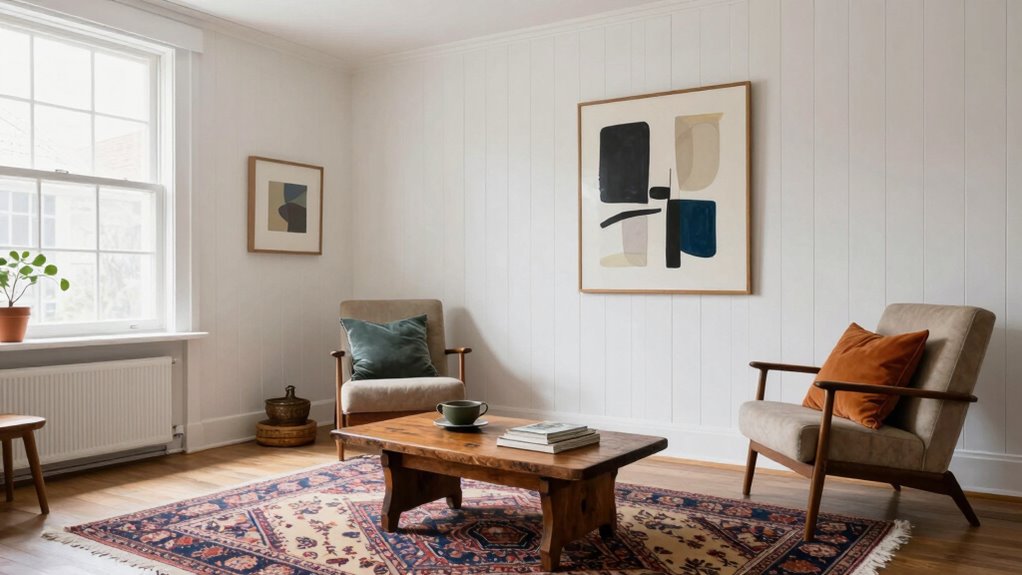
To blend two favorite styles seamlessly, start with a unifying color palette that balances warm earth tones and cool pastels, creating visual harmony. Mix furniture pieces thoughtfully, pairing sleek modern pieces with chunky reclaimed wood, ensuring finishes and proportions complement each other. Incorporate varied textures and decor elements that echo your chosen styles, guiding the eye smoothly through the space. Use lighting strategically to highlight key features and maintain flow. Keep exploring these tips to master the art of blending styles effortlessly.
Key Takeaways
- Establish a cohesive color palette that balances warm and cool tones for visual harmony.
- Mix contrasting furniture styles with consistent finishes to create visual rhythm and avoid dominance.
- Use lighting strategically to highlight curated elements and enhance the room’s atmosphere.
- Incorporate textiles and decor that echo the overall color scheme and style influences.
- Arrange furniture and accessories to guide the eye smoothly and maintain balanced proportions.
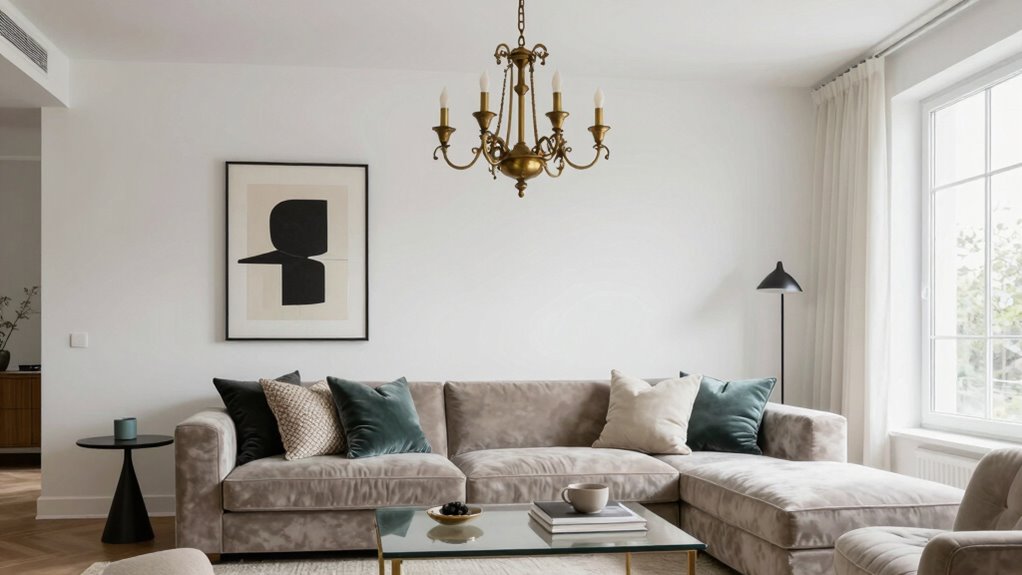
Mixing two favorite interior styles can create a unique and personalized space, but it’s easy to feel overwhelmed or lose cohesion in the process. The key to blending styles successfully lies in thoughtful color coordination and maintaining furniture balance. When you combine different aesthetics, you want the room to feel harmonious rather than chaotic. To do this, start by identifying a unifying color palette. Instead of matching every hue exactly, choose a few complementary colors that appear throughout the space. For example, if one style features warm earth tones and the other leans toward cool pastels, find a middle ground or a neutral base that ties everything together. This creates visual continuity, helping the eye flow smoothly across different design elements.
Blend styles with a unifying color palette for harmony and visual flow.
Next, consider furniture balance. If your styles are contrasting—say, rustic and modern—you want to distribute furniture pieces so they don’t clash or dominate the space. Place a sleek, minimalist sofa alongside a chunky, reclaimed wood coffee table, ensuring they don’t compete for attention. It’s about creating a visual rhythm where each piece supports the overall aesthetic. You might even mix styles within the same furniture category, like pairing a vintage armchair with a contemporary side table, but keep their finishes or colors consistent to maintain cohesion. This equilibrium prevents the room from feeling disjointed, making sure each element complements the others rather than overwhelming the space. Incorporating design principles such as balance and harmony can further enhance the cohesiveness of your eclectic space. Paying attention to visual flow can also help guide the arrangement of your furniture and decor for a more harmonious feel. To strengthen the overall unity, consider the role of lighting in highlighting your carefully curated elements and creating atmosphere. Additionally, incorporating varied textures can add depth and interest while maintaining overall harmony. When selecting decor, think about proportion to ensure your accessories and textiles don’t overpower larger furniture pieces. Finally, don’t forget the importance of accessories and textiles. Incorporate throw pillows, curtains, and artwork that echo your chosen color scheme or style influences. These details can subtly bridge the gap between contrasting styles, tying everything together without making the room feel cluttered. When you pay attention to color coordination and furniture balance, you create a space that’s both dynamic and cohesive—showcasing your personality without sacrificing harmony.
unifying color palette for home decor
As an affiliate, we earn on qualifying purchases.
As an affiliate, we earn on qualifying purchases.
Frequently Asked Questions
How Do I Choose Which Styles to Combine?
You choose styles to combine by focusing on style harmony and aesthetic contrast. Pick two styles that complement each other, like modern and vintage, to create balance. Consider your personality and how each style makes you feel. Mix elements thoughtfully—use a common color or material for cohesion. This way, you preserve the room’s harmony while highlighting the unique contrast, resulting in a cohesive, personalized space.
Can Blending Styles Make a Room Look Cluttered?
In the grand scheme of decor, blending styles can sometimes risk looking cluttered, but with careful planning, you can achieve stunning design harmony. Think of your decor theme as a symphony—each element should complement rather than compete. Use a unifying color palette or similar textures to tie different styles together. Avoid overcrowding surfaces, and let each piece breathe, ensuring your space remains cohesive and sophisticated rather than chaotic.
What Are Common Mistakes to Avoid When Mixing Styles?
When mixing styles, you should avoid common mistakes like mismatched furniture selection that clashes visually or accessory coordination that feels chaotic. Stick to a cohesive color palette and balance statement pieces with subtle accents. Don’t overdo it—too many contrasting styles can overwhelm the space. Instead, focus on blending elements thoughtfully, ensuring each piece complements the others, creating harmony without sacrificing personality or comfort.
How Do I Balance Bold and Subtle Design Elements?
Did you know that rooms with balanced design elements feel more inviting? To balance bold and subtle design elements, focus on texture contrast—combine plush, textured fabrics with sleek, minimal surfaces. Use furniture pairing wisely: select statement pieces for bold accents and keep other furniture subtle. This approach creates visual interest without overwhelming the space, ensuring your room feels cohesive and stylish.
Should I Focus on Color Schemes When Blending Styles?
Yes, focusing on color schemes helps when blending styles. Use color contrast to highlight different elements and create visual interest, ensuring each style stands out without clashing. Pay attention to pattern coordination—balance bold patterns with subtle ones to unify the space. This approach keeps your room cohesive while showcasing both styles, making it inviting and harmonious without overwhelming the senses.
Conclusion
Now that you’ve mastered blending your favorite styles seamlessly, imagine the endless possibilities awaiting in your space. With each carefully chosen piece and subtle shift, you’re creating a room that’s uniquely yours—full of personality and charm. But the true magic lies ahead: the unexpected details that will elevate your design even further. Are you ready to take the next step and realize the full potential of your beautifully blended room? The best is yet to come.