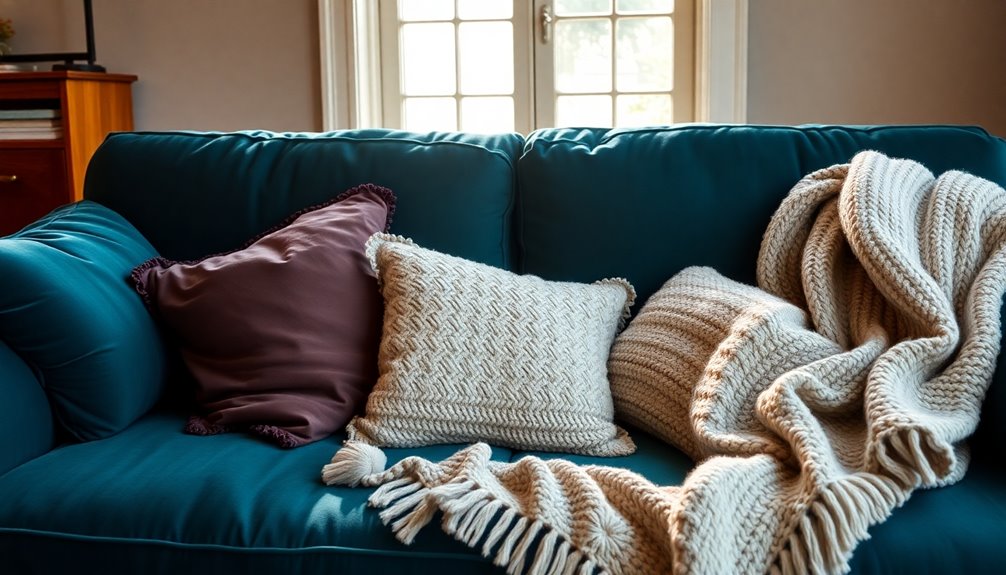
To create more depth in rooms with low contrast, focus on layered lighting with wall sconces, table, and floor lamps to highlight different areas and add shadows. Incorporate varied textures and materials to introduce tactile interest, while placing larger furniture slightly away from walls to form distinct zones. Use subtle color shifts and contrasting rugs to guide the eye and add visual layers. Combining these strategies can transform a flat space into a dynamic, inviting environment—discover how to master these techniques effectively.
Key Takeaways
- Use layered lighting with varying heights and angles to create contrast between illuminated and shadowed areas.
- Incorporate different textures and materials to add tactile and visual interest.
- Arrange furniture in zones with overlapping pieces to establish depth and spatial layers.
- Introduce subtle color variations within decor to guide the eye and add perceived depth.
- Highlight architectural features or artwork with accent lighting to create focal points and dimension.
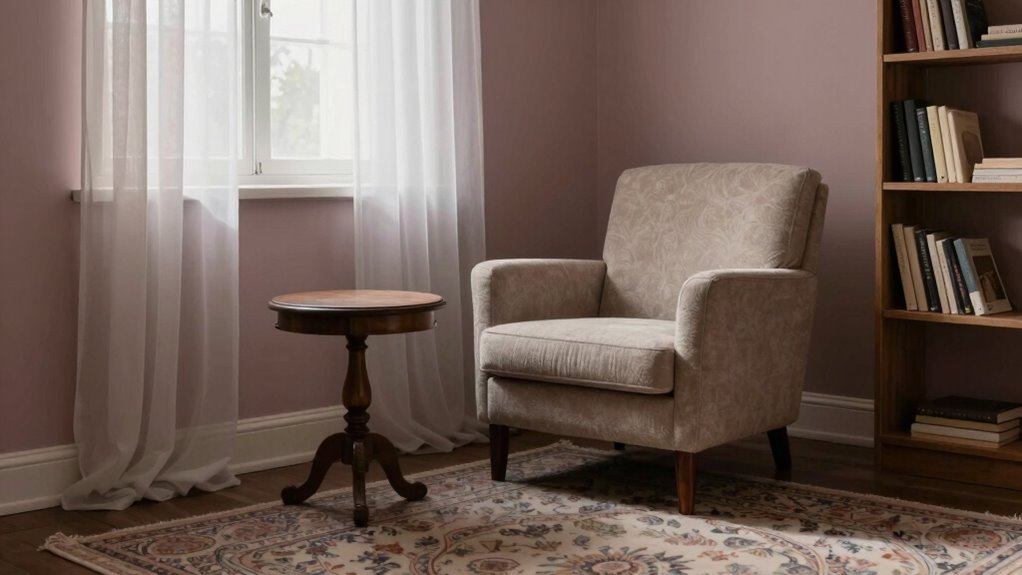
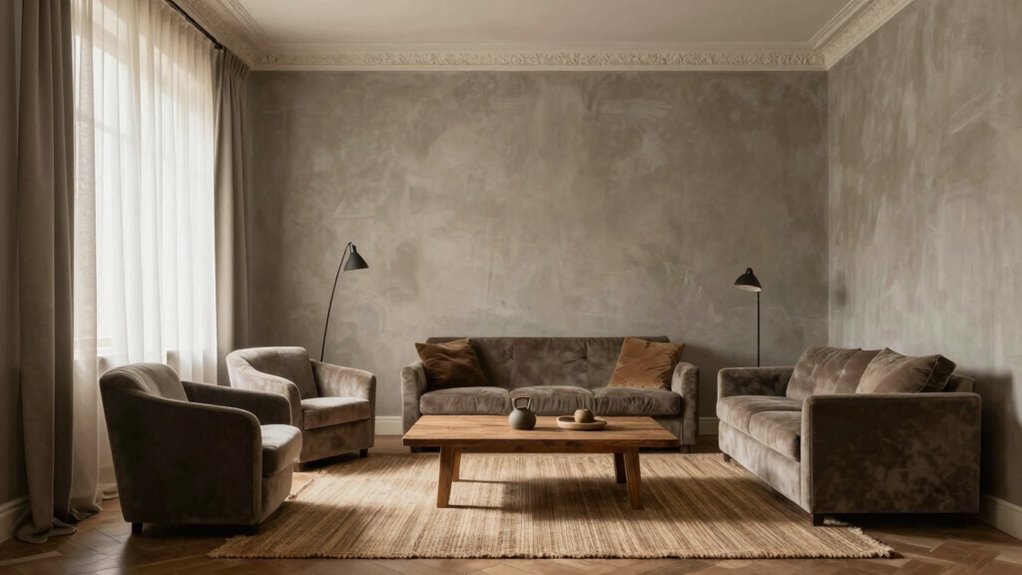
Creating depth in a room with low contrast can be a challenge, but it’s entirely achievable with the right techniques. When your space lacks strong color or tonal differences, you need to focus on how lighting and furniture placement can create visual separation and dimensionality. Proper lighting techniques are your first tool. Instead of relying solely on overhead lights, incorporate layered lighting that highlights different areas of the room. Use a combination of wall sconces, table lamps, and floor lamps to cast shadows and add depth. Position lights at varying heights and angles to create contrast between illuminated and shadowed zones, which helps your space feel more dynamic and less flat. Accent lighting can also emphasize architectural features or artwork, drawing the eye and creating focal points that break up low contrast surfaces. Understanding lighting techniques and how to implement them effectively is key to achieving this effect. Furniture placement plays an essential role too. When your room’s color palette is subdued, strategic furniture arrangement can introduce visual interest. Avoid pushing all the furniture against the walls; instead, create zones with different pieces to add layers of depth. For example, placing a sofa slightly away from the wall and accentuating it with a contrasting rug underneath adds a sense of dimension. Use furniture pieces of varying heights and styles to prevent the space from feeling monotonous. Position taller items, like bookshelves or armoires, near windows or light sources to catch the eye and create vertical interest. Additionally, layering furniture—such as placing a chair or side table in front of a larger piece—can produce visual depth by creating overlapping planes. Incorporating furniture arrangement techniques that emphasize spatial relationships can further enhance the perception of depth. Paying attention to texture contrast in textiles and materials can also help add tactile and visual layers, making the space feel richer. Incorporating color variation subtly within your decor can further guide the eye through the room and enhance perceived depth. Furthermore, using different finishes and materials can add subtle visual interest that helps break up uniform surfaces. In low contrast rooms, you want to guide the eye through the space intentionally. Effective lighting techniques and thoughtful furniture placement work together to achieve this. By intentionally illuminating different parts of your room and organizing your furniture to create visual layers, you break up the flatness and introduce a sense of depth. Remember to balance these elements, avoiding overly bright spots or cluttered arrangements, so the room feels inviting rather than chaotic. When done correctly, your space will feel richer, more inviting, and full of visual interest, even without high contrast colors or tones. With patience and strategic choices, you can transform a low contrast room into a layered, dimensional haven that draws people in.
As an affiliate, we earn on qualifying purchases.
Frequently Asked Questions
Can Adding Textures Improve Room Depth Without High Contrast?
Adding textures can definitely improve room depth without high contrast. You can incorporate texture patterns and tactile surfaces like woven rugs, textured wall panels, or plush cushions to create visual and tactile interest. These elements break up flat surfaces, giving your space dimension and warmth. Even with low contrast colors, textured details draw the eye and make the room feel layered and inviting.
What Lighting Techniques Enhance Depth in Low-Contrast Rooms?
You can enhance depth in low-contrast rooms by using layered lighting techniques. Incorporate ambient lighting to softly illuminate the space, creating a warm, inviting atmosphere. Add strategic accent lighting to highlight architectural features or textures, and use shadow play to cast interesting shadows, adding visual depth. Combining these techniques helps break up flat lighting, making the room feel more dynamic, spacious, and visually engaging.
Are Certain Colors Better for Creating Depth in Subtle Rooms?
You should choose colors based on color psychology and tonal variation. Opt for deeper, richer shades like navy or forest green to add visual weight, creating depth. Incorporate tonal variation by mixing light and dark hues within the same color family, which enhances dimension without overwhelming the space. These techniques help subtle rooms feel more layered and inviting, giving your space a richer, more dynamic appearance.
How Does Furniture Placement Influence Perceived Room Depth?
Think of furniture placement as the skeleton of your room’s story, guiding your eye through space. By carefully arranging your furniture to create clear focal points and maintaining a balanced spatial arrangement, you add layers and depth. Position larger pieces away from walls and use rugs or lighting to highlight key areas. This approach tricks the eye into perceiving a larger, more inviting room, even in low-contrast spaces.
Can Artwork or Accessories Make a Room Appear More Layered?
Yes, artwork and accessories can make your room appear more layered. By choosing pieces with neutral palettes, you add subtle depth without overwhelming the space. Position a bold focal point, like a large artwork or statement accessory, to draw attention and create visual interest. These elements break up flat surfaces, add texture, and guide the eye around the room, making it feel richer and more dynamic.
Conclusion
By adding depth to low-contrast rooms, you might just stumble upon a secret to transforming your space. Sometimes, the smallest tweaks—like a pop of color or varied textures—can make all the difference. It’s funny how a simple change can unexpectedly bring your room to life, proving that even in low contrast, there’s room for surprising vibrancy. So, keep experimenting—your perfect, more dynamic space might be just one small detail away.