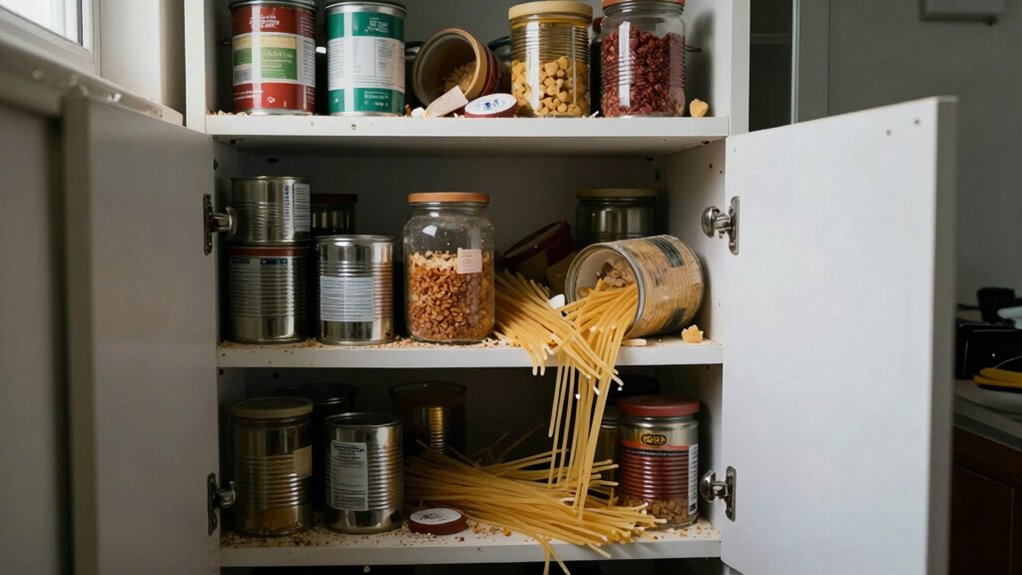

If you ignore daily habits like tidying up, returning items to proper spots, and checking expiration dates, your pantry cabinets quickly become cluttered and disorganized. Without routine maintenance, it’s easy to overstock, forget about unused items, and let clutter pile up. This makes it harder to find what you need and causes food waste. Maintaining simple habits ensures your pantry stays functional and neat. Keep going to discover how to prevent this from happening altogether.
Key Takeaways
- Neglecting daily tidying leads to clutter accumulation and difficulty maintaining order in pantry cabinets.
- Ignoring routine inventory checks causes expired items and overstocking, reducing accessibility.
- Failing to return items to proper spots after use results in disorganized and inefficient storage.
- Lack of consistent labeling and container use hampers visibility and quick retrieval of pantry items.
- Skipping regular maintenance and organization practices causes cabinets to become overwhelming and unmanageable.
Many pantry cabinet failures stem from overlooking daily habits that influence organization. It’s easy to assume that a well-stocked pantry means it’s organized, but without consistent routines, clutter quickly takes over. The key to a functional pantry lies in how you approach meal planning and storage organization every day. When these habits slip, chaos ensues, making it difficult to find what you need and leading to wasted food and frustration.
You might think meal planning is only about deciding what to cook, but it’s also about how you manage your pantry. When you plan your meals in advance, you’re more likely to buy only what you need and avoid impulse purchases that clutter your shelves. Consistent meal planning helps you track ingredients and prevents overstocking, which often results in expired or forgotten items. This routine keeps your pantry tidy and ensures that everything has a designated place. It also encourages you to rotate older items to the front, so nothing gets neglected or tossed out.
Storage organization plays an essential role in maintaining an efficient pantry. Without a system in place, even the best intentions can fall apart. Daily habits like returning items to their proper spots after cooking, checking expiration dates regularly, and consolidating similar products keep the space manageable. When you neglect these routines, clutter piles up, and you lose track of what you actually have. This leads to buying duplicates or overlooking essentials, which wastes money and space. Establishing an organization system and sticking to it can significantly improve how your pantry functions. Additionally, consistent maintenance ensures that your storage solutions remain effective over time. Incorporating a regular inventory check can further prevent unnecessary purchases and keep your space optimized. Implementing these practices can also help you identify underutilized storage opportunities, maximizing your space.
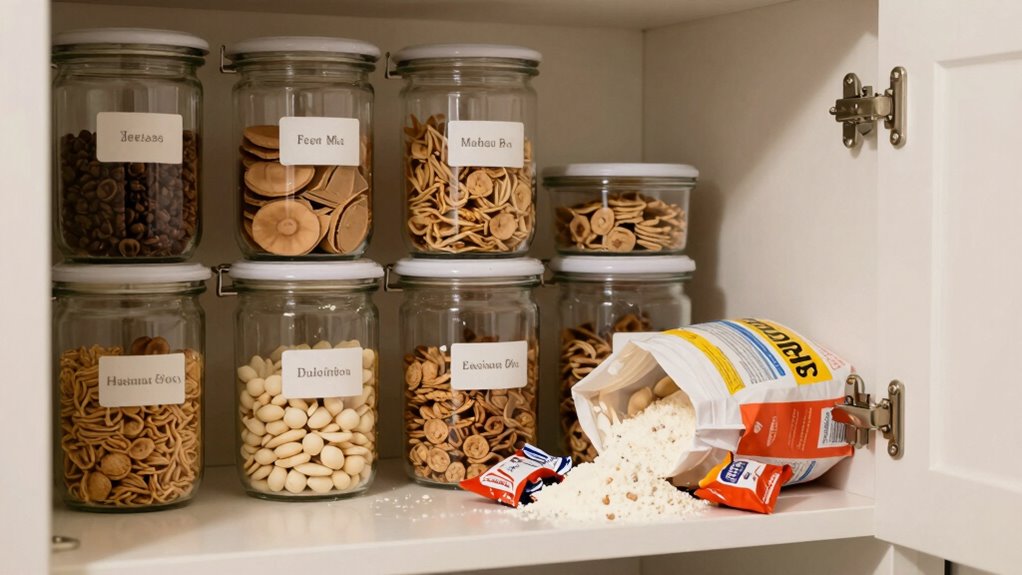
Furthermore, a habit of tidying your pantry after grocery shopping or meal prep can make a big difference. Instead of letting clutter accumulate, spend a few minutes putting things back in order. Use clear containers and labels to make it easy to see what’s inside and where it belongs. These small actions, repeated daily or weekly, create a predictable system that minimizes chaos. When you develop the habit of maintaining your storage organization, it becomes second nature to keep your pantry neat, accessible, and efficient.
In essence, the failure of pantry cabinets is often rooted in neglecting these daily habits. Meal planning and storage organization aren’t one-time chores; they’re ongoing practices that, if overlooked, cause disorganization to take hold. Developing organized routines and sticking to them can transform your pantry from a cluttered mess into a well-functioning space. By consciously integrating these routines into your daily life, you guarantee your pantry remains a helpful, tidy space instead of a source of frustration. Small, consistent actions make all the difference in keeping your pantry functional and enjoyable to use.
clear pantry storage containers with labels
As an affiliate, we earn on qualifying purchases.
As an affiliate, we earn on qualifying purchases.
Frequently Asked Questions
How Often Should I Clean My Pantry Cabinets?
You should clean your pantry cabinets at least once a month to maintain organization and prevent pests. During cleaning, focus on shelf labeling to guarantee everything stays in its place, and check container stacking to avoid spills or damage. Regularly wiping down surfaces and re-labeling as needed keeps your pantry tidy and functional, helping you spot expired items early and prevent clutter from building up.
What Is the Best Way to Organize Pantry Items?
Imagine you’re prepping meals for the week, and clear, labeled containers help you quickly find ingredients. To organize your pantry, group similar items like snacks, grains, and canned goods. Use labeling strategies for easy identification, and keep frequently used items at eye level. Regularly reassess your setup to prevent clutter, making meal prep smoother and your pantry more functional. This approach keeps everything accessible and well-maintained.
Do Specific Habits Prevent Pantry Clutter?
Yes, specific habits can prevent pantry clutter. When you incorporate meal prep routines, you’re less likely to impulse buy or let items expire. Habit stacking—pairing pantry organization with daily activities—keeps things tidy effortlessly. For example, while cooking, you can quickly put away ingredients or snacks. These consistent habits reduce mess, keep your pantry organized, and make meal prep smoother, ultimately avoiding clutter buildup over time.
How Can I Maintain Pantry Hygiene Daily?
Think of your pantry like a garden—you need daily care to keep it thriving. To maintain hygiene, always check for expired items and wipe shelves regularly. Use shelf labeling to organize and avoid clutter, and guarantee good air circulation by not overstuffing shelves. This routine prevents spoilage and mold, keeping your pantry fresh and inviting. Small daily efforts make a big difference in maintaining a clean, functional space.
What Tools Help Track Pantry Inventory?
To keep track of your pantry inventory, you should use effective tracking tools like digital apps or spreadsheets designed for inventory management. These tools help you monitor stock levels, expiration dates, and usage patterns, preventing overstocking or shortages. By regularly updating your inventory management system, you stay organized, save time, and guarantee your pantry remains well-stocked with essentials. Consistent use of tracking tools makes maintaining your pantry effortless.
Conclusion
If you neglect your daily habits, your pantry cabinet becomes a chaotic maze of forgotten jars and spilled cereals. Like leaves swept aside by the wind, clutter gathers where you least expect it, making it hard to find what you need. But if you pay attention to your routines, your pantry transforms into a well-organized haven—each item shining like a gem, ready at your fingertips. Keep habits in check, and your pantry will always serve you smoothly.