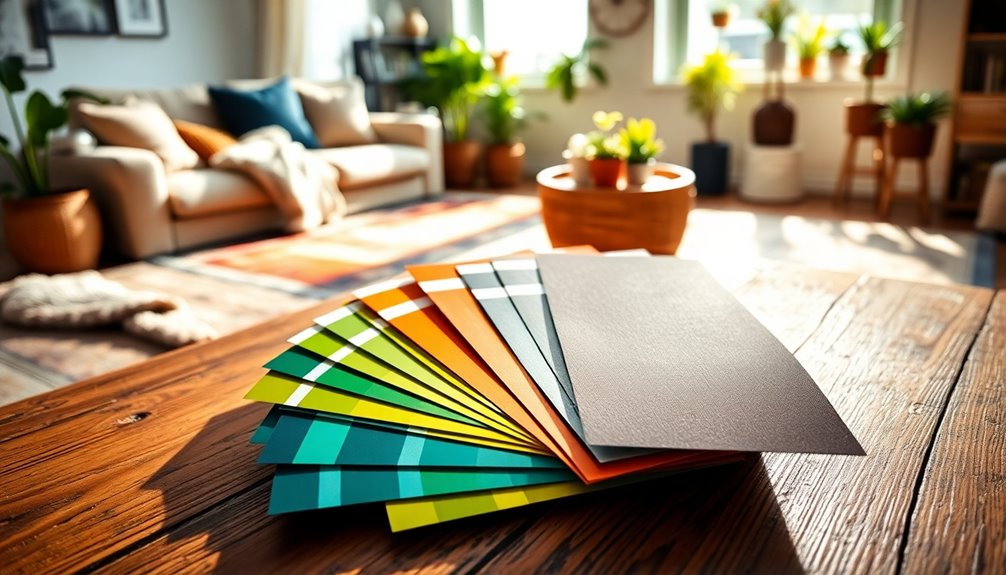
Choosing the right white paint starts with understanding undertones—cool shades like blue or gray create a modern vibe, while warm hues like cream or beige add coziness. Consider how your space’s natural light and lighting fixtures influence these shades, as lighting can shift the color’s appearance. Texture and finish also matter; matte softens, while satin adds a gentle sheen. If you’re enthusiastic to master every detail, exploring further will help you craft the perfect, personalized look.
Key Takeaways
- Consider the room’s natural light to determine if a cool or warm white enhances the space.
- Test different shades in your space to observe how lighting affects their appearance.
- Choose a finish—matte for softness, satin for subtle sheen—that aligns with your desired style.
- Be aware of undertones; select whites with the right hints (blue, yellow, beige) for your mood and decor.
- Experiment and trust your instincts to find a white that elevates your space and complements your personal style.
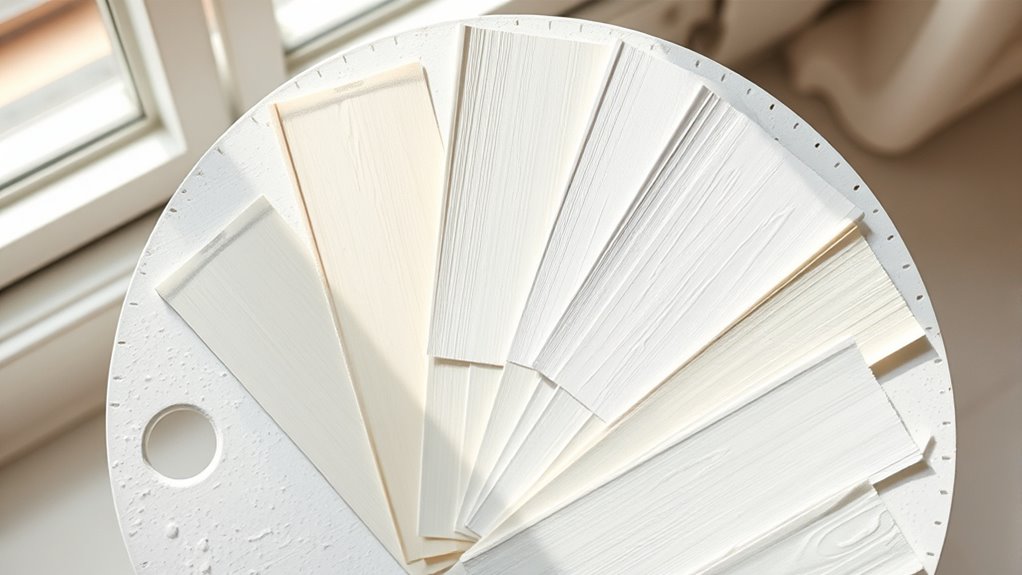
Have you ever wondered why selecting the perfect white paint can transform a space from bland to breathtaking? It’s not just about choosing any shade of white; it’s about finding one that complements your environment, enhances your style, and creates the mood you desire. The beauty of white lies in its versatility, but that very versatility can make the decision overwhelming. To truly elevate your space, you need to understand the nuances of different whites and how they interact with natural light, furniture, and decor.
Start by considering the undertones. White isn’t a one-size-fits-all hue; it’s a delicate balance of undertones that subtly influence its appearance. Some whites lean toward cool shades, with hints of blue, gray, or green, creating a crisp, modern feel. These are perfect if you want a clean, fresh backdrop that makes other colors pop. On the other hand, warm whites carry undertones of yellow, beige, or cream, imparting a cozy, inviting atmosphere that softens a space and adds a touch of timeless elegance. Think about your room’s purpose and mood—cool whites evoke a sleek, contemporary vibe, while warm whites foster comfort and intimacy.
Consider undertones: cool whites with blue, gray, green hints for modern spaces; warm whites with yellow, beige, or cream for cozy, inviting atmospheres.
Lighting plays a pivotal role in how your chosen white appears. Natural sunlight can make a white look brighter and more vibrant, while dim or artificial lighting might cast subtle shadows or alter its undertones. It’s wise to test your favorite shades on small patches of your wall, observing them at different times of day. This way, you’ll see how they shift with the light and better understand which tone best aligns with your vision.
Texture and finish also influence how your white paint will look. Matte finishes absorb light, adding depth and a velvety softness, ideal for hiding imperfections and creating a subtle, sophisticated ambiance. Satin or eggshell finishes reflect a gentle sheen, making your walls feel luminous and lively without being overly glossy. These small choices in finish can dramatically affect the aesthetic, so consider the overall style you’re aiming for—whether sleek and modern or warm and textured.
Finally, trust your instincts, but don’t be afraid to experiment. White is inherently flexible; it’s a blank canvas waiting for your personal touch. By paying close attention to undertones, lighting, and finish, you can select a white that not only looks stunning but also elevates your entire space, transforming it into a sanctuary that feels thoughtfully curated and uniquely yours. Understanding white undertones can be particularly helpful in making your choice.
Frequently Asked Questions
How Do Different Lighting Conditions Affect White Paint Appearance?
Different lighting conditions dramatically influence how white paint appears. In natural sunlight, it often looks crisp and bright, highlighting subtle undertones. Under warm incandescent light, it can seem cozy and inviting, while cool LED lighting may make it appear stark or bluish. You’ll notice that the same white shade shifts, so observe it in various lights to guarantee it complements your space’s ambiance perfectly.
What Are the Best White Paint Finishes for High-Traffic Areas?
For high-traffic areas, go for a semi-gloss or satin finish. These finishes add a subtle sheen that’s both stylish and practical, making fingerprints and scuffs less noticeable. They’re easy to wipe clean without losing their elegance. You’ll appreciate how they reflect light, brightening your space while standing up to daily wear. Opt for these finishes to keep your walls looking fresh, sophisticated, and effortlessly chic.
How Does the Base Color of White Paint Influence Its Final Look?
The base color of white paint markedly influences its final look. Warm bases, with hints of yellow or beige, create cozy, inviting spaces, while cool bases, with subtle blues or grays, lend a modern, crisp feel. You’ll notice that the base color affects how the light interacts, making your walls appear softer or more stark. To achieve your desired ambiance, choose a white with a base that complements your room’s mood and lighting.
Can White Paint Be Mixed to Create Custom Shades?
Yes, you can mix white paints to craft custom shades, giving your space a personalized touch. Start with a pure white base, then add tiny amounts of color—like soft blues, warm creams, or subtle grays—to achieve your desired hue. Mix thoroughly and test on a small area first. This process allows you to tailor the tone perfectly, ensuring your walls reflect your unique style and aesthetic vision.
What Are Common Mistakes to Avoid When Choosing White Paint?
You’ll want to avoid assuming all white paints are the same—each has subtle undertones that can clash with your decor. Don’t pick a white without testing it in your space; natural light can dramatically change its appearance. Steer clear of choosing overly warm or cool tones if they don’t complement your room’s palette. Remember, rushing this step is like a painter skipping the primer—destined for uneven results.
Conclusion
Ultimately, selecting the perfect white paint is about embracing subtle nuances and trusting your intuition. Think of it as finding a shade that whispers elegance and complements your space’s natural light. When you choose wisely, you’ll discover that the right white transforms your room into a serene, stylish sanctuary—proof that sometimes, the simplest choices make the grandest statements. So, trust your eye, and let your space reflect your unique, refined taste.