
To achieve an industrial, softened home aesthetic, you blend raw materials like steel beams, concrete, and exposed brick with warm wood accents, plush textiles, and layered lighting. Carefully select finishes that balance roughness with refinement, such as matte sealants or smooth drywall. Incorporate strategic lighting to highlight textures and add warmth, and choose furniture with minimalist lines paired with cozy cushions. If you explore further, you’ll discover how to create a cohesive, inviting space that celebrates industrial principles with gentle comfort.
Key Takeaways
- Incorporate warm textiles and plush furnishings to offset raw industrial materials and create an inviting atmosphere.
- Use layered lighting with warm, dimmable LEDs to soften the harshness of exposed structural elements.
- Pair raw materials like concrete and brick with softer finishes and natural fibers for visual warmth and comfort.
- Select furniture with clean lines and natural or distressed materials to balance utilitarian elements with coziness.
- Incorporate subtle design details such as textured rugs, softened color palettes, and warm-toned woods to enhance homey appeal.
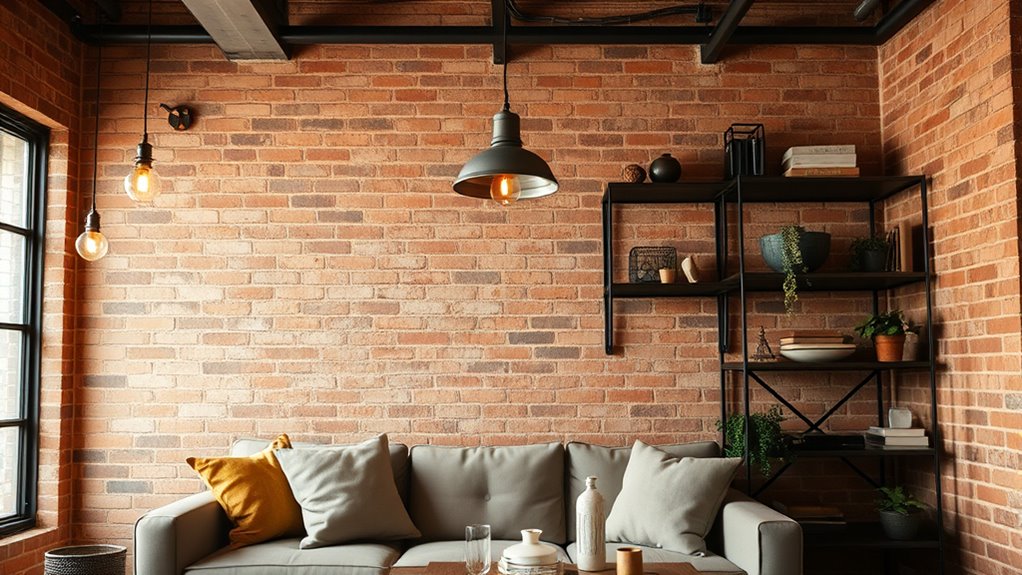
Have you ever considered how industrial design elements can be seamlessly integrated into residential spaces to create a balanced aesthetic? This approach involves meticulously combining raw, utilitarian materials with softer, more inviting textures to achieve harmony. When employing industrial features in homes, you must prioritize material selection, spatial arrangement, and finishing techniques to prevent the space from appearing cold or uninviting. For example, exposed structural components such as steel beams and ductwork serve as focal points, but their visual impact depends on precise detailing and proper contrast with softer elements. To soften these features, incorporate warm-toned woods, plush textiles, and diffused lighting that counterbalance the starkness of metallic surfaces.
The key lies in understanding the interplay between materials. Steel, concrete, and brick are hallmark industrial materials, yet their raw finishes can be overwhelming if not tempered by deliberate design choices. Polished concrete floors, for instance, should be paired with area rugs made of natural fibers to add warmth and texture. Similarly, exposed brick walls can be treated with a matte sealant to reduce visual roughness, while adjacent surfaces may feature smooth drywall or painted finishes to create visual variety. Precise detailing is essential; joints, seams, and surface imperfections should be carefully considered, either left intentionally raw or refined to a high standard for a cleaner appearance. Additionally, selecting sustainable materials can enhance the overall environmental friendliness of an industrial-inspired home.
Lighting plays a pivotal role in balancing industrial and soft aesthetics. Industrial design often relies on functional, high-visibility fixtures like pendant lights or bare bulbs, but in a residential context, these should be supplemented with layered lighting schemes. Use warm, dimmable LED bulbs and incorporate fixtures with softer finishes—such as matte black or brushed nickel—to introduce warmth and visual comfort. Proper placement of lighting enhances the textures of materials, highlighting the natural imperfections of concrete or the grain of wood, therefore accentuating their tactile qualities.
Furniture selection must complement the aesthetic without overwhelming it. Opt for pieces with clean, minimalist lines crafted from natural or distressed materials that echo industrial origins yet offer comfort. Metal-framed chairs with plush cushions or reclaimed wood tables can serve as focal points. When arranging these elements, maintain a balance of open space and visual weight, ensuring that the raw materials are showcased without feeling stark or oppressive. Overall, the integration of industrial design into residential spaces requires meticulous attention to material finishes, spatial organization, and lighting strategies to achieve a refined, inviting environment that celebrates both utilitarian appeal and soft comfort.
Frequently Asked Questions
How Does Softened Industrial Water Impact Household Appliances?
Softened industrial water reduces mineral buildup, preventing scale formation inside household appliances. This minimizes clogging and corrosion, extending appliance lifespan. It also improves efficiency by maintaining ideal heat transfer and water flow. You’ll notice fewer maintenance issues and longer-lasting appliances, especially with water heaters, dishwashers, and washing machines. However, overly softened water may lead to increased soap consumption and potential corrosion if not properly balanced, so monitoring water chemistry remains essential.
Is Softened Industrial Water Safe for Drinking and Cooking?
Yes, softened industrial water is safe for drinking and cooking, provided it meets local health standards. The softening process removes minerals like calcium and magnesium, reducing scale and corrosion risks. However, it may add sodium ions, so if you’re on a low-sodium diet, consult a water quality report or consider additional filtration. Overall, properly treated softened water guarantees safety and enhances taste without compromising health.
What Are the Environmental Effects of Using Softened Industrial Water?
Using softened industrial water can have environmental impacts, primarily due to the discharge of high sodium levels into ecosystems. Elevated sodium can harm aquatic life and disrupt soil quality. Additionally, the regeneration process for water softeners consumes significant energy and produces brine waste, which may contaminate water sources if not properly managed. As a result, careful monitoring and treatment are essential to minimize adverse environmental effects.
How Does Softened Industrial Water Compare in Cost to Traditional Water Sources?
Softened industrial water typically costs substantially more than traditional sources, sometimes doubling or tripling expenses due to the advanced filtration and ion-exchange processes involved. You’ll notice higher operational costs from maintenance, chemical use, and energy requirements. While initial setup is more expensive, softened water can reduce long-term equipment wear and energy consumption, providing savings over time. Overall, expect a notable investment upfront, but potential operational efficiencies could balance the scales.
Can Softened Industrial Water Be Used for Gardening and Outdoor Purposes?
Yes, softened industrial water can be used for gardening and outdoor purposes. It’s effective because the softening process removes minerals like calcium and magnesium, reducing scale buildup on equipment and plants. However, since softened water may contain sodium, it’s best for ornamental plants or non-edible gardening. You should consider soil compatibility and plant tolerance before widespread use, and monitor soil salinity levels regularly to prevent potential damage.
Conclusion
Shifting industrial elements into your home isn’t just about aesthetics; it’s about precision and functionality. By carefully softening raw materials and integrating them seamlessly, you create an environment that balances durability with comfort. Think of it as transforming steel into silk—maintaining strength while enhancing elegance. This meticulous process guarantees your space remains both resilient and refined, proving that industrial design, when softened with care, becomes not just a style but a testament to thoughtful craftsmanship.