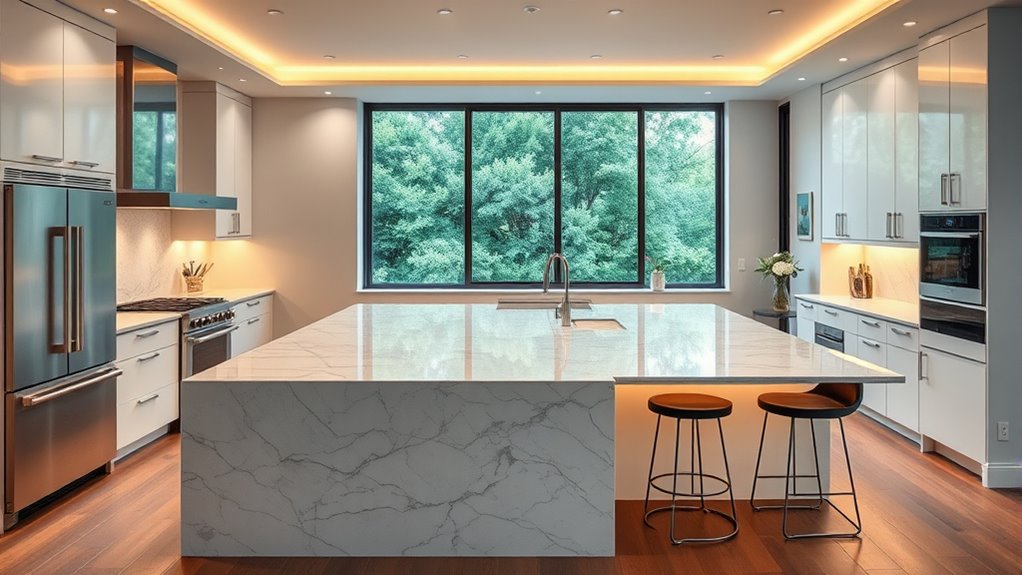

In your kitchen, combining islands and peninsulas creates a versatile, stylish hub tailored to your needs. An island offers a central gathering spot, extra workspace, and a focal point for entertainment, while a peninsula extends your counter and maintains visual flow with adjoining areas. Using both can define zones, maximize storage, and boost functionality seamlessly. Curious to see how this hybrid approach transforms your space? Explore more to discover how to craft your perfect culinary haven.
Key Takeaways
- Combining both can define multiple zones and enhance functionality in larger kitchens.
- Islands serve as social, prep, and focal points, while peninsulas extend workspace from existing counters.
- Consider space constraints and traffic flow to determine if one or both features suit your layout.
- Style and practicality should balance, with islands making a statement and peninsulas offering seamless integration.
- The choice depends on your cooking, entertaining needs, and desired kitchen openness and accessibility.
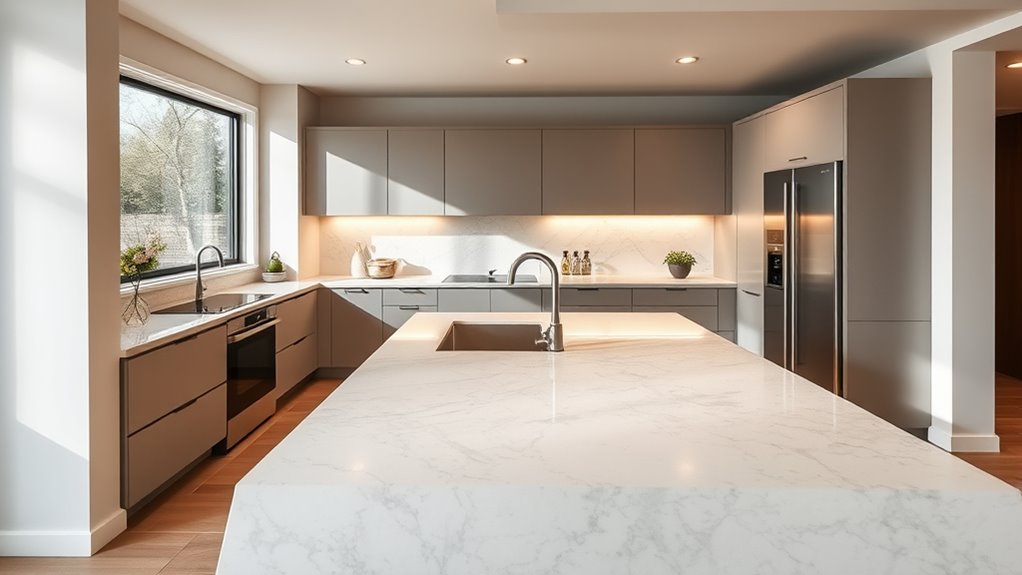
When designing your dream kitchen, you might wonder whether an island, a peninsula, or both best suit your space and lifestyle. Each option brings its own unique advantages, and choosing the right one depends on how you want to use your kitchen, the layout of your home, and your aesthetic preferences. An island stands alone, often positioned centrally, providing a focal point that invites social interaction. It’s perfect if you love to entertain, want a dedicated workspace, or need extra storage and seating. A well-designed island can serve multiple functions—cooking prep, dining, or even a spot for kids to do homework while you cook. Its mobility allows you to customize the layout, making it stand out as a statement piece that complements your style.
An island offers a versatile, social centerpiece perfect for entertaining and multitasking in your kitchen.
On the other hand, a peninsula extends from an existing countertop or wall, creating a seamless connection that maximizes your cabinetry and workspace without sacrificing flow. This setup works beautifully in open-concept layouts, allowing you to maintain visual connection with living or dining areas while working. Peninsulas often serve as a bridge between the kitchen and other spaces, making them ideal for casual meals or quick chats with family members. They’re also great if you want the functionality of an island but have limited space or wish to avoid the potential crowding that can come with freestanding units.
It’s worth considering whether combining both features might serve your needs better. For example, in a larger kitchen, an island paired with a peninsula can define different zones: the island for prep and socializing, and the peninsula for quick meals or additional storage. This hybrid approach maximizes flexibility, allowing you to adapt your kitchen for various occasions—from intimate family dinners to lively gatherings. It also creates a dynamic visual flow, balancing openness with practical divisions.
When making your choice, think about your workflow and how often you cook or entertain. If you thrive on social interaction, an island can be a lively hub. If you prefer a more streamlined, integrated space, a peninsula might be more suitable. Also, consider your space constraints—an island requires enough clearance around all sides for comfortable movement, while a peninsula can be tucked into corners or against walls, saving space. Finally, evaluate your storage needs and how each option can accommodate your appliances, utensils, and cookware. Additionally, incorporating ergonomic considerations into your design can improve efficiency and comfort during meal prep and other tasks.
Ultimately, whether you opt for an island, a peninsula, or a combination of both, focus on creating a kitchen that enhances your daily routines and reflects your personality. Practicality and style should go hand-in-hand, resulting in a space that’s inviting, functional, and uniquely yours.

Shintenchi Kitchen Island with Folding Drop Leaf, Rolling Island Table with Storage, Kitchen Cabinet on Wheels with Seating Area for Kitchen, Bar Cart with Cabinet, White
- Foldable Drop Leaf: Transforms into a dining bar or expands
- Ample Storage Space: Includes cabinet and three drawers
- Adjustable Shelf: Customizable 3-tier shelf for versatile storage
As an affiliate, we earn on qualifying purchases.
As an affiliate, we earn on qualifying purchases.
Frequently Asked Questions
How Do I Choose Between an Island or Peninsula for My Kitchen?
You should choose based on your space and cooking habits. If you want a social hub that’s easy to interact with guests, an island works great. If you need more counter space and a dedicated cooking zone, a peninsula can be more practical, especially if you’re tight on room. Consider your workflow, storage needs, and how you want to use your kitchen daily to decide which layout fits best.
What Are the Cost Differences Between Islands and Peninsulas?
Islands generally cost more than peninsulas because they require additional plumbing, electrical work, and a separate foundation. You’ll also pay for more materials and labor due to their standalone design. Peninsulas, being attached to walls, are usually cheaper, as they involve less complexity and fewer modifications. Budget-wise, plan for a few thousand dollars extra if you opt for an island, but don’t forget the added convenience and style it brings!
Can a Kitchen Have Both an Island and a Peninsula?
Yes, you can definitely have both an island and a peninsula in your kitchen. Imagine a spacious layout where the island serves as a central hub for prep and socializing, while the peninsula extends from a wall, creating a cozy breakfast bar or additional workspace. This combination maximizes functionality and flow, giving you distinct zones for cooking, dining, and gathering—perfect for a busy, stylish kitchen that suits your needs.
What Are the Best Materials for Durable Kitchen Islands?
You should choose durable materials like quartz, granite, or butcher block for your kitchen island. Quartz offers resilience against scratches and stains, making it low maintenance. Granite provides natural beauty and heat resistance, perfect for cooking prep. Butcher block adds warmth and is great for chopping, but needs sealing regularly. Consider your cooking habits and style to pick the best material that withstands daily wear while adding charm to your space.
How Do I Optimize Space With Both an Island and a Peninsula?
Think of your kitchen as a well-tuned orchestra, where the island and peninsula play harmonious roles. To optimize space, position the island centrally, leaving at least 42 inches of clearance on all sides for fluid movement. Use the peninsula to create a cozy nook or additional prep space without crowding. Keep traffic flow in mind, and guarantee pathways are clear—this balance turns your kitchen into a functional masterpiece.
Conclusion
As you weigh your options, remember that whether you choose islands, peninsulas, or a clever combination, your kitchen’s true potential lies in what feels right for your space and lifestyle. But don’t rush—sometimes, the most unexpected design choice reveals a secret ingredient to your perfect kitchen. The decision isn’t just about style; it’s about creating a space that invites discovery and surprises. So, which element will you trust to uncover its hidden magic?