
To achieve effective acoustic design for quiet floors, walls, and doors, you should select materials with high mass, damping properties, and proper sealing techniques. Use resilient underlayments, decoupled floating floors, and dense wall assemblies with insulation to block sound transmission. Install solid-core doors with airtight seals, door sweeps, and reinforced frames. Combining these measures ensures ideal soundproofing and privacy. Continuing further reveals detailed strategies to enhance each element for superior acoustic performance.
Key Takeaways
- Use resilient underlayments and floating floor systems to reduce impact and airborne sound transmission between levels.
- Apply dense, multi-layered drywall with damping compounds and insulation within wall cavities for effective soundproofing.
- Install high-mass, solid-core doors with airtight seals, door sweeps, and reinforced frames to block sound leaks.
- Seal all joints, gaps, and penetrations with acoustic sealants to prevent sound leaks across walls and doors.
- Combine floor, wall, and door measures with proper installation for comprehensive acoustic performance and privacy.
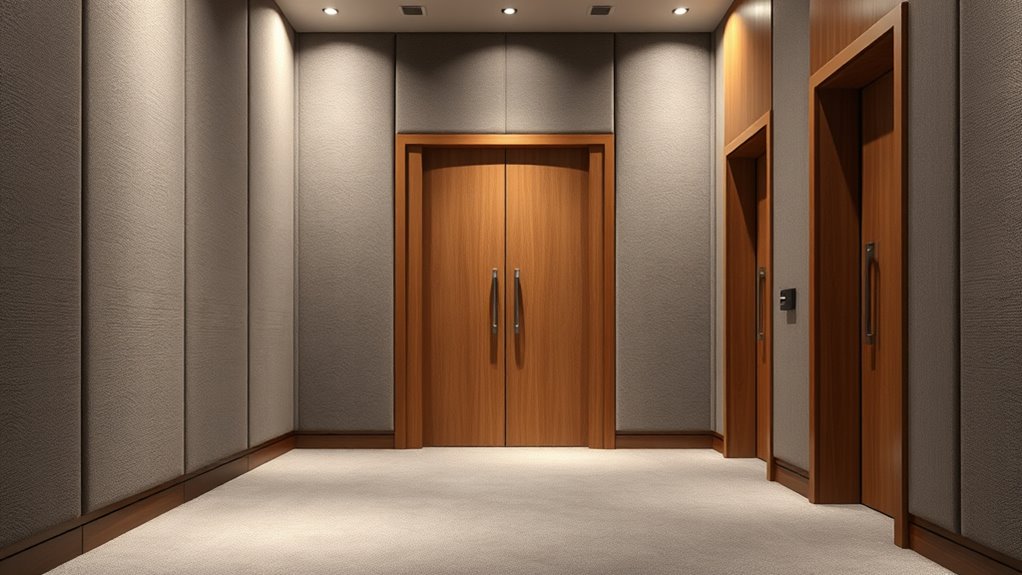
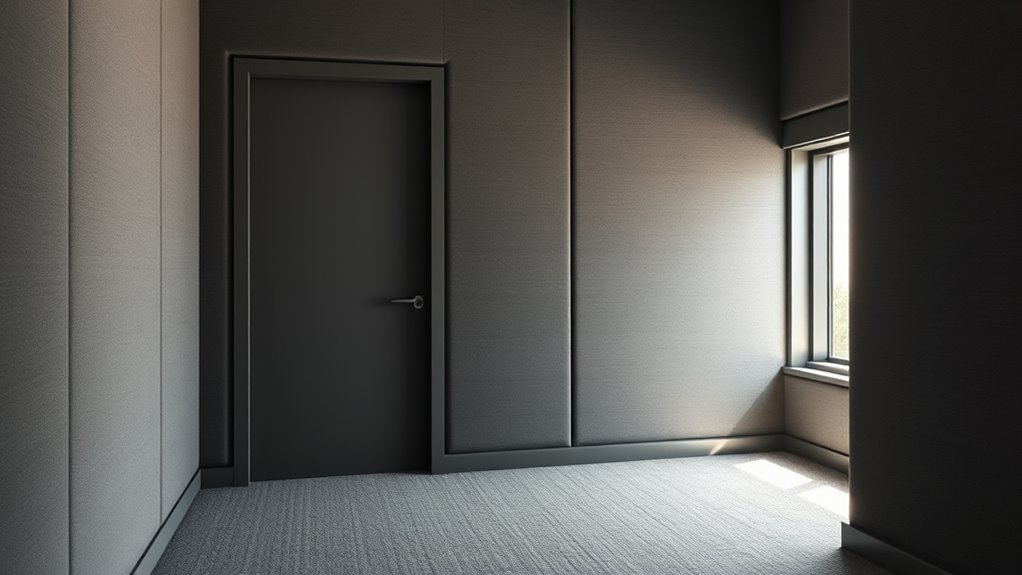
Have you ever wondered how sound environments are intentionally shaped to enhance auditory experiences and minimize noise? Acoustic design focuses on controlling sound transmission and reflection within a space, guaranteeing ideal clarity and privacy. The foundation of effective acoustic design lies in understanding how sound propagates through different building elements and how these elements can be engineered to absorb, block, or diffuse sound waves. In this scenario, quiet floors, walls, and doors are vital components that require precise material selection and structural design to achieve desired sound insulation levels. To optimize performance, it is essential to consider soundproofing materials that effectively absorb or block noise transmission. When designing quiet floors, your goal is to reduce impact and airborne sound transmission between levels. You typically incorporate resilient underlayments beneath the finished flooring surface. These materials, such as mass-loaded vinyl, rubber, or specialized acoustic mats, function to decouple the floor surface from the structural slab, thereby attenuating vibrations and impact noise. Additionally, floating floor systems—constructed with an independent subfloor layer—further isolate sound energy. Proper installation and sealing are essential to prevent sound leaks and guarantee that the entire floor assembly operates as an effective barrier. This approach minimizes footfalls and equipment noise, creating a quieter environment. Walls require similar attention to sound transmission control. You must consider mass, stiffness, and damping properties in material selection. Dense materials like concrete, brick, or drywall with added mass can markedly impede sound passage. To maximize effectiveness, you should incorporate multiple layers of drywall with damping compounds or resilient channels, which decouple the inner drywall layers from the structural framing. Sealing all joints, gaps, and penetrations with acoustic sealants enhances performance by preventing airborne sound leakage. Additionally, adding insulation within wall cavities—using mineral wool or fiberglass—absorbs sound energy and reduces transmission. The integration of these elements results in walls that effectively contain sound within designated spaces, maintaining privacy and acoustic clarity. Doors, often overlooked, are vital in preventing sound leaks between rooms. To achieve ideal acoustic performance, you need doors with high mass and airtight seals. Solid-core doors, constructed from dense materials like laminated wood or composite, provide substantial sound attenuation. The installation of acoustic seals around the perimeter of doors ensures an airtight fit, preventing sound from bypassing the door leaf. Additionally, integrating door sweeps and thresholds that form a continuous seal with the floor further reduces sound transfer. Proper hinges and frame reinforcement prevent gaps that can compromise acoustic integrity. When combined, these measures ensure doors serve as effective sound barriers, maintaining the overall acoustic quality of the environment.

Rubber Flooring Underlayment, Resilient Acoustic Underlayment for Floors, Floating Floor Installation – Floor Sound Barrier – 5mm Thick – 4' x 30' Ft – Covers 120 sq ft – Made in The USA.
Marvel Mute Rubber floor underlayment is made of RECYCLED RUBBER IMPACT SOUND INSULATION to minimize impact transmission noise…
As an affiliate, we earn on qualifying purchases.
As an affiliate, we earn on qualifying purchases.
Frequently Asked Questions
How Do Different Wall Materials Affect Soundproofing Efficiency?
Different wall materials directly impact soundproofing efficiency by varying in density, mass, and damping properties. Heavier materials like concrete or brick provide superior sound insulation compared to lighter options such as drywall or wood, which transmit more sound. Adding insulation within wall cavities enhances absorption. Combining dense outer layers with resilient damping layers effectively reduces sound transmission, optimizing overall acoustic performance. Material selection therefore plays a vital role in designing soundproof walls.
What Are the Latest Innovations in Quiet Door Technology?
Think of quiet door technology as the new frontier of soundproofing, much like the Iron Curtain in Cold War history. Recent innovations include airtight seals with advanced gasket systems, intelligent acoustic materials that absorb sound waves, and automated door closers that minimize noise during operation. These developments markedly enhance sound isolation, ensuring minimal disruption, while maintaining durability and ease of use for modern architectural demands.
How Can Existing Buildings Be Retrofitted for Better Acoustic Performance?
You can retrofit existing buildings for better acoustics by installing acoustic panels or sealant to fill gaps and reduce sound transmission. Adding mass-loaded vinyl barriers, upgrading doors with soundproofing cores, and replacing existing flooring with resilient, sound-absorbing materials also help. Make certain of proper sealing around windows and vents, and consider installing acoustic underlays beneath existing floors. These steps markedly improve sound isolation, enhancing overall acoustic performance.
What Are Cost-Effective Solutions for Soundproofing in Residential Spaces?
You can enhance soundproofing in your home by installing acoustic sealants around doors and windows, which reduces air gaps. Adding mass-loaded vinyl or resilient channels to walls can markedly dampen noise transmission. For floors, consider installing acoustic underlayments beneath existing flooring. Upgrading doors to solid-core variants and sealing all penetrations with weatherstripping also help, providing a cost-effective approach to improve acoustic performance without extensive renovations.
How Does Room Shape Influence Acoustic Design and Sound Transmission?
Room shape substantially impacts acoustic performance and sound transmission. You should prefer rectangular or square layouts, as they minimize standing waves and flutter echoes. Avoid irregular or highly asymmetric shapes, which can cause uneven sound distribution and increased transmission. Incorporate internal acoustic treatments like diffusers or absorbers to further control reflections. Properly designing room geometry ensures better sound isolation and clarity, optimizing overall acoustic quality within residential spaces.
high mass solid core door with seals
As an affiliate, we earn on qualifying purchases.
As an affiliate, we earn on qualifying purchases.
Conclusion
By implementing strategic acoustic design, you can substantially reduce noise transmission through floors, walls, and doors. For instance, a commercial office retrofit utilized soundproof flooring and acoustic wall panels, resulting in a 50% noise reduction and improved occupant comfort. Precise material selection and installation techniques are essential to achieving ideal results. Focus on these details to create quieter, more functional spaces that meet your acoustic performance goals efficiently and effectively.

Green Glue Soundproofing and Acoustical Caulk Combo Set – 5 Green Glue soundproof Compound and 1 Acoustic Sealant Adhesive Seal.
This Combo Set Includes Five Tubes of Green Glue glue and One tube of Green Glue acoustic sealant…
As an affiliate, we earn on qualifying purchases.
As an affiliate, we earn on qualifying purchases.

MAGZO Door Draft Stopper, 36 Inch Adjustable Under Door Gap Filler, Fits 30'' – 36'' Bottom Widths, Seals Gaps up to 1.7", Soundproof Sweep Blocks Air, Noise, Light, Dust- Grey
ADJUSTABLE DOOR DRAFT BLOCKER: The fabric Cover includes six fan-shaped foam rods, which can be cut to fit…
As an affiliate, we earn on qualifying purchases.
As an affiliate, we earn on qualifying purchases.