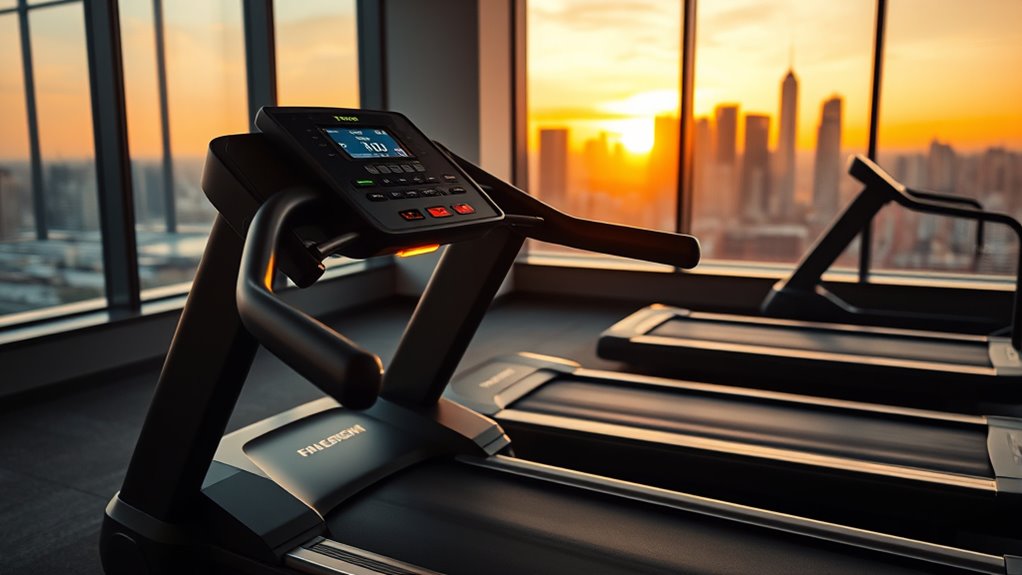

Among these high-end treadmills with incline, I rank the NordicTrack Commercial 2450 as the best overall for buyers who want a premium running platform with substantial incline capability. The Vitalwalk Apollo 11 stands out for its 25% auto incline, while the CURSOR FITNESS pairs a foldable design with a 20% incline and a 4.0 HP motor. The main tradeoffs are incline range, running space and stability, interactive features, and how much room the machine takes up. A higher incline figure alone does not guarantee the best fit if you need a broad deck or a treadmill that folds away. Read on for the full comparison, buying guidance, and picks by training need.

Get furniture and decor delivered free with Prime
- Fast, free delivery on millions of items
- Prime Video, Amazon Music and more included
- Member-only deals all year
Complete the kit


Key Takeaways
- The NordicTrack Commercial 2450 leads overall because it combines premium treadmill positioning with a running-focused design, while several other picks stand out more for a single feature such as folding or incline range.
- The Vitalwalk Apollo 11 has the highest stated incline here at 25%, making it a distinctive choice for steep walking and hill-style sessions; buyers should still weigh its overall running fit, not incline alone.
- CURSOR FITNESS and the Heavy-Duty Folding Treadmill both list 20-level or 20% incline positioning, but the CURSOR also specifies a 4.0 HP motor, while the Heavy-Duty model is best evaluated around its folding, heavy-duty design.
- The lineup splits between feature-rich training and space-conscious formats: the BowFlex T16 and Peloton emphasize screen-led or varied workouts, while the Echelon Stride and folding models speak more to home storage needs.
- Deck dimensions and fit deserve attention alongside incline: the GYMOST lists a 64 × 24-inch running belt, a useful published detail for shoppers comparing running room across models.
| CURSOR FITNESS Foldable Treadmill with 20% Auto Incline, 4.0 HP Motor |  | Best for High-Capacity Incline Walking | Motor: 4.0 HP brushless | Speed range: 0.6–8 mph | Maximum incline: 20% | VIEW ON AMAZON | See Our Full Breakdown |
| NordicTrack T6.5S Treadmill |  | Best for iFIT-Guided Beginner Workouts | Maximum speed: 10 mph | Incline range: 0–10% | Cushioning: KeyFlex | VIEW ON AMAZON | See Our Full Breakdown |
| Echelon Stride Series Smart Foldable Treadmill |  | Best for Faster Running in a Foldable Design | Motor: 3.75 HP | Maximum speed: 12.5 mph | Maximum incline: 15% | VIEW ON AMAZON | See Our Full Breakdown |
| Vitalwalk Apollo 11 Foldable Treadmill with 25% Auto Incline |  | Best for Steep Automatic Incline | Motor: 3.5 HP brushless | Speed range: 0.6–10 mph | Maximum incline: 25% | VIEW ON AMAZON | See Our Full Breakdown |
| NordicTrack Commercial 2450 Incline Treadmill |  | Best Premium All-Rounder | Screen: 22-inch tilt-and-pivot touchscreen | Speed range: 0–12 mph | Incline range: -3% to 12% | VIEW ON AMAZON | See Our Full Breakdown |
| FAGUS H Motorized Treadmill with 15% Auto Incline |  | Best for a Spacious Running Deck | Motor: 7 HP peak | Maximum speed: 12.5 mph | Incline: 0–15% | VIEW ON AMAZON | See Our Full Breakdown |
| Peloton Cross Training Treadmill for Running, Walking, and Hiking |  | Best for Cross-Training Classes | Screen: 24-inch Full HD swivel touchscreen with 360° movement | Running space: 59 in | User weight capacity: 300 lb | VIEW ON AMAZON | See Our Full Breakdown |
| BowFlex T16 Treadmill with 16-Inch HD Touchscreen |  | Best for Connected Training Without a Giant Screen | Motor: 3.5 HP | Speed range: 0.5–12 mph | Maximum incline: 15% | VIEW ON AMAZON | See Our Full Breakdown |
| Heavy-Duty Folding Treadmill with 20-Level Auto Incline |  | Best for High-Capacity Incline Training | Motor: 4.5 HP brushless | Speed range: 0.6–12 mph | Incline: 20 automatic levels | VIEW ON AMAZON | See Our Full Breakdown |
| GYMOST Home Treadmill with 15% Auto Incline and 64 × 24 in Running Belt |  | Best for Maximum Running Room and Capacity | Motor: 6.0 HP | Speed range: 0.6–15.6 mph | Maximum incline: 15% | VIEW ON AMAZON | See Our Full Breakdown |
| highend treadmills with incline | Motor | Speed range | Maximum incline |
|---|---|---|---|
| CURSOR FITNESS Foldable Treadm | 4.0 HP brushless | 0.6–8 mph | 20% |
| NordicTrack T6.5S Treadmill | — | — | — |
| Echelon Stride Series Smart Fo | 3.75 HP | — | 15% |
| Vitalwalk Apollo 11 Foldable T | 3.5 HP brushless | 0.6–10 mph | 25% |
| NordicTrack Commercial 2450 In | — | 0–12 mph | — |
| FAGUS H Motorized Treadmill wi | 7 HP peak | — | — |
| Peloton Cross Training Treadmi | — | — | — |
| BowFlex T16 Treadmill with 16- | 3.5 HP | 0.5–12 mph | 15% |
| Heavy-Duty Folding Treadmill w | 4.5 HP brushless | 0.6–12 mph | — |
| GYMOST Home Treadmill with 15% | 6.0 HP | 0.6–15.6 mph | 15% |
More Details on Our Top Picks
CURSOR FITNESS Foldable Treadmill with 20% Auto Incline, 4.0 HP Motor
The CURSOR FITNESS makes its case with 20 automatic incline levels up to 20% and a stated 400-pound capacity, a combination aimed more at steep walking and varied home training than fast running. Its 0.6–8 mph range covers walking and moderate jogging, but it falls short of the 12 mph ceiling on the NordicTrack Commercial 2450 and the 12.5 mph listed for the Echelon Stride. The 44.1-by-16-inch belt is also narrower and shorter than the Vitalwalk Apollo 11’s 49-by-18-inch deck, which may matter for taller users or a longer stride. Hydraulic folding and transport wheels help with storage, while pulse sensors offer a basic way to track exertion. Tradeoff: its strong incline and capacity come with a more limited running pace and a relatively compact belt.
Pros:- Automatic incline provides 20 levels up to 20% for varied hill-walking workouts.
- Stated 400-pound weight capacity exceeds the 350-pound capacity listed for the Vitalwalk Apollo 11.
- Hydraulic folding and transport wheels support easier storage.
- Cushioned anti-slip belt and handrail pulse sensors add comfort and basic workout monitoring.
Cons:- Maximum speed of 8 mph limits faster running compared with the NordicTrack Commercial 2450 and Echelon Stride.
- The 44.1-by-16-inch belt is relatively narrow and short for longer strides.
- The listed compact footprint may not reflect the full space needed during use.
Best for: Walkers seeking steep automatic incline sessions, a stated capacity of up to 400 pounds, and a treadmill that folds for home storage.
Not ideal for: Runners who regularly exceed 8 mph or taller users who want a longer, wider running deck.
- Motor:4.0 HP brushless
- Speed range:0.6–8 mph
- Maximum incline:20%
- Incline levels:20
- Weight capacity:400 lb
- Running belt:44.1 × 16 in
- Folding:Hydraulic folding with transport wheels
Our verdict“Choose the CURSOR FITNESS if steep incline walking and a high stated capacity matter more than a long belt or fast running speeds.”
NordicTrack T6.5S Treadmill
The NordicTrack T6.5S is the more approachable pick for buyers who want guided structure rather than the steepest incline. Its 0–10% incline and 10 mph maximum speed are more modest than the CURSOR FITNESS’s 20% incline, but they offer a practical range for walking, jogging, and introductory hill sessions. The foldable frame and KeyFlex cushioning suit home use, while iFIT can adjust speed and incline during supported workouts. That connected experience is a defining difference from the Vitalwalk Apollo 11, which lists FitShow and Zwift compatibility instead. The catch is that connected features require an iFIT Train Membership, and ActivePulse requires a separately sold Bluetooth heart-rate monitor. Tradeoff: it prioritizes coaching and app integration over a more aggressive incline range.
Pros:- iFIT workouts can automatically adjust speed and incline during supported sessions.
- Folding frame and roll-away design help fit a treadmill into a shared home space.
- Maximum speed of 10 mph supports jogging beyond the CURSOR FITNESS’s 8 mph ceiling.
- Workout data can sync with supported services including Strava, Garmin, and Apple Health.
Cons:- The 10% incline is substantially lower than the CURSOR FITNESS’s 20% and Vitalwalk Apollo 11’s 25%.
- Many connected features require an iFIT Train Membership.
- Bluetooth heart-rate monitor for ActivePulse is sold separately.
Best for: Newer treadmill users who want trainer-led sessions, app syncing, and a foldable machine for walking or moderate jogging.
Not ideal for: Buyers focused on steep hill training or those who want connected coaching and automatic workout adjustments without a membership.
- Maximum speed:10 mph
- Incline range:0–10%
- Cushioning:KeyFlex
- Display:LCD
- Frame:Foldable
- Connectivity:iFIT, Strava, Garmin, and Apple Health
- Membership requirement:iFIT Train Membership required for connected features
Our verdict“Pick the T6.5S if guided, connected workouts matter more than a steep incline or advanced running range.”
Echelon Stride Series Smart Foldable Treadmill
The Echelon Stride is the speed-focused choice in this group: its listed 12.5 mph maximum exceeds the NordicTrack T6.5S’s 10 mph and the Vitalwalk Apollo 11’s 10 mph. A 15% incline adds meaningful hill work, though it does not match the Vitalwalk’s 25% peak or the CURSOR FITNESS’s 20%. The 20-by-55-inch cushioned deck gives runners more room than the CURSOR’s 44.1-by-16-inch belt, while the 22-inch HD touchscreen and Bluetooth connectivity make it the most screen-forward option among these foldable models. It also lists heart-rate sensors and eight pre-programmed workouts. The compromise is a 300-pound capacity and a Premier membership included for only 30 days; the product description also gives conflicting deck-length and workout-count details.
Pros:- Maximum speed of 12.5 mph is higher than the other listed treadmills in this batch.
- 15% incline supports hill workouts beyond the NordicTrack T6.5S’s 10% maximum.
- 20-by-55-inch cushioned deck provides more running room than the CURSOR FITNESS belt.
- 22-inch HD touchscreen, Bluetooth, and listed heart-rate sensors add workout and tracking options.
Cons:- The 300-pound capacity is lower than the capacities listed for the CURSOR FITNESS and Vitalwalk Apollo 11.
- The 15% incline is below the Vitalwalk Apollo 11’s 25% and the CURSOR FITNESS’s 20%.
- Premier membership is included for only 30 days, and the description contains conflicting deck and program details.
Best for: Runners who want a higher top speed, a large touchscreen, and a foldable treadmill with a longer deck than compact walking-focused models.
Not ideal for: Buyers needing a capacity above 300 pounds, a very steep incline, or clearly consistent published specifications.
- Motor:3.75 HP
- Maximum speed:12.5 mph
- Maximum incline:15%
- Running deck:20 × 55 in
- Weight capacity:300 lb
- Display:22-inch HD touchscreen
- Workout programs:8 pre-programmed workouts
- Folded thickness:10 in
Our verdict“Choose the Echelon Stride if faster running and a large display outweigh a lower capacity and less aggressive incline.”
Vitalwalk Apollo 11 Foldable Treadmill with 25% Auto Incline
The Vitalwalk Apollo 11 earns its place for buyers who want the steepest stated incline in this batch: 25% automatic incline, ahead of the CURSOR FITNESS at 20% and Echelon Stride at 15%. Its 0.6–10 mph range also spans walking through moderate running, and the 49-by-18-inch deck is wider and longer than the CURSOR’s belt. A 350-pound capacity and cushioning make it a more substantial option for varied household workouts, while FitShow and Zwift compatibility add app choices beyond the NordicTrack T6.5S’s iFIT-centered setup. The drawbacks are practical: the treadmill weighs 105 pounds, so moving it may still take effort even with transport wheels, and its listed folded storage measurements conflict. Choose it for incline reach, not effortless portability or the highest running speed.
Pros:- 25% automatic incline is the highest listed in this batch.
- 49-by-18-inch running deck is wider and longer than the CURSOR FITNESS’s 44.1-by-16-inch belt.
- 10 mph maximum speed covers moderate running as well as walking and incline training.
- FitShow and Zwift compatibility, 15 workout programs, and cushioning add training variety.
Cons:- At 105 pounds, it may be difficult to move even with transport wheels.
- The listed folded storage measurements conflict, making storage planning less certain.
- Its 10 mph ceiling is below the Echelon Stride’s 12.5 mph and NordicTrack Commercial 2450’s 12 mph.
Best for: Home users prioritizing steep automatic hill workouts, a wider deck, and app compatibility across walking and moderate running.
Not ideal for: People who need to move their treadmill often, have limited storage clearance, or run faster than 10 mph.
- Motor:3.5 HP brushless
- Speed range:0.6–10 mph
- Maximum incline:25%
- Running deck:49 × 18 in
- Maximum user weight:350 lb
- Workout programs:15
- Connectivity:FitShow and Zwift
- Weight:105 lb
Our verdict“Choose the Apollo 11 if maximum incline and a roomy deck matter more than light weight or a faster top speed.”
NordicTrack Commercial 2450 Incline Treadmill
The NordicTrack Commercial 2450 is the most versatile running-and-training choice here, pairing speeds up to 12 mph with an incline range that also reaches -3% decline. That downhill setting separates it from the incline-only CURSOR FITNESS and Vitalwalk Apollo 11, while its top speed is close to the Echelon Stride’s 12.5 mph. The 22-inch pivoting touchscreen can serve treadmill workouts and off-equipment sessions, and Runner’s Flex cushioning, two AutoBreeze fans, and hydraulic EasyLift folding assist add useful comfort and storage details. Its maximum incline is 12%, though, well below the Vitalwalk’s 25% and CURSOR’s 20%. Many guided workouts and automatic adjustments also depend on a separately sold iFIT subscription. Premium versatility comes with a subscription tradeoff, and heart-rate-based adjustments require a separate Bluetooth monitor.
Pros:- Incline and decline range adds downhill training unavailable on the CURSOR FITNESS and Vitalwalk Apollo 11.
- Maximum speed of 12 mph supports running close to the Echelon Stride’s listed 12.5 mph ceiling.
- 22-inch pivoting touchscreen supports treadmill sessions and off-equipment workouts.
- Hydraulic EasyLift folding assist, transport wheels, and two AutoBreeze fans add practical convenience.
Cons:- The 12% maximum incline is much lower than the Vitalwalk Apollo 11’s 25% and CURSOR FITNESS’s 20%.
- Many guided and automatic adjustment features require a separately sold iFIT subscription.
- Heart-rate-based adjustments require a Bluetooth heart-rate monitor, sold separately.
Best for: Runners and cross-training households who want a pivoting screen, decline as well as incline, and a broad speed range.
Not ideal for: Incline-focused walkers who want a steep grade, or buyers unwilling to pay separately for iFIT features and a Bluetooth heart-rate monitor.
- Screen:22-inch tilt-and-pivot touchscreen
- Speed range:0–12 mph
- Incline range:-3% to 12%
- Cushioning:Runner’s Flex
- Folding design:SpaceSaver design with transport wheels
- Folding assistance:Hydraulic EasyLift assist
- Fans:Two AutoBreeze fans
- Subscription:iFIT subscription sold separately
Our verdict“Choose the Commercial 2450 for a premium mix of running, decline work, and off-treadmill training rather than the steepest incline.”
FAGUS H Motorized Treadmill with 15% Auto Incline
The FAGUS H pairs a 64 × 22-inch running surface with a 15% auto incline, giving runners more side-to-side room than the BowFlex T16’s 22-inch-wide, 60-inch-long deck and more length for longer strides. Its stated 12.5 mph top speed also edges past the BowFlex’s 12 mph ceiling, while six-zone shock absorption is aimed at softening repetitive impact. The workout display and device charging cover basic connected training without the Peloton Cross Training Tread’s class-centered setup. The main drawback is confidence in the capacity specification: the listing gives conflicting user-weight claims of 400-plus and 520 pounds. At 293 pounds, it is also a substantial delivery and placement job, and the one-year warranty is limited.
Pros:- 64 × 22-inch running surface offers generous room for running.
- Automatic incline reaches 15% for hill sessions.
- Top speed of 12.5 mph supports faster workouts than the BowFlex T16.
- Six-zone shock absorption is designed to reduce joint impact.
Cons:- Maximum user weight is unclear because the description cites both 400-plus and 520 pounds.
- At 293 pounds, moving and setup may require assistance.
- One-year warranty is short for a high-end treadmill.
Best for: Runners who want a long, wide deck and a 15% incline for regular home training, and who can confirm the weight limit before buying.
Not ideal for: Buyers who need an unambiguous weight-capacity rating, a long warranty, or a treadmill they can move without help.
- Motor:7 HP peak
- Maximum speed:12.5 mph
- Incline:0–15%
- Running surface:64 × 22 in
- Maximum weight recommendation:520 lb listed; description also states 400+ lb
- Item weight:293 lb
- Dimensions:76.1 × 36.4 × 59.1 in
- Warranty:1 year
Our verdict“Choose the FAGUS H for its roomy, long deck and 15% incline, but verify its weight limit and plan for difficult placement.”
Peloton Cross Training Treadmill for Running, Walking, and Hiking
The Peloton Cross Training Tread stands apart from incline-first machines such as the FAGUS H: its signature feature is a 24-inch swivel touchscreen that supports classes off the belt as well as running, walking, and hiking. Speed and incline knobs make on-tread changes accessible without searching through menus, while Bluetooth, USB-C charging, and speakers round out the console. Its 59-inch running space is shorter than the FAGUS H’s 64-inch deck, and the listed details do not specify an incline maximum, so buyers focused on steepness or long-stride room should compare carefully. Peloton classes and applicable features require an All-Access Membership. The machine also needs substantial rear clearance and an eight-foot ceiling, so its listed compact footprint does not tell the whole space story.
Pros:- Swivel touchscreen supports both treadmill and off-tread workouts.
- Speed and incline knobs allow quick adjustments during a session.
- Bluetooth 5.2, USB-C charging, and front-facing speakers add convenient device support.
- 59-inch running space comes in a smaller listed footprint than many long-deck alternatives.
Cons:- All-Access Membership is required for Peloton classes and applicable features.
- The supplied specifications do not state the maximum incline.
- Requires substantial clearance behind the treadmill and an eight-foot ceiling; moving and assembly may need lifting help.
Best for: Households that want one connected machine for treadmill sessions and guided strength, yoga, Pilates, or barre classes.
Not ideal for: Incline-focused runners who want a clearly specified steep grade, a longer running surface, or a treadmill without a required class membership.
- Screen:24-inch Full HD swivel touchscreen with 360° movement
- Running space:59 in
- User weight capacity:300 lb
- Dimensions:68 × 33 × 65 in
- Connectivity:Bluetooth 5.2; Wi-Fi required
- Charging:USB-C
- Membership:All-Access Membership required for classes and applicable features
- Supported user height:4 ft 11 in to 6 ft 4 in
Our verdict“Pick the Peloton if guided off-tread classes matter as much as running; skip it if incline range and long-deck performance are your main priorities.”
BowFlex T16 Treadmill with 16-Inch HD Touchscreen
The BowFlex T16 is a balanced choice for runners who want a 15% motorized incline and an integrated touchscreen without giving the console over to a 24-inch display like the Peloton Cross Training Tread. Its 22 × 60-inch cushioned deck gives plenty of width, though the FAGUS H offers four more inches of running length and a higher stated top speed. The 16-inch HD touchscreen, training and streaming apps, and smartwatch connections make it the more app-oriented pick than the Heavy-Duty Folding Treadmill, whose simpler LED display prioritizes workout readouts and preset programs. A folding frame helps with storage, but the full-size deck still takes meaningful floor space when in use. App and device features may depend on subscriptions or compatible hardware, so buyers should check what their preferred services require.
Pros:- Motorized incline reaches 15% for hill training.
- 22 × 60-inch cushioned deck provides a wide running area.
- 16-inch touchscreen supports workouts, streaming apps, and training metrics.
- Smartwatch connectivity and a folding frame add flexibility.
Cons:- The 60-inch deck is shorter than the FAGUS H’s 64-inch running surface.
- App and connected workout features may depend on subscriptions or compatible devices.
- The wide deck still requires substantial space when unfolded.
Best for: Runners who want a cushioned 15% incline treadmill with an integrated screen, smartwatch links, and a folding frame.
Not ideal for: Buyers who need a running deck longer than 60 inches, want to avoid app-dependent features, or need a particularly light machine to relocate.
- Motor:3.5 HP
- Speed range:0.5–12 mph
- Maximum incline:15%
- Running deck:22 × 60 in
- Display:16-inch HD touchscreen
- Maximum user weight:375 lb
- Connectivity:Apple Watch, Samsung Galaxy Watch, JRNY, Peloton, and Zwift
- Warranty:Lifetime frame and motor warranty
Our verdict“Choose the BowFlex T16 for a strong mix of incline training and screen-based workouts, unless you need a longer deck or fully independent features.”
Heavy-Duty Folding Treadmill with 20-Level Auto Incline
For buyers who put weight capacity and adjustable incline ahead of a long running deck, this folding model lists support for up to 500 pounds and offers 20 automatic incline levels. That capacity is below the GYMOST’s stated 600 pounds, but this treadmill is much lighter at 128 pounds and folds to a 39-inch length, giving it a more manageable storage profile. The tradeoff is the 50 × 20-inch belt: compared with the GYMOST’s 64 × 24-inch surface, it gives less room for long strides and broad running form. An LED display, 36 programs, shock-absorbing components, and app compatibility cover varied home workouts, though it lacks the GYMOST’s stated broad speed ceiling. The listed incline levels are not expressed as a percentage, so buyers seeking a particular grade should confirm the range.
Pros:- Listed maximum user weight of 500 pounds.
- Twenty automatic incline levels support varied hill sessions.
- Folding frame and transport wheels make storage and repositioning easier than with the 436-pound GYMOST.
- Thirty-six workout programs and app compatibility provide training variety.
Cons:- 50 × 20-inch belt is considerably shorter and narrower than the GYMOST’s 64 × 24-inch deck.
- Incline is described in levels, not as a maximum percentage.
- Requires a corded power source and weighs 128 pounds.
Best for: Walkers and moderate-pace runners who need a high stated capacity, multiple automatic incline settings, and a folding frame.
Not ideal for: Tall or fast runners who need a long deck, or buyers who require a stated incline percentage and a fully cordless setup.
- Motor:4.5 HP brushless
- Speed range:0.6–12 mph
- Incline:20 automatic levels
- Running belt:50 × 20 in
- Maximum user weight:500 lb
- Workout programs:36
- Folded dimensions:39 × 30 × 53 in
- Item weight:128 lb
Our verdict“Choose this model for high listed capacity and foldaway storage, but look to the GYMOST for more running room and a stated 15% grade.”
GYMOST Home Treadmill with 15% Auto Incline and 64 × 24 in Running Belt
The GYMOST makes its case with a rare combination of a 64 × 24-inch running belt, a stated 600-pound capacity, and speeds up to 15.6 mph. That gives it more width and a faster top speed than the FAGUS H, whose surface is 22 inches wide and whose stated maximum is 12.5 mph; both offer a 15% automatic incline. Thirty-nine programs, wireless charging, workout tracking, and handrail pulse sensors add practical console features. But this is the least convenient machine in the group to place: at 436 pounds and 84.5 inches long, it needs substantial floor space and two people for setup. Its one-year warranty also contrasts sharply with the BowFlex T16’s lifetime frame and motor coverage. The GYMOST suits capacity-first buyers, not anyone seeking easy repositioning.
Pros:- 64 × 24-inch running belt provides the widest listed deck in this group.
- Stated 600-pound capacity exceeds the FAGUS H and Heavy-Duty Folding Treadmill.
- 15% auto incline and speeds up to 15.6 mph cover steep and fast training.
- Wireless charging and 39 preset programs add useful console features.
Cons:- At 436 pounds, it requires two people for setup and is difficult to relocate.
- 84.5-inch length demands substantial permanent floor space.
- One-year warranty is short compared with the BowFlex T16’s stated lifetime frame and motor warranty.
Best for: Large-framed runners and households that need a very wide, long deck, a high stated capacity, and a fast top speed.
Not ideal for: People with limited floor space, narrow access routes, or no help available for delivery and setup.
- Motor:6.0 HP
- Speed range:0.6–15.6 mph
- Maximum incline:15%
- Running belt:64 × 24 in
- Weight capacity:600 lb
- Workout programs:39
- Dimensions:84.5 × 37 × 66 in
- Item weight:436 lb
- Warranty:1 year
Our verdict“Choose the GYMOST if deck width, capacity, and speed lead your priorities and you have space and help for installation.”

How We Picked
I compared the ten treadmills around the needs implied by high-end incline training: incline capability, running and walking fit, motor or deck details where provided, storage design, and the role of screens or connected workouts. I gave more weight to machines that appear suited to sustained training rather than a single headline feature, while recognizing that a compact foldable treadmill or a steep-incline model may be the better choice for a specific home.
The order reflects those tradeoffs, not a claim that one treadmill suits every buyer. The NordicTrack Commercial 2450 ranks first for its broad premium running appeal; the Vitalwalk Apollo 11 and CURSOR FITNESS follow for standout incline and motor details. Other models rank by their more specific strengths, such as interactive training, folding convenience, or stated belt size. Where the product name alone provides limited detail, I avoid assuming performance or durability claims that are not specified.
Factors to Consider When Choosing Highend Treadmills With Incline
Before choosing among high-end treadmills with incline, I would match the machine to the workouts and space it will actually serve. These broader checks can prevent paying for features that go unused or overlooking fit details that affect everyday training.
Choose an Incline Range That Matches Your Training
Incline is useful for adding hill work and making walking sessions more demanding, but the highest number is not automatically the best choice. A steep range can suit hikers and walkers who want varied gradients, while regular runners may care just as much about stable pacing and a comfortable deck. Check whether the manufacturer describes incline as a percentage, a level count, or another scale; those labels are not always directly comparable. Also look for how incline changes are controlled during a workout, since manual interruptions can make interval sessions less fluid. Avoid paying extra for extreme incline if most of your planned sessions will stay near level. Match the feature to a real weekly routine rather than a headline specification.
Prioritize Running Space and User Fit
A treadmill can have a strong incline specification and still feel cramped for a taller runner or a long stride. Compare belt length and width with your height, pace, and preferred gait, using published dimensions rather than the machine’s overall footprint. The GYMOST’s stated 64 × 24-inch belt gives shoppers a concrete measurement to compare, but every model should be checked against your own needs. If several people will use the treadmill, size it for the person who needs the most room. A narrower or shorter belt may be acceptable for walking and easy jogging but can feel restrictive at faster speeds. Leave enough surrounding clearance for safe mounting and ordinary use.
Separate Motor Claims From Real Use Needs
Motor power figures can help with comparison, but a single horsepower number does not tell the whole story about how a treadmill will suit your training. The CURSOR FITNESS lists a 4.0 HP motor, which is a useful published point of distinction in this lineup, but buyers should also check the manufacturer’s stated continuous-duty rating and intended use. Frequent running, heavier users, and shared household use place different demands on a machine than occasional walking. Look for clear guidance on user weight limits, warranty coverage, and service support before treating a motor specification as proof of long-term resilience. A well-matched treadmill is preferable to choosing the biggest number without context.
Balance Folding Convenience Against Stability
Foldable designs can help in homes where a treadmill must share space, but the folded footprint is only part of the decision. Check the machine’s full operating dimensions, how it folds, and whether moving it between sessions is practical in your room. For regular running, consider whether the frame and deck feel appropriate for your pace and whether the setup instructions allow the treadmill to sit securely on your floor. Folding models may suit walkers and space-conscious households especially well, while buyers with a permanent training area may prefer to prioritize a dedicated running platform. Do not assume that a folding mechanism makes a large treadmill easy to store. Measure doorways and storage paths before ordering.
Decide Whether Screens and Connected Training Earn Their Place
Large displays and guided workouts can make training more engaging, but they also add cost, setup requirements, and possible reliance on subscriptions or connectivity. Before choosing a screen-led treadmill, confirm which features work without a membership and whether your preferred workout apps are supported. A built-in display matters less if you already train with a tablet, watch, or separate coaching service. Models such as the BowFlex T16 and Peloton Cross Training Treadmill have a more prominent connected-workout identity than a basic incline-focused choice, so compare the experience as well as the hardware. Consider who will use the programming and how often. Skip premium digital features if they are unlikely to change your routine.
Check Service, Warranty, and Home Setup Before Buying
A high-end treadmill is a substantial home appliance, so after-sale support matters alongside training features. Read the warranty terms for the frame, motor, parts, and labor separately, since coverage can differ across components. Confirm what assembly involves, whether delivery includes placement, and how repairs are handled in your area. Check the manufacturer’s maintenance instructions, including belt care and lubrication requirements, before deciding how much upkeep fits your schedule. Measure ceiling height as well as floor space if you plan to use a steep incline, since the deck rises beneath the user. These checks can distinguish a treadmill that fits your home from one that looks right only on a feature list.
Frequently Asked Questions
Is the treadmill with the highest incline automatically the best choice for hill training?
No. The Vitalwalk Apollo 11 lists a 25% auto incline, the highest stated figure in this group, but the right treadmill also needs to suit your stride, training pace, and available space. Compare how the treadmill handles incline changes and whether its deck feels appropriate for the workouts you plan to do. A lower maximum may be enough for varied walking and running sessions. Treat incline range as one part of the decision, not a substitute for fit and usability.
Should I choose a foldable treadmill if I plan to run regularly?
Folding can be useful when a treadmill needs to share a room, but the design alone does not tell you whether a model suits regular running. Compare the operating footprint, belt dimensions, user weight limit, and manufacturer guidance for running use. If the treadmill will be folded and moved often, check its folded size and how easily it can be repositioned. A permanent setup may let you prioritize deck space and training feel instead. Choose folding for a genuine storage need, not simply because it sounds more convenient.
How much should I value a treadmill’s horsepower figure?
Horsepower is one useful comparison point, but its meaning depends on how the manufacturer defines and reports the rating. The CURSOR FITNESS lists a 4.0 HP motor, yet that number alone does not establish how the treadmill will perform for a particular user or how long it will last. Check continuous-duty details, intended use, warranty coverage, and the machine’s user limit where available. Your typical pace and how many people will share the treadmill also matter. Use the figure as supporting information rather than the deciding factor.
Do I need a touchscreen or connected workout platform on an incline treadmill?
No; those features are most useful when guided classes or a built-in display will keep you training consistently. The BowFlex T16 and Peloton Cross Training Treadmill are more aligned with screen-led or varied workout experiences, while other picks put more emphasis on incline, folding, or straightforward home use. Check whether classes require a separate membership and what remains available without a connection. If you already use a tablet or training app, a built-in screen may duplicate equipment you own. Decide based on the workouts you will use, not the display size alone.
What should I measure before ordering a high-end treadmill with incline?
Measure the floor area for both the treadmill’s operating position and its folded position, if it folds. Check doorway and hallway clearances along the delivery route, and confirm the floor can support the machine in its intended location. Ceiling height matters too, especially at a steep incline, because your body rises as the deck tilts. Compare belt dimensions with the tallest user’s stride and intended running pace. Leave clearance around the machine for safe entry, exit, and maintenance access.
Conclusion
For most buyers seeking a premium running treadmill with incline, I would start with the NordicTrack Commercial 2450 as the best overall pick. The CURSOR FITNESS is a value-minded option for shoppers drawn to its stated 20% auto incline and 4.0 HP motor, while the Vitalwalk Apollo 11 suits buyers whose priority is its 25% incline range. Beginners should focus on a comfortable belt, straightforward controls, and a pace they can progress with; the NordicTrack T6.5S is a more approachable place to compare than the lineup’s premium and feature-heavy choices. For screen-led workouts, look at the BowFlex T16 or Peloton; for a stated belt-size reference, consider the GYMOST; and for storage needs, compare the Echelon Stride and other folding models. My final choice would depend on matching incline, running fit, space, and support—not on the steepest spec alone.
Halloween Picks
halloween
As an affiliate, we earn on qualifying purchases.